

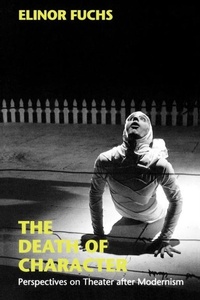
The Death of Character
Perspectives on Theater After Modernism
1st Edition
Published on 22. July 1996
277 pages
978-0-253-11347-4 (ISBN)
Description

"Extremely well written, and exceedingly well informed, this is a work that opens a variety of important questions in sophisticated and theoretically nuanced ways. It is hard to imagine a better tour guide than Fuchs for a trip through the last thirty years of, as she puts it, what we used to call the 'avant-garde.'" -Essays in Theatre
". . . an insightful set of theoretical 'takes' on how to think about theatre before and theatre after modernism." -Theatre Journal
"In short, for those who never experienced a 'postmodern swoon,' Elinor Fuchs is an excellent informant." -Performing Arts Journal
". . . a thoughtful, highly readable contribution to the evolving literature on theatre and postmodernism." -Modern Drama
"A work of bold theoretical ambition and exceptional critical intelligence. . . . Fuchs combines mastery of contemporary cultural theory with a long and full participation in American theater culture: the result is a long-needed, long-awaited elaboration of a new theatrical paradigm." -Una Chaudhuri, New York University
"What makes this book exceptional is Fuchs' acute rehearsal of the stranger unnerving events of the last generation that have-in the cross-reflections of theory-determined our thinking about theater. She seems to have seen and absorbed them all." -Herbert Blau, Center for Twentieth Century Studies, University of Wisconsin, Milwaukee
"Surveying the extraordinary scene of the postmodern American theater, Fuchs boldly frames key issues of subjectivity and performance with the keenest of critical eyes for the compelling image and the telling gesture." -Joseph Roach, Tulane University
" . . . Fuchs makes an exceptionally lucid and eloquent case for the value and contradictions in postmodern theater." -Alice Rayner, Stanford University
"Arguably the most accessible yet learned road map to what remains for many impenetrable territoryan obligatory addition to all academic libraries serving upper-division undertgraduates and above." -Choice
"A systematic, comprehensive and historically-minded assessment of what, precisely, 'post-modern theatre' is, anyway." -American Theatre
In this engrossing study, Elinor Fuchs explores the multiple worlds of theater after modernism. While The Death of Character engages contemporary cultural and aesthetic theory, Elinor Fuchs always speaks as an active theater critic. Nine of her Village Voice and American Theatre essays conclude the volume. They give an immediate, vivid account of contemporary theater and theatrical culture written from the front of rapid cultural change.
". . . an insightful set of theoretical 'takes' on how to think about theatre before and theatre after modernism." -Theatre Journal
"In short, for those who never experienced a 'postmodern swoon,' Elinor Fuchs is an excellent informant." -Performing Arts Journal
". . . a thoughtful, highly readable contribution to the evolving literature on theatre and postmodernism." -Modern Drama
"A work of bold theoretical ambition and exceptional critical intelligence. . . . Fuchs combines mastery of contemporary cultural theory with a long and full participation in American theater culture: the result is a long-needed, long-awaited elaboration of a new theatrical paradigm." -Una Chaudhuri, New York University
"What makes this book exceptional is Fuchs' acute rehearsal of the stranger unnerving events of the last generation that have-in the cross-reflections of theory-determined our thinking about theater. She seems to have seen and absorbed them all." -Herbert Blau, Center for Twentieth Century Studies, University of Wisconsin, Milwaukee
"Surveying the extraordinary scene of the postmodern American theater, Fuchs boldly frames key issues of subjectivity and performance with the keenest of critical eyes for the compelling image and the telling gesture." -Joseph Roach, Tulane University
" . . . Fuchs makes an exceptionally lucid and eloquent case for the value and contradictions in postmodern theater." -Alice Rayner, Stanford University
"Arguably the most accessible yet learned road map to what remains for many impenetrable territoryan obligatory addition to all academic libraries serving upper-division undertgraduates and above." -Choice
"A systematic, comprehensive and historically-minded assessment of what, precisely, 'post-modern theatre' is, anyway." -American Theatre
In this engrossing study, Elinor Fuchs explores the multiple worlds of theater after modernism. While The Death of Character engages contemporary cultural and aesthetic theory, Elinor Fuchs always speaks as an active theater critic. Nine of her Village Voice and American Theatre essays conclude the volume. They give an immediate, vivid account of contemporary theater and theatrical culture written from the front of rapid cultural change.
Reviews / Votes
Treating theater as a crucial mediating term between the heterogeneous fullness of life and the clarifying abstractions of theory and as a grounding principle in a period of conflicting or dissolving truths, Fuchs (Yale and Columbia) demonstrates in this sage and sane examination of postmodern theater (especially in the US) why she is one of the most astute observers of the contemporary scene. As a critic she brings to this perceptive, dense study not only insights of sheer brilliance but historical perspective (including samplings of her own reviews and articles, 1979-93) and contextual overview rare in contemporary critical writing. Although clearly supportive of trends challenging more traditional approaches in theater, she remains objective and balanced throughout. She provides illuminating analyses of work by such artists as Richard Foreman, Robert Wilson, Meredith Monk, Reza Abdoh, Elizabeth LeCompte, and Suzan-Lori Parks, among others, and such influential theorists as Jacques Derrida. Arguably the most accessible yet learned road map to what remains for many impenetrable territory, Fuchs' book, heavily theoretical but constantly anchored to specific performances, is an obligatory addition to all academic libraries serving upper-division undergraduates and abov- D. B. Wilmeth (Choice)
All prices
More details
Language
English
Place of publication
Bloomington, IN
United States
Target group
Professional and scholarly
ISBN-13
978-0-253-11347-4 (9780253113474)
Copyright in bibliographic data and cover images is held by Nielsen Book Services Limited or by the publishers or by their respective licensors: all rights reserved.
Schweitzer Classification
Other editions
Additional editions
Book
07/1996
Indiana University Press
€17.32
Shipment within 10-20 days
Person
ELINOR FUCHS, a New York theater critic noted for her writing on contemporary experimental theater, is on the faculty of the School of the Arts at Columbia University and is Lecturer at the Yale School of Drama. She has also taught at Harvard University, New York University, and Emory University. She is editor of Plays of the Holocaust: An International Anthology, and co-author (with Joyce Antler) of the documentary play Year One of the Empire. Her essays have appeared in such publications as American Theatre, The Drama Review, Modern Drama, Theater, and Performing Arts Journal. She has been a contributor to The Village Voice since 1982.
Content
Introduction
Part I: Modern Retrospect
1. Character: Its Rise and Fall
2. The Mysterium and the Re-Allegorization of Modern Drama
3. Reading Against the Grain
Part II: Theater After Modernism
4. Signalling Through the Signs: Thinking Theater After Derrida
5. Play as Landscape: Another Version of Pastoral
6. Staging the Obscene Body
7. Theater as Shopping
8. Postmodernism and the "Scene" of Theater
Reviews and Articles 1979-1993: Accounts of an Emerging Aesthetic
1979 Des McAnuff's Leave it to Beaver is Dead
Richard Schechner's The Balcony
1982 Andrei Serban's The Marriage of Figaro
1983 The Death of Character
1985 Peter Sellars's The Count of Monte Cristo
1986 Robert Wilson's Alcestis
1988 Elizabeth LeCompte and The Wooster Group's Frank Dell's The Temptation of Saint Antony
1989 Misunderstanding Postmodernism: Joanne Akalaitis's Cymbeline
1993 The AIDS Quilt and The Performance of Mourning
Part I: Modern Retrospect
1. Character: Its Rise and Fall
2. The Mysterium and the Re-Allegorization of Modern Drama
3. Reading Against the Grain
Part II: Theater After Modernism
4. Signalling Through the Signs: Thinking Theater After Derrida
5. Play as Landscape: Another Version of Pastoral
6. Staging the Obscene Body
7. Theater as Shopping
8. Postmodernism and the "Scene" of Theater
Reviews and Articles 1979-1993: Accounts of an Emerging Aesthetic
1979 Des McAnuff's Leave it to Beaver is Dead
Richard Schechner's The Balcony
1982 Andrei Serban's The Marriage of Figaro
1983 The Death of Character
1985 Peter Sellars's The Count of Monte Cristo
1986 Robert Wilson's Alcestis
1988 Elizabeth LeCompte and The Wooster Group's Frank Dell's The Temptation of Saint Antony
1989 Misunderstanding Postmodernism: Joanne Akalaitis's Cymbeline
1993 The AIDS Quilt and The Performance of Mourning
