

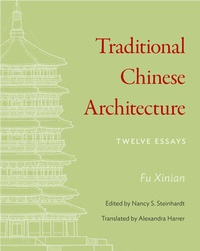
Traditional Chinese Architecture
Twelve Essays
1st Edition
Published on 22. May 2017
448 pages
978-1-4008-8513-8 (ISBN)
Description

A groundbreaking book by one of the world's leading historians of Chinese architecture
Translated by Alexandra Harrer.
Fu Xinian is considered by many to be the world's leading historian of Chinese architecture. He is an expert on every type of Chinese architecture from every period through the nineteenth century, and his work is at the cutting edge of the field. Traditional Chinese Architecture gathers together, for the first time in English, twelve seminal essays by Fu Xinian. This wide-ranging book pays special attention to the technical aspects of the building tradition since the first millennium BC, and Fu Xinian's signature drawings abundantly illustrate its nuances.
The essays delve into the modular basis for individual structures, complexes, and cities; lateral and longitudinal building frames; the unity of sculpture and building to create viewing angles; the influence of Chinese construction on Japanese architecture; and the reliability of images to inform us about architecture. Organized chronologically, the book also examines such topics as the representation of architecture on vessels in the Warring States period, early Buddhist architecture, and the evolution of imperial architecture from the Tang to Ming dynasty. A biography of Fu Xinian and a detailed Chinese-English glossary are included.
Bringing together some of the most groundbreaking scholarship in Chinese architectural history, Traditional Chinese Architecture showcases an uncontested master of the discipline.
Translated by Alexandra Harrer.
Fu Xinian is considered by many to be the world's leading historian of Chinese architecture. He is an expert on every type of Chinese architecture from every period through the nineteenth century, and his work is at the cutting edge of the field. Traditional Chinese Architecture gathers together, for the first time in English, twelve seminal essays by Fu Xinian. This wide-ranging book pays special attention to the technical aspects of the building tradition since the first millennium BC, and Fu Xinian's signature drawings abundantly illustrate its nuances.
The essays delve into the modular basis for individual structures, complexes, and cities; lateral and longitudinal building frames; the unity of sculpture and building to create viewing angles; the influence of Chinese construction on Japanese architecture; and the reliability of images to inform us about architecture. Organized chronologically, the book also examines such topics as the representation of architecture on vessels in the Warring States period, early Buddhist architecture, and the evolution of imperial architecture from the Tang to Ming dynasty. A biography of Fu Xinian and a detailed Chinese-English glossary are included.
Bringing together some of the most groundbreaking scholarship in Chinese architectural history, Traditional Chinese Architecture showcases an uncontested master of the discipline.
More details
Language
English
Place of publication
Princeton, NJ
United States
Publishing group
De Gruyter
Target group
Professional and scholarly
Edition type
Digital original
Product notice
Reflowable
Illustrations
150 line illus.
File size
33,30 MB
ISBN-13
978-1-4008-8513-8 (9781400885138)
Schweitzer Classification
Other editions
Additional editions
Book
05/2017
Princeton University Press
€61.90
Shipment within 10-20 days
Persons
Fu Xinian is professor of Chinese architecture at Tsinghua University. This is his first full-length book in English. Works that have appeared in Chinese include Architectural History, Chinese Ancient Architecture, and Ancient Chinese Architectural History. Nancy S. Steinhardt is professor of East Asian art and curator of Chinese art at the University of Pennsylvania. Her books include Chinese Architecture in an Age of Turmoil and China's Early Mosques.
Content
List of Illustrations vii
Preface xv
Editor's Note xvii
Chronology of Chinese Dynasties xxi
Map of China xxiii
Biography of Fu Xinian ¿¿¿ xxv
1 Representations of Architecture on Vessels of the Warring States Period 1
2 Reconstruction of Northern Dynasties Buildings Based on Relief Sculpture and Murals in Cave-Temples at Maijishan 31
3 Early Buddhist Architecture in China 79
4 The Development of Timber-Frame Architecture during the Two Jins and the Northern and Southern Dynasties 97
5 Architectural Features of the Northern and Southern Dynasties and the Sui and Tang Periods in China as Reflected in Japanese Architecture of the Asuka and Nara Periods 140
6 Hanyuan Hall at Daminggong in Tang Chang'an 167
7 The Module in Tang Architecture 209
8 Imperial Architecture of Tang through Ming and Its Relation to Other Architecture 226
9 The Problem of Pillar Displacement with Respect to the Characteristics of Song Construction 253
10 Song Architecture in South China and Its Relation to Japanese Great Buddha-Style Architecture of the Kamakura Period 273
11 Northern Song Architecture in the Painting A Thousand Li of Rivers and Mountains by Wang Ximeng 296
12 Typical Design Features of Ming Palaces and Altars in Beijing 315
Glossary 349
Index 375
Preface xv
Editor's Note xvii
Chronology of Chinese Dynasties xxi
Map of China xxiii
Biography of Fu Xinian ¿¿¿ xxv
1 Representations of Architecture on Vessels of the Warring States Period 1
2 Reconstruction of Northern Dynasties Buildings Based on Relief Sculpture and Murals in Cave-Temples at Maijishan 31
3 Early Buddhist Architecture in China 79
4 The Development of Timber-Frame Architecture during the Two Jins and the Northern and Southern Dynasties 97
5 Architectural Features of the Northern and Southern Dynasties and the Sui and Tang Periods in China as Reflected in Japanese Architecture of the Asuka and Nara Periods 140
6 Hanyuan Hall at Daminggong in Tang Chang'an 167
7 The Module in Tang Architecture 209
8 Imperial Architecture of Tang through Ming and Its Relation to Other Architecture 226
9 The Problem of Pillar Displacement with Respect to the Characteristics of Song Construction 253
10 Song Architecture in South China and Its Relation to Japanese Great Buddha-Style Architecture of the Kamakura Period 273
11 Northern Song Architecture in the Painting A Thousand Li of Rivers and Mountains by Wang Ximeng 296
12 Typical Design Features of Ming Palaces and Altars in Beijing 315
Glossary 349
Index 375
