

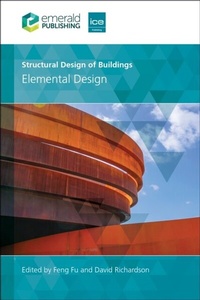
Structural Design of Buildings
Elemental Design
1st Edition
Published on 12. July 2024
272 pages
978-1-83549-574-2 (ISBN)
Description

Structural Design of Buildings: Elemental Design is the essential reference for all structural engineers involved in the design of buildings and other structures. The book forms part of the Structural Design of Buildings series and focuses on the introduction of building elements and materials. It also introduces retrofitting and materials for thermal upgrade of existing buildings.
Broken down into the key areas for understanding and undertaking structural design, and with a fully international approach, this book features coverage of
concrete
steel
timber
masonry
aluminium
glass
thermal upgrading and life cycle impacts
The book provides a comprehensive and practical guide to the design of buildings from a structural perspective. It is a timely and essential read for consultants, designers, technicians and contractors tasked with a holistic approach to structural design.
Broken down into the key areas for understanding and undertaking structural design, and with a fully international approach, this book features coverage of
concrete
steel
timber
masonry
aluminium
glass
thermal upgrading and life cycle impacts
The book provides a comprehensive and practical guide to the design of buildings from a structural perspective. It is a timely and essential read for consultants, designers, technicians and contractors tasked with a holistic approach to structural design.
More details
Language
English
Place of publication
Bingley
United Kingdom
Target group
Professional and scholarly
File size
14,83 MB
ISBN-13
978-1-83549-574-2 (9781835495742)
Copyright in bibliographic data and cover images is held by Nielsen Book Services Limited or by the publishers or by their respective licensors: all rights reserved.
Schweitzer Classification
Other editions
Additional editions
Book
07/2024
Emerald Publishing Limited
€96.00
Shipment within 3-4 weeks
Persons
Feng Fu Ph.D., MBA, CEng, FIStructE, FASCE, FICE, FHEA is a Chartered Structural Engineer and Associate Professor of Structural Engineering at the School of Engineering and Mathematical Sciences, City, University London, UK.
David Richardson BEng(Hons) CEng FIStructE FHEA is a Chartered Structural Engineer and Associate Professor of Structural Design at the School of Civil Engineering, University of Leeds, UK.
David Richardson BEng(Hons) CEng FIStructE FHEA is a Chartered Structural Engineer and Associate Professor of Structural Design at the School of Civil Engineering, University of Leeds, UK.
Content
Foreword
Preface
Acknowledgements
About the Editors
About the Contributors
Introduction
Chapter 1. Structural design of reinforced concrete elements to EC2; Owen Brooker and Ashraf Ashour
1.1 Introduction
1.2 System selection
1.3 Preliminary sizing
1 .4 Stability
1.5 Detailed design
1.6 Conclusions
Chapter 2. Steelwork; John Rushton
2.1 Introduction
2.2 What is a successful steel design?
2.3 Design responsibility
2.4 Design/Analysis/Detail design-a virtuous circle
2.5 Preliminary structural steelwork arrangements
2.6 Challenges and opportunities
2.7 Reconstruction of a 1920s steel framed office building
2.8 Conclusion
Chapter 3. Timber and wood-based products; Bernardino D'Amico
3.1 Introduction
3.2 Timber for structural use
3.3 Solid timber and engineered wood products
3.4 Mechanical properties of timber and engineered wood products
3.5 Design rules for ultimate limit states
3.6 Design rules for serviceability limit states
3.7 Connections
3.8 Glued composite sections
3.9 Conclusions
Chapter 4. Masonry; Andrew Rolf
4.1 Introduction
4.2 System Selection
4.3 Preliminary Sizing
4.4 Final Design
4.5 Design Examples
4.6 Other Aspects of Final Design
Chapter 5. Aluminium in Civil Engineering structures; Federico Massimo Mazzolani
5.1 Birth of Aluminium
5.2 The first applications
5.3 Why Aluminium in Structural Engineering
5.4. Aluminium alloys for structural use
5.5. The development of Eurocode
5.6. Some relevant features of Eurocode 9
5.7. Real examples of Aluminium Structures
Chapter 6. Glass in Facades and Other Applications; Mauro Overend
6.1 Introduction
6.2 Manufacture and Mechanical Properties
6.3 Use of glass in buildings
6.4. Engineering design of glass
6.5 Use of glass in buildings;
6.6 Engineering design of glass
6.7 Designing environmentally sustainable glass.
Chapter 7. Retrofitting, materials for the thermal upgrade of existing building and life cycle impacts; Chiara Piccardo
7.1 Introduction
7.2 Energy efficiency standards
7.3 Measures for energy-efficient renovations
7.4 Materials for energy-efficient renovations
7.5 Life cycle of energy-efficient renovations
7.6. Energy and carbon implications of renovations
Preface
Acknowledgements
About the Editors
About the Contributors
Introduction
Chapter 1. Structural design of reinforced concrete elements to EC2; Owen Brooker and Ashraf Ashour
1.1 Introduction
1.2 System selection
1.3 Preliminary sizing
1 .4 Stability
1.5 Detailed design
1.6 Conclusions
Chapter 2. Steelwork; John Rushton
2.1 Introduction
2.2 What is a successful steel design?
2.3 Design responsibility
2.4 Design/Analysis/Detail design-a virtuous circle
2.5 Preliminary structural steelwork arrangements
2.6 Challenges and opportunities
2.7 Reconstruction of a 1920s steel framed office building
2.8 Conclusion
Chapter 3. Timber and wood-based products; Bernardino D'Amico
3.1 Introduction
3.2 Timber for structural use
3.3 Solid timber and engineered wood products
3.4 Mechanical properties of timber and engineered wood products
3.5 Design rules for ultimate limit states
3.6 Design rules for serviceability limit states
3.7 Connections
3.8 Glued composite sections
3.9 Conclusions
Chapter 4. Masonry; Andrew Rolf
4.1 Introduction
4.2 System Selection
4.3 Preliminary Sizing
4.4 Final Design
4.5 Design Examples
4.6 Other Aspects of Final Design
Chapter 5. Aluminium in Civil Engineering structures; Federico Massimo Mazzolani
5.1 Birth of Aluminium
5.2 The first applications
5.3 Why Aluminium in Structural Engineering
5.4. Aluminium alloys for structural use
5.5. The development of Eurocode
5.6. Some relevant features of Eurocode 9
5.7. Real examples of Aluminium Structures
Chapter 6. Glass in Facades and Other Applications; Mauro Overend
6.1 Introduction
6.2 Manufacture and Mechanical Properties
6.3 Use of glass in buildings
6.4. Engineering design of glass
6.5 Use of glass in buildings;
6.6 Engineering design of glass
6.7 Designing environmentally sustainable glass.
Chapter 7. Retrofitting, materials for the thermal upgrade of existing building and life cycle impacts; Chiara Piccardo
7.1 Introduction
7.2 Energy efficiency standards
7.3 Measures for energy-efficient renovations
7.4 Materials for energy-efficient renovations
7.5 Life cycle of energy-efficient renovations
7.6. Energy and carbon implications of renovations
