

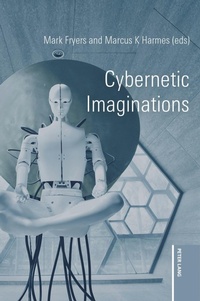
Cybernetic Imaginations
Description

Cybernetics, the science of control systems, was first popularised as an idea in 1948, following Norbert Wiener's seminal publication on the topic. Almost immediately, cybernetics gripped the imagination of science fiction writers and film and television producers. This collection explores decades of the intersection between cybernetics and speculative fiction, from the Cybermen of Doctor Who to the Borg of Star Trek, sci-fi luminaries from Isaac Asimov to George Lucas, and classic works like The Terminator to current outputs like The Mandalorian. It is intended as both an introduction to and a showcase for new and cutting-edge scholarship on the topic, highlighting the urgency of cybernetics research with the rise of artificial intelligence (AI), anxieties over the potential dehumanisation of society, and new futures envisioned for human-machine integration. As we become accustomed to speaking to nonhuman answering services, using AI technology in our writing, and even seeing films with nonhuman actors, this collection gives us access to rich fictional speculations about cybernetics that may help us to understand our rapidly changing world.
More details
Other editions
Additional editions
Persons
Mark Fryers is a Lecturer in Film and Media at the Open University, UK. He has published widely on topics including environmentalism, gothic horror and science fiction and cultural history, including contributions to the Journal of Popular Television and numerous edited collections. His monographs include on The Woman in Black (1989) and a forthcoming book on the Gothic maritime.
Marcus K Harmes is a professor at the University of Southern Queensland College, where he teaches legal history in the law degree and communications in the enabling program. He has published extensively in the fields of religious and political history, with a particular emphasis on British religious history and constitutional history.
