

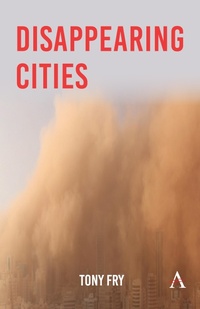
Disappearing Cities
Published on 11. November 2025
168 pages
978-1-83999-599-6 (ISBN)
Description

Disappearing Cities is a collection of over fifty short stories of invented cities, set in the not too distant future, destroyed by varied climate change impacts and linked natural disasters. The stories bring into question the relation between the natural and unnatural forces of change and expose responses to, and lessons learnt, from different disaster crises situations. Stories also focus on how means to adapt are sought. The projected fictions are created from projected current climate facts; trends; and the author's experience of population displacement, relocation and design-based climate change responsive action. Central to the book is the recognition that to be able to respond and adapt to the scale of coming changes in the climate requires going beyond existing practical action and embracing a new way of imagining futures. Disappearing Cities aims to stimulate ways of meeting this need.
The book opens with a Prologue that establishes the contextual frame of empirical foundation out of which the fictions are created. It recognises that we all live in a world in which the conditions that will result in huge numbers of cities disappearing are underway. From the human perspective, the process appears to be very slow, whereas in historico-geological time, it is happening exceptionally quickly. The number of the loss of cities is going to be huge, yet the recognition that this will occur is not arriving, In part, this is because of a lack of knowledge, but equally, it reflects a lack of imagination. Transposing what is known about climate change by a significant percentage of the societies of many nations to actual environments in which they live is just not arriving. What appears so solid and established fails to be seen and imagined as a risk and vulnerable. From establishing this opening perspective, the first part of the book presents stories of cities already disappearing as a result of the forces of nature changed by anthropogenically created global warming. Part two discusses the impacts of natural disasters being made unnaturally. For example, by the way industrial societies are damaging and changing natural systems, including the climatic. The final part goes to cities destroyed by completely un-natural means, including war.
Disappearing Cities aims to contribute to meeting the need for a better understanding of, and ability to imagine, the risks to which vast numbers of cities are, and will be, exposed to forces of disappearance. To do this, the narratives are a hybrid of fact and fiction. The work was inspired by Italo Calvino's book Invisible Cities and is intended to be a salient contemporary companion to this text. It mirrors its form but differs in style and content. Invisible Cities attained diverse readership, Disappearing Cities aspires to do likewise.
The book opens with a Prologue that establishes the contextual frame of empirical foundation out of which the fictions are created. It recognises that we all live in a world in which the conditions that will result in huge numbers of cities disappearing are underway. From the human perspective, the process appears to be very slow, whereas in historico-geological time, it is happening exceptionally quickly. The number of the loss of cities is going to be huge, yet the recognition that this will occur is not arriving, In part, this is because of a lack of knowledge, but equally, it reflects a lack of imagination. Transposing what is known about climate change by a significant percentage of the societies of many nations to actual environments in which they live is just not arriving. What appears so solid and established fails to be seen and imagined as a risk and vulnerable. From establishing this opening perspective, the first part of the book presents stories of cities already disappearing as a result of the forces of nature changed by anthropogenically created global warming. Part two discusses the impacts of natural disasters being made unnaturally. For example, by the way industrial societies are damaging and changing natural systems, including the climatic. The final part goes to cities destroyed by completely un-natural means, including war.
Disappearing Cities aims to contribute to meeting the need for a better understanding of, and ability to imagine, the risks to which vast numbers of cities are, and will be, exposed to forces of disappearance. To do this, the narratives are a hybrid of fact and fiction. The work was inspired by Italo Calvino's book Invisible Cities and is intended to be a salient contemporary companion to this text. It mirrors its form but differs in style and content. Invisible Cities attained diverse readership, Disappearing Cities aspires to do likewise.
Reviews / Votes
'Disappearing Cities by Tony Fry is an essential read. It timely reveals how urban centres are vanishing due to natural forces, climate change and human conflict. This book underscores escalating global risks, urging us to mobilise imagination for urgent, life-affirming action.' - David Palazon, Climate Change Content Producer, UNICEF Pakistan'Disappearing Cities is compelling reading that encourages deep reflection. Through a diverse range of short stories, Tony Fry takes the reader to entirely imaginable places, experiencing potentially avoidable devastation. These tales paint a bleak picture of our world's future, but in doing so hope to inspire societal action now.' - Jeremy Mather, ACT 2318 NSW 9349, RAIA, RIBA, Director, Mather Architecture
'What is the opposite of fantasy? What is fiction that helps you face pressing situations - not personal ones, but collective ones, the experiences some of us have already lived through, the unsettling we are all going to have to deal with? Disappearing Cities is this kind of reading .' - Cameron Tonkinwise, Professor of Design Studies, the University of Technology Sydney
'Disappearing Cities presents urban endings and their causes, interweaving their roles in modernity's inequities and demise. Eschewing modernity's tendency to reproduce itself through solutionism, this seems less a work of fiction than vignettes of plausible future pasts, reminding us that modernity's benefactors may not fare so well under its demise.' -Professor Louise Crabtree-Hayes, Professorial Research Fellow, Institute for Culture and Society
'Contrary to Calvino`s or Pavic`s hyper-textual games, Fry's imagined cities disappear for quite real reasons, threatening life on the planet as such. Using all the power of creative writing as a tool for cultivating political imagination, Fry places the readers in the epicentre of catastrophe and induces them to start acting now.' -Madina Tlostanova, Professor of Postcolonial Feminisms, Department of Thematic Studies, Linkoeping University, Sweden
More details
Language
English
Place of publication
London
United Kingdom
File size
0,20 MB
ISBN-13
978-1-83999-599-6 (9781839995996)
Copyright in bibliographic data and cover images is held by Nielsen Book Services Limited or by the publishers or by their respective licensors: all rights reserved.
Schweitzer Classification
Other editions
Additional editions
Person
Tony Fry is a writer, a design philosopher, an award-winning designer, an adjunct professor at the University of Tasmania and a visiting professor at the University of Ibague (Colombia).
Content
Acknowledgements; Prologue; 1 Disappearance by Natural Nature; 2 Disappearance by Unnatural Nature; 3 Disappearance by the Purely Unnatural ; Notes; Further Reading: an Annotated list
