

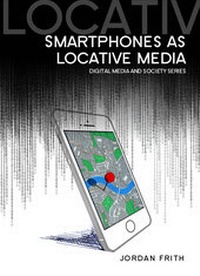
Smartphones as Locative Media
1st Edition
Published on 6. June 2018
168 pages
978-0-7456-8502-1 (ISBN)
Description

Smartphone adoption has surpassed 50% of the population in more
than 15 countries, and there are now more than one million mobile
applications people can download to their phones. Many of these
applications take advantage of smartphones as locative media, which
is what allows smartphones to be located in physical space.
Applications that take advantage of people's location are
called location-based services, and they are the focus of this
book.
Smartphones as locative media raise important questions about
how we understand the complicated relationship between the Internet
and physical space. This book addresses these questions through an
interdisciplinary theoretical framework and a detailed analysis of
how various popular mobile applications including Google Maps,
Facebook, Instagram, Yelp, and Foursquare use people's
location to provide information about their surrounding space.
The topics explored in this book are essential reading for
anyone interested in how smartphones and location-based services
have begun to impact the ways we navigate and engage with the
physical world.
than 15 countries, and there are now more than one million mobile
applications people can download to their phones. Many of these
applications take advantage of smartphones as locative media, which
is what allows smartphones to be located in physical space.
Applications that take advantage of people's location are
called location-based services, and they are the focus of this
book.
Smartphones as locative media raise important questions about
how we understand the complicated relationship between the Internet
and physical space. This book addresses these questions through an
interdisciplinary theoretical framework and a detailed analysis of
how various popular mobile applications including Google Maps,
Facebook, Instagram, Yelp, and Foursquare use people's
location to provide information about their surrounding space.
The topics explored in this book are essential reading for
anyone interested in how smartphones and location-based services
have begun to impact the ways we navigate and engage with the
physical world.
More details
Other editions
Additional editions
Content
Acknowledgments
Chapter 1: From atoms to bits and back again
Chapter 2: Mobilities and the spatial turn
Chapter 3: The infrastructure of locative media
Chapter 4: Wayfinding through mobile interfaces
Chapter 5: Location and social networks
Chapter 6: Writing and archiving space
Chapter 7: Market forces and the shaping of location-based services
Chapter 8: The negotiation of locational privacy
Conclusion: The future of locative media
Notes
References
Chapter 1: From atoms to bits and back again
Chapter 2: Mobilities and the spatial turn
Chapter 3: The infrastructure of locative media
Chapter 4: Wayfinding through mobile interfaces
Chapter 5: Location and social networks
Chapter 6: Writing and archiving space
Chapter 7: Market forces and the shaping of location-based services
Chapter 8: The negotiation of locational privacy
Conclusion: The future of locative media
Notes
References
