

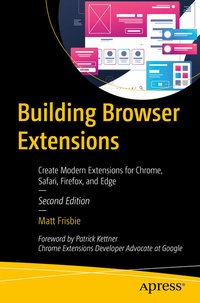
Building Browser Extensions
Description

This book is the definitive guide to building modern browser extensions, covering everything from fundamental concepts to advanced techniques.
Developing a browser extension is more like building a mobile app than a traditional website. Extensions operate within a unique environment with their own security model, lifecycle, and APIs. This book demystifies the process, guiding you through every stage-from planning and development to publishing and maintaining your extension.
You'll gain a deep understanding of how browser extensions function, their core architectural components, and best practices for structuring your code. The book also uncovers the nuances of extension development that many developers only discover through trial and error. By the end, you'll be equipped with the knowledge to confidently build, deploy, and scale a high-quality browser extension.
You Will Learn:
- The fundamental building blocks of browser extensions and how they interact with the browser
- How to avoid common pitfalls that can lead to security vulnerabilities, performance issues, and rejections from extension marketplaces
- To master the entire development lifecycle, from writing your first extension to publishing and maintaining it in the Chrome Web Store, Firefox Add-ons, and other repositories
- How to build browser extensions using modern tools, languages, and frameworks
- Best practices for extension networking, authentication, storage, and management
New for This Edition:
- Coverage of the latest browser extension APIs, including the side panel, offscreen documents, user scripts, and vendor-specifc APIs like the Chrome Prompt API.
- Hands-on tutorials for building real-world extensions, including monetization strategies, AI assistants, password managers, ad blockers, and DevTools integrations
- The latest tooling and frameworks for browser extension development, such as Vite, Extension.js, and WXT
This Book Is For:
This book is ideal for developers looking to expand their expertise by building a browser extension-whether as a standalone product or as an extension to an existing web service. It's also a great resource for teams integrating extension-based functionality into their SaaS platforms. Readers should have at least a basic understanding of HTML, CSS, and JavaScript.
More details
Other editions
Additional editions
Previous edition
Person
Matt Frisbie has worked in web development for over a decade and is the founder of his own supply chain software company and is a Google Developer Expert.
As a Google software engineer, Matt worked on both the AdSense and Accelerated Mobile Pages (AMP) platforms; his code contributions run on most of the planet's web browsing devices. Prior to this, Matt was the first engineer at DoorDash, where he helped lay the foundation for a company that has become the leader in online food delivery.
Matt is the author of six books, has recorded two video series and is a frequent guest on podcasts, and a speaker at conferences and meetups focusing on front-end development.
Matt lives near Chicago with his family and two dopey dogs and can be reached at mattfriz.com
Content
Chapter 1: What Are Browser Extensions?.- Chapter 2: Fundamental Elements of Browser Extensions.- Chapter 3: Browser Extension Crash Course.- Chapter 4: Browser Extension Architecture.- Chapter 5: The Extension Manifest.- Chapter 6: Background Scripts.- Chapter 7: Extension UIs.- Chapter 8: Content Scripts.- Chapter 9: Extension and Browser APIs.- Chapter 10: Permissions.- Chapter 11: Networking and Authentication.- Chapter 12: Tutorials.- Chapter 13: Extension Development and Deployment.- Chapter 14: Cross-Browser Extensions.- Chapter 15: Tooling and Frameworks.
