

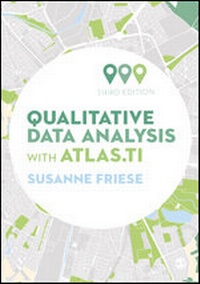
Qualitative Data Analysis with ATLAS.ti
3rd Edition
Published on 22. March 2019
344 pages
978-1-5264-5496-6 (ISBN)
Description

Now updated to cover latest versions and featuring instructions for both Mac and Windows users, this book is still the go-to source of support for getting to grips with qualitative data analysis using ATLAS.ti.
With over twenty years of experience using, developing, and teaching ATLAS.ti, Susanne Friese is the perfect data analysis tour guide. Aware of common challenges and sticking points, she eases readers from readying and organizing data into coding and querying it, providing not only tips on how to prepare for analysis, but also the tools and technical know-how needed to observe, examine, and discuss data. Placing quick software 'skills training' tutorials alongside different stages of the data analysis process, she gives readers the opportunity to integrate software training with their actual analysis.
With over twenty years of experience using, developing, and teaching ATLAS.ti, Susanne Friese is the perfect data analysis tour guide. Aware of common challenges and sticking points, she eases readers from readying and organizing data into coding and querying it, providing not only tips on how to prepare for analysis, but also the tools and technical know-how needed to observe, examine, and discuss data. Placing quick software 'skills training' tutorials alongside different stages of the data analysis process, she gives readers the opportunity to integrate software training with their actual analysis.
Reviews / Votes
Susanne Friese has produced an up to date, must-read guide full of useful information for students and early-career researchers considering using ATLAS.ti for data analysis. Read this book and learn about computer assisted NCT from the best. -- Jennifer Coe This is a wonderful, easy to read and pragmatic introduction to using one of the most frequently used and best developed software packages in qualitative research at all levels. At the same time, it introduces to a method of data analysis of its own right for people who are still on their journey to acquire a deeper understanding of software assisted qualitative research or social research in general, while not promising full salvation in handling data without further in-depth study of overall social research methodology and more specific methods. The book can help software users and data handlers far beyond just academic work context, but also in more professional areas such as data/information management, library work, criminalist practice, data mining - or simply for people who want to process lots of information for reading or professional writing. With every sentence, you feel the author has developed the book out of a long standing practice of teaching the same subject matter to people directly all-over the world - with a sense of humour and user needs. -- Peter Stegmaier This book provides an informative guide for students, researchers and educators to uncover and systematically analyze complex phenomena hidden in unstructured data. It provides analytical and visualization tools designed to open new interpretative views on qualitative data. -- Nashwa Ismail Friese clearly articulates her approach to using ATLAS.ti for analysing qualitative data thematically and developing from the descriptive through to the conceptual with invaluable tips on how to then write this up in a report. -- Steven Wright This book gives practical insight and encouragement for everyone interested in computer-assisted qualitative data analysis with ATLAS.ti. It is also an essential read for those commencing exploring the world of qualitative research methods or seeking to make sense of rich data in a meaningful way. -- Tobias Mettler Susanne Friese provides both practitioners and researchers with a handy guide full of important information on making most effective use of ATLAS.ti. It's a 'must have' in the field of qualitative data analysis. -- Maik Arnold This book is an excellent tool supporting novice and experienced researchers as they develop the capability to utilize ATLAS.ti in qualitative or mixed methods research. -- Georgios Fessakis Just like Atlas, the mythic Greek Titan, this book can hold the weight of your qualitative data analysis using ATLAS.ti software. Enlightening, extensive and detailed, the book is a precious guide for both experts and novices in the field of software-supported analysis of qualitative data. -- Stavroula PrantsoudiMore details
Edition
Third Edition
Language
English
Place of publication
London
United Kingdom
Target group
College/higher education
ISBN-13
978-1-5264-5496-6 (9781526454966)
Copyright in bibliographic data and cover images is held by Nielsen Book Services Limited or by the publishers or by their respective licensors: all rights reserved.
Schweitzer Classification
Other editions
Additional editions
Susanne Friese
Qualitative Data Analysis with ATLAS.ti
Book
04/2019
3rd Edition
SAGE Publications Ltd
€96.50
Shipment within 15-20 days
Person
Susanne Friese is Senior Research Partner at the Max Planck Institute for the Study of Religious and Ethnic Diversity in Goettingen, Germany.
Content
Introduction
Chapter 1: The process of computer-assisted analysis
Chapter 2: Getting to know ATLAS.ti
Chapter 3: Embarking on the journey - data and project management
Chapter 4: Technical aspects of coding
Chapter 5: Creating a coding scheme
Chapter 6: Querying the data and further steps in the data analysis process
Chapter 7: Recognizing and visualizing relationships - working with networks
Chapter 8: Compiling the final report - the last phase of the writing process
Chapter 9: Team work
Chapter 1: The process of computer-assisted analysis
Chapter 2: Getting to know ATLAS.ti
Chapter 3: Embarking on the journey - data and project management
Chapter 4: Technical aspects of coding
Chapter 5: Creating a coding scheme
Chapter 6: Querying the data and further steps in the data analysis process
Chapter 7: Recognizing and visualizing relationships - working with networks
Chapter 8: Compiling the final report - the last phase of the writing process
Chapter 9: Team work
