

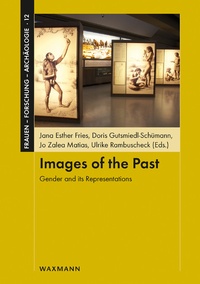
Images of the Past
Gender and its Representations
1st Edition
Published on 1. October 2017
228 pages
978-3-8309-8709-3 (ISBN)
Description

Pictures are an essential feature of archaeological discourse. The way they are used and their unconsciously made assertions demonstrate important things about ourselves, our theories, our methods, and the way we think. They subtly convey our convictions and view of the world - especially with regards to gender issues.
The papers united in this volume highlight the relationship between words and images, thinking and showing, knowledge and assumptions, scholarly thinking and popular images in archaeology They cover two main issues: pictorial representations of archaeology in academic and popular media, and pictures in museums. The authors examine the use of gender in academic publications, TV-documentaries, video games, non-fiction books for children and adolescents, and in archaeological museums in Spain and Germany.
The volume is the result of two sessions of gender study in archaeology: 'Images of the Past: Gender and its Representations' during the 20th Annual Meeting of the European Association of Archaeologists in September 2014 in Istanbul, and 'Gender in Museums', the symposium of the Nordwestdeutscher Verband für Altertumskunde (Northwest German Association for Antiquarian Studies) in September 2013 in Lübeck. This book includes articles in English and in German.
The papers united in this volume highlight the relationship between words and images, thinking and showing, knowledge and assumptions, scholarly thinking and popular images in archaeology They cover two main issues: pictorial representations of archaeology in academic and popular media, and pictures in museums. The authors examine the use of gender in academic publications, TV-documentaries, video games, non-fiction books for children and adolescents, and in archaeological museums in Spain and Germany.
The volume is the result of two sessions of gender study in archaeology: 'Images of the Past: Gender and its Representations' during the 20th Annual Meeting of the European Association of Archaeologists in September 2014 in Istanbul, and 'Gender in Museums', the symposium of the Nordwestdeutscher Verband für Altertumskunde (Northwest German Association for Antiquarian Studies) in September 2013 in Lübeck. This book includes articles in English and in German.
More details
Other editions
Additional editions
Jana Esther Fries | Doris Gutsmiedl-Schümann | Jo Zalea Matias
Images of the Past
Gender and its Representations
Book
10/2017
1st Edition
Waxmann
€29.90
Shipment within 7-9 days
Content
1 - Book Cover / Buchtitel [Seite 1]
1.1 - Imprint / Impressum [Seite 4]
1.2 - Preface / Vorwort [Seite 7]
1.3 - Contents / Inhalt [Seite 9]
2 - Introduction/Einleitung (Jana Esther Fries, Doris Gutsmiedl-Schümann, Jo Zalea Matias, Ulrike Rambuscheck) [Seite 11]
3 - The Representation of Gallic and Celtic Women. An Iconography Fixed in the Ungendered Approach to Archaeological and Historical Data (Chloé Belard) [Seite 23]
3.1 - Abstract [Seite 23]
3.2 - Zusammenfassung [Seite 23]
3.3 - Femininity required for Iron Age women in modern pictures [Seite 24]
3.4 - The traditional correlation between women and the domestic sphere [Seite 27]
3.5 - The representations of the "good wife" and the "Gallic family" [Seite 30]
3.6 - Challenging the traditional representations of women with the archaeological and ethnographic records [Seite 34]
3.7 - Iron Age artistic representations of women in Western and Central European areas [Seite 37]
3.8 - Conclusion [Seite 42]
3.9 - Bibliography [Seite 43]
4 - How to Make Prehistory Attractive. Women's Representation of the Bronze and Iron Age (Caroline Trémeaud) [Seite 47]
4.1 - Abstract [Seite 47]
4.2 - Zusammenfassung [Seite 47]
4.3 - Define images [Seite 49]
4.4 - Deconstruct images [Seite 52]
4.5 - Graphic solutions: a link between techniques and aim? [Seite 54]
4.6 - Reconstructing the human figure: a necessary reflection on gender [Seite 59]
4.7 - Conclusion [Seite 61]
4.8 - Bibliography [Seite 62]
5 - "It has always been like that ." How Televised Prehistory Explains what is Natural (Georg Koch) [Seite 65]
5.1 - Abstract [Seite 65]
5.2 - Zusammenfassung [Seite 65]
5.3 - Gender relations in popular prehistory [Seite 66]
5.4 - An analysis of prehistory on television [Seite 68]
5.5 - 'Man, the Hunter' in television documentaries - 1980s and 1990s [Seite 68]
5.6 - The diffusion of docu-dramas in the 2000s [Seite 73]
5.7 - Explanations from the past - the 2010s [Seite 75]
5.8 - Natural behaviour from prehistory [Seite 78]
5.9 - Prehistory as an experience [Seite 79]
5.10 - A brief conclusion: gender topics as an example for changing science communication [Seite 81]
5.11 - Sources [Seite 82]
5.12 - Filmography (chronological) [Seite 82]
5.13 - Bibliography [Seite 82]
6 - Is it all Warfare and Treasure Hunting? Gender Roles and Representations in Video Games (Rachael Sycamore) [Seite 85]
6.1 - Abstract [Seite 85]
6.2 - Zusammenfassung [Seite 85]
6.3 - Introduction [Seite 86]
6.4 - The importance of video games [Seite 87]
6.5 - The types of video games related to archaeology [Seite 88]
6.6 - Roles and representations of female characters [Seite 90]
6.7 - The roles and representation of men [Seite 93]
6.8 - Discussion [Seite 95]
6.9 - Conclusion [Seite 97]
6.10 - Acknowledgements [Seite 98]
6.11 - Video Games References [Seite 98]
6.12 - Bibliography [Seite 98]
7 - Armour Fetishism, Homosociality and Masculine Display. The Representations of Medieval Knights and Viking Men in Illustrated Non-fictional Books for Young Readers (Katja Fält) [Seite 103]
7.1 - Abstract [Seite 103]
7.2 - Zusammenfassung [Seite 103]
7.3 - Introduction [Seite 104]
7.4 - Representations, fabrications and non-fiction [Seite 105]
7.5 - Examining masculinities [Seite 107]
7.6 - Assembling masculinity - metal warriors and chivalric subjects [Seite 109]
7.7 - Down-to-earth masculinity of Viking men and occasional bulging muscles [Seite 115]
7.8 - To conclude [Seite 120]
7.9 - Sources [Seite 121]
7.10 - Bibliography [Seite 121]
8 - The Image of Women in Spanish Archaeological Museums during the last Decade. A Gender Perspective (Lourdes Prados Torreira and Clara López Ruiz) [Seite 127]
8.1 - Abstract [Seite 127]
8.2 - Zusammenfassung [Seite 127]
8.3 - Introduction [Seite 127]
8.4 - Incorporating the gender perspective to archaeology museums in Spain [Seite 129]
8.5 - How can images help to integrate women in history? [Seite 130]
8.6 - The importance of a gender perspective-oriented museum discourse [Seite 138]
8.7 - Bibliography [Seite 140]
9 - "Archäologie und Geschlecht" im Germanischen Nationalmuseum, Nürnberg. Eine Bestandsaufnahme (Claudia Merthen) [Seite 145]
9.1 - Zusammenfassung [Seite 145]
9.2 - Summary [Seite 145]
9.3 - Die Dauerausstellung - Geschlechter und Rollen [Seite 146]
9.4 - Zur Vermittlung der Vor- und Frühgeschichte am Museum [Seite 154]
9.5 - Geschlecht und Karriere [Seite 160]
9.6 - Fazit [Seite 162]
9.7 - Nachwort [Seite 165]
9.8 - Dank [Seite 166]
9.9 - Literatur [Seite 167]
10 - Frau - Mann, Jung - Alt, Arm - Reich. Museale Darstellung und Visualisierung frühmittelalterlicher Gesellschafts- und Gender(re)konstruktionen im Landesmuseum Württemberg (Kirsten Eppler) [Seite 171]
10.1 - Zusammenfassung [Seite 171]
10.2 - Abstract [Seite 171]
10.3 - Die Ausstellung [Seite 173]
10.4 - Die Präsentation [Seite 174]
10.5 - Biologisches und soziales Geschlecht [Seite 180]
10.6 - Fazit [Seite 181]
10.7 - Literatur [Seite 182]
11 - Horkheim, Klingenberg, Talheim. Geschlechterrollen in der Archäologischen Sammlung der Städtischen Museen Heilbronn (Christina Jacob) [Seite 185]
11.1 - Zusammenfassung [Seite 185]
11.2 - Abstract [Seite 185]
11.3 - Neuzeit/Mittelalter [Seite 186]
11.4 - Franken/Alamannen [Seite 186]
11.5 - Römer [Seite 187]
11.6 - Eisenzeit/Bronzezeit [Seite 189]
11.7 - Steinzeit [Seite 190]
11.8 - Fazit [Seite 193]
11.9 - Literatur [Seite 194]
12 - Man the Hunter?Zur Konzeption von Geschlechterrollen im paläon, Forschungs- und Erlebniszentrum Schöninger Speere (Gabriele Zipf) [Seite 197]
12.1 - Zusammenfassung [Seite 197]
12.2 - Abstract [Seite 197]
12.3 - Bilder in Ausstellungen [Seite 197]
12.4 - Die Schöninger Speere und das paläon [Seite 199]
12.5 - Geschlechterrollen in der Ethnografie [Seite 201]
12.6 - Beispiele der Umsetzung [Seite 203]
12.6.1 - Die Collage [Seite 203]
12.6.2 - Plastik eines Homo heidelbergensis [Seite 206]
12.6.3 - Das Diorama [Seite 207]
12.6.4 - Die Illustrationen [Seite 209]
12.6.5 - Die "kleinen" Bilder [Seite 212]
12.7 - Schluss [Seite 214]
12.8 - Literatur [Seite 214]
13 - List of Contributors / Die Autorinnen, Autoren und Herausgeberinnen [Seite 217]
1.1 - Imprint / Impressum [Seite 4]
1.2 - Preface / Vorwort [Seite 7]
1.3 - Contents / Inhalt [Seite 9]
2 - Introduction/Einleitung (Jana Esther Fries, Doris Gutsmiedl-Schümann, Jo Zalea Matias, Ulrike Rambuscheck) [Seite 11]
3 - The Representation of Gallic and Celtic Women. An Iconography Fixed in the Ungendered Approach to Archaeological and Historical Data (Chloé Belard) [Seite 23]
3.1 - Abstract [Seite 23]
3.2 - Zusammenfassung [Seite 23]
3.3 - Femininity required for Iron Age women in modern pictures [Seite 24]
3.4 - The traditional correlation between women and the domestic sphere [Seite 27]
3.5 - The representations of the "good wife" and the "Gallic family" [Seite 30]
3.6 - Challenging the traditional representations of women with the archaeological and ethnographic records [Seite 34]
3.7 - Iron Age artistic representations of women in Western and Central European areas [Seite 37]
3.8 - Conclusion [Seite 42]
3.9 - Bibliography [Seite 43]
4 - How to Make Prehistory Attractive. Women's Representation of the Bronze and Iron Age (Caroline Trémeaud) [Seite 47]
4.1 - Abstract [Seite 47]
4.2 - Zusammenfassung [Seite 47]
4.3 - Define images [Seite 49]
4.4 - Deconstruct images [Seite 52]
4.5 - Graphic solutions: a link between techniques and aim? [Seite 54]
4.6 - Reconstructing the human figure: a necessary reflection on gender [Seite 59]
4.7 - Conclusion [Seite 61]
4.8 - Bibliography [Seite 62]
5 - "It has always been like that ." How Televised Prehistory Explains what is Natural (Georg Koch) [Seite 65]
5.1 - Abstract [Seite 65]
5.2 - Zusammenfassung [Seite 65]
5.3 - Gender relations in popular prehistory [Seite 66]
5.4 - An analysis of prehistory on television [Seite 68]
5.5 - 'Man, the Hunter' in television documentaries - 1980s and 1990s [Seite 68]
5.6 - The diffusion of docu-dramas in the 2000s [Seite 73]
5.7 - Explanations from the past - the 2010s [Seite 75]
5.8 - Natural behaviour from prehistory [Seite 78]
5.9 - Prehistory as an experience [Seite 79]
5.10 - A brief conclusion: gender topics as an example for changing science communication [Seite 81]
5.11 - Sources [Seite 82]
5.12 - Filmography (chronological) [Seite 82]
5.13 - Bibliography [Seite 82]
6 - Is it all Warfare and Treasure Hunting? Gender Roles and Representations in Video Games (Rachael Sycamore) [Seite 85]
6.1 - Abstract [Seite 85]
6.2 - Zusammenfassung [Seite 85]
6.3 - Introduction [Seite 86]
6.4 - The importance of video games [Seite 87]
6.5 - The types of video games related to archaeology [Seite 88]
6.6 - Roles and representations of female characters [Seite 90]
6.7 - The roles and representation of men [Seite 93]
6.8 - Discussion [Seite 95]
6.9 - Conclusion [Seite 97]
6.10 - Acknowledgements [Seite 98]
6.11 - Video Games References [Seite 98]
6.12 - Bibliography [Seite 98]
7 - Armour Fetishism, Homosociality and Masculine Display. The Representations of Medieval Knights and Viking Men in Illustrated Non-fictional Books for Young Readers (Katja Fält) [Seite 103]
7.1 - Abstract [Seite 103]
7.2 - Zusammenfassung [Seite 103]
7.3 - Introduction [Seite 104]
7.4 - Representations, fabrications and non-fiction [Seite 105]
7.5 - Examining masculinities [Seite 107]
7.6 - Assembling masculinity - metal warriors and chivalric subjects [Seite 109]
7.7 - Down-to-earth masculinity of Viking men and occasional bulging muscles [Seite 115]
7.8 - To conclude [Seite 120]
7.9 - Sources [Seite 121]
7.10 - Bibliography [Seite 121]
8 - The Image of Women in Spanish Archaeological Museums during the last Decade. A Gender Perspective (Lourdes Prados Torreira and Clara López Ruiz) [Seite 127]
8.1 - Abstract [Seite 127]
8.2 - Zusammenfassung [Seite 127]
8.3 - Introduction [Seite 127]
8.4 - Incorporating the gender perspective to archaeology museums in Spain [Seite 129]
8.5 - How can images help to integrate women in history? [Seite 130]
8.6 - The importance of a gender perspective-oriented museum discourse [Seite 138]
8.7 - Bibliography [Seite 140]
9 - "Archäologie und Geschlecht" im Germanischen Nationalmuseum, Nürnberg. Eine Bestandsaufnahme (Claudia Merthen) [Seite 145]
9.1 - Zusammenfassung [Seite 145]
9.2 - Summary [Seite 145]
9.3 - Die Dauerausstellung - Geschlechter und Rollen [Seite 146]
9.4 - Zur Vermittlung der Vor- und Frühgeschichte am Museum [Seite 154]
9.5 - Geschlecht und Karriere [Seite 160]
9.6 - Fazit [Seite 162]
9.7 - Nachwort [Seite 165]
9.8 - Dank [Seite 166]
9.9 - Literatur [Seite 167]
10 - Frau - Mann, Jung - Alt, Arm - Reich. Museale Darstellung und Visualisierung frühmittelalterlicher Gesellschafts- und Gender(re)konstruktionen im Landesmuseum Württemberg (Kirsten Eppler) [Seite 171]
10.1 - Zusammenfassung [Seite 171]
10.2 - Abstract [Seite 171]
10.3 - Die Ausstellung [Seite 173]
10.4 - Die Präsentation [Seite 174]
10.5 - Biologisches und soziales Geschlecht [Seite 180]
10.6 - Fazit [Seite 181]
10.7 - Literatur [Seite 182]
11 - Horkheim, Klingenberg, Talheim. Geschlechterrollen in der Archäologischen Sammlung der Städtischen Museen Heilbronn (Christina Jacob) [Seite 185]
11.1 - Zusammenfassung [Seite 185]
11.2 - Abstract [Seite 185]
11.3 - Neuzeit/Mittelalter [Seite 186]
11.4 - Franken/Alamannen [Seite 186]
11.5 - Römer [Seite 187]
11.6 - Eisenzeit/Bronzezeit [Seite 189]
11.7 - Steinzeit [Seite 190]
11.8 - Fazit [Seite 193]
11.9 - Literatur [Seite 194]
12 - Man the Hunter?Zur Konzeption von Geschlechterrollen im paläon, Forschungs- und Erlebniszentrum Schöninger Speere (Gabriele Zipf) [Seite 197]
12.1 - Zusammenfassung [Seite 197]
12.2 - Abstract [Seite 197]
12.3 - Bilder in Ausstellungen [Seite 197]
12.4 - Die Schöninger Speere und das paläon [Seite 199]
12.5 - Geschlechterrollen in der Ethnografie [Seite 201]
12.6 - Beispiele der Umsetzung [Seite 203]
12.6.1 - Die Collage [Seite 203]
12.6.2 - Plastik eines Homo heidelbergensis [Seite 206]
12.6.3 - Das Diorama [Seite 207]
12.6.4 - Die Illustrationen [Seite 209]
12.6.5 - Die "kleinen" Bilder [Seite 212]
12.7 - Schluss [Seite 214]
12.8 - Literatur [Seite 214]
13 - List of Contributors / Die Autorinnen, Autoren und Herausgeberinnen [Seite 217]
