

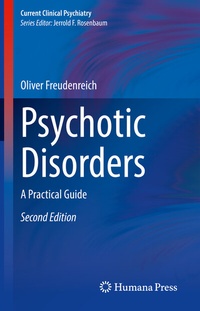
Psychotic Disorders
Description

This book provides clear and concise guidance for clinicians when they encounter a patient with psychosis, starting with the medical work-up to arrive at a diagnosis and ending with the comprehensive care for patients with established schizophrenia. It covers the optimal use of medications (emphasizing safe use) but also addresses other treatment approaches (psychological treatments, rehabilitation) and the larger societal context of care, including how to work effectively in complex systems. It uniquely condenses the literature into teaching points without simplifying too much, effectively serving as a learning tool for trainees and professionals. For this second edition, the book was extensively updated and its content expanded, with new figures as well. Each chapter begins with an initial summary and includes Tips and Key Points in text boxes. Each chapter also includes links to external websites and additional readings. The book contains clinical and practical wisdom for clinicians who are treating real patients at the front lines, setting it apart from all other texts.
Psychotic Disorders
is an excellent resource for medical students, early career professionals such as trainees and fellows, and related clinicians seeking additional training and resources, including those in psychiatry, psychology, neurology, and all others.
More details
Other editions
Additional editions
Person
Oliver Freudenreich, MD, FACLP
Associate Professor of Psychiatry
Harvard Medical School
Co-Director, Massachusetts General Hospital Schizophrenia Clinical and Research Program
Massachusetts General Hospital
Boston, Massachusetts
Content
Psychotic signs and symptoms.- Psychosis interview.- Delirium.- Drug-induced psychosis.- Secondary schizophrenia.- Psychiatric differential diagnosis of psychosis.- Schizophrenia-spectrum disorders.- Diagnosing schizophrenia - clinical approach.- Emergency management of acute psychosis.- Phase-specific treatment of schizophrenia.- Antipsychotics - overview.- Antipsychotics - motor side effects.- Antipsychotics - non-motor side effects.- Antipsychotics - clinical effectiveness.- Ancillary medications.- Drug interactions.- Polypharmacy.- Psychological treatments - the patient.- Psychological treatments - the family.- Psychiatric rehabilitation.- Medical morbidity and mortality.- HIV/AIDS and serious mental illness.- Dual diagnosis.- Nicotine dependence.- Refractory psychosis and clozapine.- Negative symptoms.- Cognition in schizophrenia.- Depression and suicide.- Illness insight and medication adherence.- Forensic aspects of schizophrenia care.- Social aspects of schizophrenia care.
