

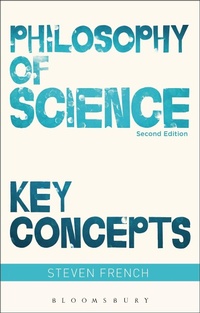
Philosophy of Science: Key Concepts
2nd Edition
Published on 28. January 2016
240 pages
978-1-4742-4526-5 (ISBN)
Description

Science has made a huge impact on human society over hundred years, but how does it work? How do scientists do the things they do? How do they come up with the theories? How do they test them? How do they use these theories to explain phenomena? How do they draw conclusions from them about how the world might be?
Now updated, this second edition of Philosophy of Science: Key Concepts looks at each of these questions and more. Taking in turn the fundamental theories, processes and views lying at the heart of the philosophy of science, this engaging introduction illuminates the scientific practice and provides a better appreciation of how science actually works. It features:
- Chapters on discovery, evidence, verification and falsification, realism and objectivity
- Accessible overviews of work of key thinkers such as Galileo, Einstein and Mullis
- A new chapter on explanation
- An extended range of easy-to-follow and contemporary examples to help explain more technical ideas
- Study exercises, an annotated bibliography and suggestions of Where to Go Next
Succinct and approachable, Philosophy of Science: Key Concepts outlines some of the most central and important scientific questions, problems and arguments without assuming prior knowledge of philosophy. This enjoyable introduction is the perfect starting point for anyone looking to understand how and why science has shaped and changed our view of the world.
Now updated, this second edition of Philosophy of Science: Key Concepts looks at each of these questions and more. Taking in turn the fundamental theories, processes and views lying at the heart of the philosophy of science, this engaging introduction illuminates the scientific practice and provides a better appreciation of how science actually works. It features:
- Chapters on discovery, evidence, verification and falsification, realism and objectivity
- Accessible overviews of work of key thinkers such as Galileo, Einstein and Mullis
- A new chapter on explanation
- An extended range of easy-to-follow and contemporary examples to help explain more technical ideas
- Study exercises, an annotated bibliography and suggestions of Where to Go Next
Succinct and approachable, Philosophy of Science: Key Concepts outlines some of the most central and important scientific questions, problems and arguments without assuming prior knowledge of philosophy. This enjoyable introduction is the perfect starting point for anyone looking to understand how and why science has shaped and changed our view of the world.
More details
Edition
2nd edition
Language
English
Place of publication
London
United Kingdom
Publishing group
Bloomsbury Publishing PLC
Target group
College/higher education
ISBN-13
978-1-4742-4526-5 (9781474245265)
Copyright in bibliographic data and cover images is held by Nielsen Book Services Limited or by the publishers or by their respective licensors: all rights reserved.
Schweitzer Classification
Other editions
Additional editions
Steven French
Philosophy of Science: Key Concepts
Book
01/2016
2nd Edition
Bloomsbury Academic
€32.50
Shipment within 15-20 days
Person
Steven French is Professor of the Philosophy of Science at the University of Leeds. He is the author of The Structure of the World (OUP 2014) and numerous other books and articles on the philosophy of science. He is also Co-Editor of The British Journal for the Philosophy of Science and of The Bloomsbury Companion to the Philosophy of Science.
Content
1. Introduction
2. Discovery
3. Heuristics
Exercise 1
4. Explanation
5. Justification
Exercise 2
6. Observation
7. Experiment
Exercise 3
8. Realism
9. Anti-Realism
Exercise 4
10. Independence
11. Gender Bias
Exercise 5
12. Where we've been and Where to Go for More?
Further Reading
Notes
Index
2. Discovery
3. Heuristics
Exercise 1
4. Explanation
5. Justification
Exercise 2
6. Observation
7. Experiment
Exercise 3
8. Realism
9. Anti-Realism
Exercise 4
10. Independence
11. Gender Bias
Exercise 5
12. Where we've been and Where to Go for More?
Further Reading
Notes
Index
