

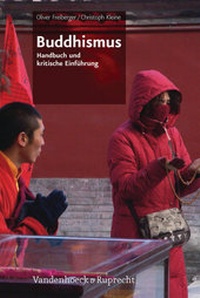
Buddhismus
Handbuch und kritische Einführung
2nd Edition
Published on 11. March 2015
536 pages
978-3-647-50005-8 (ISBN)
Description

Die Autoren bieten eine aktuelle Einführung in die Geschichte und die vielfältigen Lehren und Praktiken des Buddhismus. Es gibt einen Überblick zur historischen Entwicklung des Buddhismus in Asien und dem Westen und behandelt im Anschluss diverse Themenkomplexe: buddhistische Sprachen und Texte, Weltbilder, religiöse Praxis, Sozialformen, Staat und Politik, Ökonomie, Kunst und Architektur, Modernisierung und Globalisierung, sowie die Interaktion mit anderen Religionen. Zahlreiche Beispiele illustrieren die Vielfalt der buddhistischen Haltungen zu diesen Fragen in Geschichte und Gegenwart. Dabei wird deutlich, dass das im Westen verbreitete positive Bild vom Buddhismus als einer friedfertigen, weltabgewandten und meditativen Erleuchtungslehre große und wichtige Bereiche dieser Religion ausblendet, z.B. die gesamte nicht-meditative religiöse Praxis, interne Konflikte aller Art, wirtschaftliche und politische Interessen, Mission, die Verfolgung Andersgläubiger oder die religiöse Rechtfertigung von Krieg und Gewalt. Oliver Freiberger und Christoph Kleine versuchen, anhand von Beispielen die reale und faszinierende Komplexität des Buddhismus anzudeuten und damit das Interesse auch für weniger populäre, aber nicht minder bedeutsame Facetten dieser Religion zu wecken. Es bietet eine leserfreundliche und informative Einführung, die den aktuellen Stand der Forschung repräsentiert.
In this volume the authors offer a modern introduction to the history and multilayered teachings and practices of Buddhism. It provides an overview of the historical development of Buddhism in both Asia and the Western hemisphere as well as treating a number of other subjects: the Buddhistic language and texts, its worldview, religious practices, social forms, views of government and politics, economics, art, architecture, modernisation and globalisation as well as its interactions with other religions. Numerous examples serve to illustrate the diversity of Buddhist tenets on matters of history and modern life. The volume shows that the widely held positive attitude in the West twoard Buddhism as teaching a peace-loving, detached and meditative enlightenment ignores many of the major and important areas of this world religion, for example, its large-scale nonmeditative religious practices, its internal conflicts, its economic and political interests, its history of persecuting those who dissent or its religious justification of war and aggression. Oliver Freiberger and Christoph Kleine provide many examples to illustrate the fascinating complexity of Buddhism and to arouse our interest in less popular, but no less important, facets of this religion. This is an easy-to-read introduction to the present state of research.
In this volume the authors offer a modern introduction to the history and multilayered teachings and practices of Buddhism. It provides an overview of the historical development of Buddhism in both Asia and the Western hemisphere as well as treating a number of other subjects: the Buddhistic language and texts, its worldview, religious practices, social forms, views of government and politics, economics, art, architecture, modernisation and globalisation as well as its interactions with other religions. Numerous examples serve to illustrate the diversity of Buddhist tenets on matters of history and modern life. The volume shows that the widely held positive attitude in the West twoard Buddhism as teaching a peace-loving, detached and meditative enlightenment ignores many of the major and important areas of this world religion, for example, its large-scale nonmeditative religious practices, its internal conflicts, its economic and political interests, its history of persecuting those who dissent or its religious justification of war and aggression. Oliver Freiberger and Christoph Kleine provide many examples to illustrate the fascinating complexity of Buddhism and to arouse our interest in less popular, but no less important, facets of this religion. This is an easy-to-read introduction to the present state of research.
More details
Other editions
Additional editions
Book
03/2015
2nd Edition
Vandenhoeck & Ruprecht
€79.00
Shipment within 7-9 days
Persons
Content
- Cover
- Title Page
- Copyright
- Table of Contents
- Body
- Zum Geleit
- Einleitung: Das Studium des Buddhismus
- Hinweise zu Umschrift und Aussprache fremdsprachlicher Wörter
- Kapitel 1
- Historischer Überblick
- 1.1 Der Buddhismus in Südasien
- 1.1.1 Der zeitgeschichtliche Hintergrund
- 1.1.2 Das Leben des Buddha
- 1.1.3 Die Ausbreitung des Buddhismus in Südasien
- 1.1.4 Sri Lanka
- 1.1.5 Buddhismus in Indien heute
- 1.2 Der Buddhismus in Südostasien
- 1.2.1 Birma (Myanmar)
- 1.2.2 Kambodscha
- 1.2.3 Thailand
- 1.2.4 Laos
- 1.2.5 Vietnam
- 1.2.6 Der Buddhismus auf dem indonesischen Archipel und der malaiischen Halbinsel
- 1.3 Der Buddhismus in Zentralasien
- 1.3.1 Buddhismus entlang der Seidenstraße
- 1.3.2 Buddhismus in Tibet
- 1.4 Der Buddhismus in Ostasien
- 1.4.1 Der Buddhismus in China
- 1.4.2 Der Buddhismus in Taiwan
- 1.4.3 Der Buddhismus in Korea
- 1.4.4 Der Buddhismus in Japan
- 1.5 Der Buddhismus außerhalb Asiens
- Kapitel 2
- Sprachen und Texte
- 2.1 Sprache(n)
- 2.2 Texte
- 2.2.1 Buchkult
- 2.2.2 Gibt es einen buddhistischen Kanon?
- 2.2.3 Buddhistische Literatur in Ostasien
- 2.2.4 Buddhistische Literatur in Tibet
- 2.2.5 Buddhistische Literatur in Süd- und Südostasien
- Kapitel 3
- Buddhistische Weltbilder
- 3.1 Grundlehren des frühen Buddhismus
- 3.2 Lehren des frühen Mahayana-Buddhismus
- 3.3 Mahayana-Philosophie
- 3.4 Die Lehren des esoterischen Buddhismus oder Vajrayana
- Kapitel 4
- Ethik und Moral im Buddhismus
- 4.1 Grundlagen der frühbuddhistischen Ethik
- 4.2 Die Ethik des Mahayana-Buddhismus
- 4.3 Herausforderungen an die buddhistische Ethik in der modernen Welt
- Kapitel 5
- Religiöse Praxis
- 5.1 Meditation
- 5.1.1 Allgemeines
- 5.1.2 Meditation im Pali-Buddhismus
- 5.1.3 Meditation im Mahayana-Buddhismus
- 5.1.4 Meditation im tantrischen Buddhismus
- 5.2 Askese und Selbstkasteiung
- 5.2.1 Die Einstellung der frühen Buddhisten zu Askese und Selbstkasteiung
- 5.2.2 Askese in Ostasien
- 5.2.3 Extreme Askese: Selbstkasteiung, Selbstverstümmelung, Selbstopfer
- 5.3 Ritual
- 5.3.1 Zeremonien des Ordens
- 5.3.2 Jahreszeitliche Feste in Sri Lanka und Südostasien
- 5.3.3 Der buddhistische Festkalender in Ostasien
- 5.3.4 Staatsriten in Japan und Tibet
- 5.3.5 Devotionale Praxis
- 5.3.6 Pilgerreisen, heilige Stätten, sakrale Topographie
- 5.3.7 Nutzbringende Rituale für Jedermann
- Kapitel 6
- Die Akteure des Buddhismus Mönche, Nonnen, Laien und andere Buddhisten
- 6.1 Die Institution des Sa?gha
- 6.1.1 Der Sa?gha als Konzept
- 6.1.2 Der Sa?gha als soziale Gemeinschaft
- 6.1.3 Norm und Praxis
- 6.1.4 Exkurs: Die Debatte um die Wiedereinführung des Nonnenordens
- 6.2 Laien und religiöse Spezialisten
- Kapitel 7
- Schulen, Orden und Sekten
- 7.1 Schulen des indischen Buddhismus
- 7.1.1 Theravada und die anderen Mainstream-Schulen
- 7.1.2 Philosophische Schulen
- 7.2 Die Schulen und Orden des ostasiatischen Buddhismus
- 7.2.1 Sanlun zong (Jap. Sanronshu), die »Schule der Drei Abhandlungen«
- 7.2.2 Faxiang zong (Jap. Hossoshu), die »Schule der Erscheinungsformen der Gegebenheiten« bzw. Yogacara?/?Vijñanavada
- 7.2.3 Jingtu zong (Jap. Jodoshu), die »Schule des Reinen Landes«
- 7.2.4 Huayan zong (Jap. Kegonshu), die »Schule des Buddhavata?saka-sutra«
- 7.2.5 Lüzong (Jap. Risshu), die »Vinaya-Schule«
- 7.2.6 Chanzong (Jap. Zenshu), die »Meditations-Schule«
- 7.2.7 Tiantai zong (Jap. Tendaishu), die »Schule vom (Berg) Tiantai«
- 7.2.8 Mizong (Jap. Misshu/Mikkyo), die »esoterische Schule« bzw. Zhenyan zong (Jap. Shingonshu), die »Schule der Wahren Worte«
- 7.3 Schulen des tibetischen Buddhismus
- 7.3.1 Nyingmapa (rÑi?-ma-pa)
- 7.3.2 Sakyapa (Sa-skya-pa)
- 7.3.3 Kagyüpa (bKa'-brgyud-pa)
- 7.3.4 Kadampa (bKa'-gdams-pa) und Gelugpa (dGe-lugs-pa)
- 7.4 Deviante und marginalisierte Bewegungen und Gemeinschaften
- Kapitel 8
- Buddhismus, Politik und Ökonomie
- 8.1 Staat und Politik
- 8.2 Ökonomie
- Kapitel 9
- Kunst und Architektur
- 9.1 Südasien
- 9.1.1 Stupas
- 9.1.2 Höhlenklöster
- 9.1.3 Die Kunstschulen von Mathura, Gandhara und Amaravati
- 9.1.4 Die Kunst der Gupta- und der Pala-Periode
- 9.1.5 Sri Lanka
- 9.2 Südostasien
- 9.2.1 Birma (Myanmar
- Burma)
- 9.2.2 Thailand
- 9.2.3 Kambodscha
- 9.2.4 Laos
- 9.2.5 Vietnam
- 9.3 Ostasien
- 9.3.1 Architektur
- 9.3.2 Malerei, Kalligraphie und Buchkunst
- 9.3.3 Plastik
- 9.4 Tibet
- Kapitel 10
- Buddhismus im Rahmen von Modernisierung und Globalisierung
- 10.1 Buddhistischer Modernismus in Sri Lanka
- 10.2 Buddhismus und Moderne in Ostasien
- 10.3 Globaler und engagierter Buddhismus
- Kapitel 11
- Buddhistische Mission und die Interaktion mit anderen Religionen
- 11.1 Gibt es eine buddhistische Mission?
- 11.1.1 Südasien
- 11.1.2 Zentralasien
- 11.1.3 Ostasien
- 11.1.4 Südostasien
- 11.1.5 Mission im »Westen«
- 11.2 Die Interaktion mit anderen Religionen
- 11.2.1 Eine Religion mit Neigung zum Synkretismus?
- 11.2.2 Buddhismus und indigene Religionen
- 11.2.3 Buddhismus und Brahmanismus/Hinduismus
- 11.2.4 Buddhismus und Jinismus
- 11.2.5 Buddhismus und Konfuzianismus
- 11.2.6 Buddhismus und Daoismus
- 11.2.7 Buddhismus und Christentum
- 11.2.8 Buddhismus und Islam
- Kapitel 12
- Neun beliebte Vorurteile und populäre Irrtümer über den Buddhismus
- Hinweise zur Lektüre
- Register
