

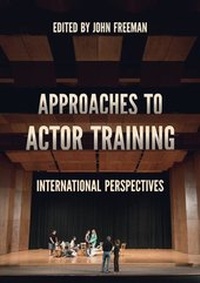
Approaches to Actor Training
Description

This insightful and practically-focused collection brings together different approaches to actor training from professionals based at universities and conservatoires in the UK, the US and Australia. Exploring the cultural and institutional differences which affect actor training, and analysing developments in the field today, it addresses a range of different approaches, from Stanislavski's System to contemporary immersive theatre. With hands-on focus from some of the world's leading programmes, and attention paid to ethical control, consent and safe practice, this book sees expert tutors exploring pathways to sustainable 21st century careers.
Designed for tutors, students and practitioners, Approaches to Actor Training examines what it means to train as an actor, what actors-in-training can expect from their programmes of study and how the road to professional accomplishment is mapped and travelled.
More details
Other editions
Additional editions
Person
John Freeman is a Fellow of the RSA and has occupied professorial and consultancy posts at UK and Australian universities; in addition to his academic roles at the University of Huddersfield, UK, and the University of Notre Dame, Australia, he is a Director at Motorvate UK, a not-for-profit organisation with a focus on adult education, employability and social inclusion.
Content
1. Perspectives and Provocations, Prescriptions and Principles; John Freeman.- 2. WAWPT: Whole Actor, Whole Person Training: Designing a holistic actor training programme for individual career longevity and wellbeing; Andrea L Moor.- 3. Being Human; Adrian James.- 4. All Those Words: Why bother with all those old plays?; Annie Tyson.- 5. What Are You Saying? An Approach to Teaching Text in an Era of Language Loss; Laura Wayth.- 6. Mind the Gap: Gong Feng Shui and the Missing Teeth (Ma); Robert Draffin.- 7. The British Tradition in Acting Shakespeare: Challenges to teaching the Acting of Shakespeare in a UK Conservatoire in the 21st century; Stephen Simms.- 8. An Actor's World: Of People, Space, Time and Text; Jeff Janisheski.- 9. Approaches to Acting and Interacting in Immersive and Interactive Contexts; Klaus Kruse.- 10. Yoga in a Circle: Actor Training Beyond Borders; Diane M. Sadak.- 11. The Architecture of Action: Late Stanislavski in Contemporary Practice; Hugh O'Gorman.- 12. Standing on the Outside Looking In; Michael McCall.- 13. An Eye on the Exit: Actor Training in a Liberal Arts Environment. Ellen Margolis.

