

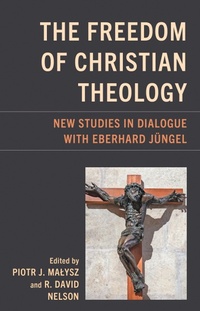
The Freedom of Christian Theology
New Studies in Dialogue with Eberhard JueNgel
Lexington Books/Fortress Academic (Publisher)
1st Edition
Published on 15. December 2024
282 pages
978-1-9787-1342-0 (ISBN)
Description

Eberhard Jüngel (1934-2021) belongs to the most creative, wide-ranging, rigorous, and demanding voices in twentieth-century Protestant theology. Over a long and distinguished career, Jüngel grappled with topics such as revelation, responsible talk about God, God's triunity, Christology, the nature of theological language, analogy, divine and human freedom, love, atheism, and theological approaches to the state. In all this, he had followed, perceptively yet critically, in the footsteps not only of Martin Luther, but also of G. W. F. Hegel, Dietrich Bonhoeffer, Rudolf Bultmann, Martin Heidegger, and Karl Barth.
Despite the diversity of their own backgrounds and interests, the contributors to The Freedom of Christian Theology: New Studies in Dialogue with Eberhard Jüngel all share the conviction that Jüngel's legacy lends itself to the same kind of constructive engagement that Jüngel himself practiced. The essays offered here bring Jüngel's many-sided contributions to bear on the theological, philosophical, and social challenges of today. Each is an attempt to grapple, in the spirit of Eberhard Jüngel, with the mysteries of today's world, which no less demand analytical care and penetrating insight. As an ongoing conversation with Jüngel, the essays model the freedom and joy of Christian theology to reflect on the world's complexities out of the riches of the Christian tradition.
Despite the diversity of their own backgrounds and interests, the contributors to The Freedom of Christian Theology: New Studies in Dialogue with Eberhard Jüngel all share the conviction that Jüngel's legacy lends itself to the same kind of constructive engagement that Jüngel himself practiced. The essays offered here bring Jüngel's many-sided contributions to bear on the theological, philosophical, and social challenges of today. Each is an attempt to grapple, in the spirit of Eberhard Jüngel, with the mysteries of today's world, which no less demand analytical care and penetrating insight. As an ongoing conversation with Jüngel, the essays model the freedom and joy of Christian theology to reflect on the world's complexities out of the riches of the Christian tradition.
More details
Series
Language
English
Place of publication
New York
United States
Publishing group
Bloomsbury Publishing Plc
Target group
Professional and scholarly
File size
0,44 MB
ISBN-13
978-1-9787-1342-0 (9781978713420)
Copyright in bibliographic data and cover images is held by Nielsen Book Services Limited or by the publishers or by their respective licensors: all rights reserved.
Schweitzer Classification
Other editions
Additional editions
Piotr J. Malysz | R. David Nelson
The Freedom of Christian Theology
New Studies in Dialogue with Eberhard Juengel
Book
02/2025
Lexington Books/Fortress Academic
€119.40
Shipment within 3-4 weeks
Persons
Piotr J. Malysz is associate professor of divinity at Samford University's Beeson Divinity School in Birmingham, Alabama.
R. David Nelson is Director of Baylor University Press.
R. David Nelson is Director of Baylor University Press.
Content
Introduction
Piotr J. Malysz and R. David Nelson
Chapter One: The Justification Event: A Phenomenological Supplement to Eberhard Jüngel's Doctrine of Justification
Scott Bailey
Chapter Two: "God's Being is in Coming": Eberhard Jüngel's Demythologized Doctrine of the Trinity
David Bruner
Chapter Three: For the Beauty of the Earth?: On Eberhard Jüngel's Theological Aesthetics
Deborah Casewell
Chapter Four: Different Expressions of Justice in Salvation and Providence: Eberhard Jüngel on Theological Anthropology and Justification-with Help from Thomas Aquinas
David C. Chao
Chapter Five: Jüngel's Spiritually light Pneumatology: Reflections on his "Triptych" on the Holy Spirit
Mark W. Elliott
Chapter Six: Jüngel's Concept of Analogy: An Apologia for the Humanity of God
Paolo Gamberini, SJ
Chapter Seven: Metaphorical Truth and Christian Theology: Eberhard Jüngel on the Language of Faith
Paul R. Hinlicky
Chapter Eight: Revisiting Jüngel on the God/World Relation: Creation, Incarnation, and the Doctrine of Analogy
Christopher R.J. Holmes
Chapter Nine: The (Hi)story of God: The Function of Narrative in Eberhard Jüngel's Divine Ontology
C. M. Howell
Chapter Ten: The Trinity and Reality: Trinitarian Doctrine between Grammar and Value
Piotr J. Malysz
Chapter Eleven: Theory and Praxis in Theology "after" Karl Barth: Eberhard Jüngel and Helmut Gollwitzer on Socialism and Solidarity
W. Travis McMaken
Chapter Twelve: John Webster's Contribution to the Reception of Jüngel's Theology in the Anglophone World
R. David Nelson
Chapter Thirteen: Evoking a Vocative Anthropology: Jüngel and Caputo on Political Pneumatology
B. Keith Putt
Chapter Fourteen: The Staurocentric Logic of Eberhard Jüngel: Pneumatology and Ecclesiology
Kathryn L. Reinhard
Chapter Fifteen: Jüngel's Contribution to a Christian Hatred of Death: An Ecumenical Engagement
Robert Saler
Chapter Sixteen: The Quality of Christian Life and Theology: Some Remarks on Freedom
Philip G. Ziegler
Appendix: The Humanity of God and the Humanity of Humans: Theses on Eberhard Jüngel's Theological Anthropology
Christoph Schwöbel
About the Contributors
Piotr J. Malysz and R. David Nelson
Chapter One: The Justification Event: A Phenomenological Supplement to Eberhard Jüngel's Doctrine of Justification
Scott Bailey
Chapter Two: "God's Being is in Coming": Eberhard Jüngel's Demythologized Doctrine of the Trinity
David Bruner
Chapter Three: For the Beauty of the Earth?: On Eberhard Jüngel's Theological Aesthetics
Deborah Casewell
Chapter Four: Different Expressions of Justice in Salvation and Providence: Eberhard Jüngel on Theological Anthropology and Justification-with Help from Thomas Aquinas
David C. Chao
Chapter Five: Jüngel's Spiritually light Pneumatology: Reflections on his "Triptych" on the Holy Spirit
Mark W. Elliott
Chapter Six: Jüngel's Concept of Analogy: An Apologia for the Humanity of God
Paolo Gamberini, SJ
Chapter Seven: Metaphorical Truth and Christian Theology: Eberhard Jüngel on the Language of Faith
Paul R. Hinlicky
Chapter Eight: Revisiting Jüngel on the God/World Relation: Creation, Incarnation, and the Doctrine of Analogy
Christopher R.J. Holmes
Chapter Nine: The (Hi)story of God: The Function of Narrative in Eberhard Jüngel's Divine Ontology
C. M. Howell
Chapter Ten: The Trinity and Reality: Trinitarian Doctrine between Grammar and Value
Piotr J. Malysz
Chapter Eleven: Theory and Praxis in Theology "after" Karl Barth: Eberhard Jüngel and Helmut Gollwitzer on Socialism and Solidarity
W. Travis McMaken
Chapter Twelve: John Webster's Contribution to the Reception of Jüngel's Theology in the Anglophone World
R. David Nelson
Chapter Thirteen: Evoking a Vocative Anthropology: Jüngel and Caputo on Political Pneumatology
B. Keith Putt
Chapter Fourteen: The Staurocentric Logic of Eberhard Jüngel: Pneumatology and Ecclesiology
Kathryn L. Reinhard
Chapter Fifteen: Jüngel's Contribution to a Christian Hatred of Death: An Ecumenical Engagement
Robert Saler
Chapter Sixteen: The Quality of Christian Life and Theology: Some Remarks on Freedom
Philip G. Ziegler
Appendix: The Humanity of God and the Humanity of Humans: Theses on Eberhard Jüngel's Theological Anthropology
Christoph Schwöbel
About the Contributors
