

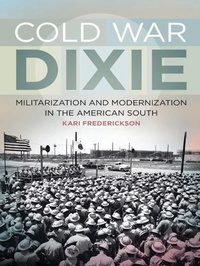
Cold War Dixie
Description

Focusing on the impact of the Savannah River Plant (SRP) on the communities it created, rejuvenated, or displaced, this book explores the parallel militarization and modernization of the Cold War-era South. The SRP, a scientific and industrial complex near Aiken, South Carolina, grew out of a 1950 partnership between the Atomic Energy Commission and the DuPont Corporation and was dedicated to producing materials for the hydrogen bomb. Kari Frederickson shows how the needs of the expanding national security state, in combination with the corporate culture of DuPont, transformed the economy, landscape, social relations, and politics of this corner of the South. In 1950, the area comprising the SRP and its surrounding communities was primarily poor, uneducated, rural, and staunchly Democratic; by the mid-1960s, it boasted the most PhDs per capita in the state and had become increasingly middle class, suburban, and Republican.
The SRP's story is notably dramatic; however, Frederickson argues, it is far from unique. The influx of new money, new workers, and new business practices stemming from Cold War-era federal initiatives helped drive the emergence of the Sunbelt. These factors also shaped local race relations. In the case of the SRP, DuPont's deeply conservative ethos blunted opportunities for social change, but it also helped contain the radical white backlash that was so prominent in places like the Mississippi Delta that received less Cold War investment.
More details
Other editions
Additional editions
Person
Content
- Cover Page
- Title Page
- Copyright Page
- Dedication
- Contents
- List of Illustrations
- Acknowledgments
- Introduction
- One. "This Most Essential Task": The Decision to Build the Super
- Two. A Varied Landscape: Geography and Culture in the Savannah River Valley
- Three. "A Land Doomed and Damned": The Costs of Militarization
- Four. "Bigger'n Any Lie": Building the Bomb Plant
- Five. Rejecting the Garrison State: National Priorities and Local Limitations
- Six. "Better Living": Life in a Cold War Company Town
- Seven. Shifting Landscapes: Politics and Race in a Cold War Community
- Epilogue
- Notes
- Bibliography
- Index
