

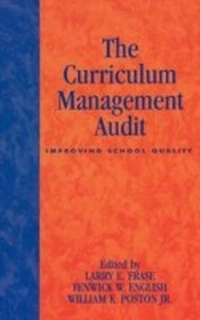
The Curriculum Management Audit
Improving School Quality
1st Edition
Published on 20. September 2000
328 pages
978-1-4616-6350-8 (ISBN)
Description

To find more information about Rowman & Littlefield titles please visit us at www.rowmanlittlefield.com.
More details
Edition
1. Auflage
Language
English
Place of publication
New York
United States
Publishing group
Bloomsbury Publishing Plc
ISBN-13
978-1-4616-6350-8 (9781461663508)
Copyright in bibliographic data and cover images is held by Nielsen Book Services Limited or by the publishers or by their respective licensors: all rights reserved.
Schweitzer Classification
Other editions
Additional editions
Larry E. Frase | Fenwick W. English | William K. Poston Jr.
The Curriculum Management Audit
Improving School Quality
Book
09/2000
Rowman & Littlefield Publishers
€98.00
Shipment within 10-20 days
Persons
Edited by Larry E. Frase; Fenwick W. English and William K. Poston Jr.
Content
- Cover
- Title Page
- Copyright Page
- Table of Contents
- Introduction
- Overview
- Part I: History, Critics and Practical Compatibility of the Curriculum Management Audit and Total Quality Management
- Chapter 1. Standards and Assumptions of the Curriculum Management Audit
- Critical Assumptions of the Audit
- School Systems as Rational Organizations
- Explication of the Audit Standards
- What the Curriculum Management Audit Doesn't Advocate
- Chapter 2. Background and Criticisms of the Curriculum1 Audit and Total Quality Management
- Total Quality Management
- The Curriculum Management Audit
- Summary
- References
- Chapter 3. The Quality Fit
- Introduction
- Downey's Quality Fit Framework
- Deming's Profound Knowledge
- Deming's Fourteen Points
- The Curriculum Audit
- A Logical Connection and the Overlay of Quality
- First Prong: Quality Fit Framework
- Relationships
- Summary of the First Prong Analysis
- Second Prong: Deming's Profound Knowledge and Fourteen Points Overlay
- Summary of the Second Prong
- Summary and Recommendations
- Acknowledgements
- References
- Chapter 4. The History and Context of the Curriculum Audit
- Introduction
- Audits as External-Internal Eyes on School System Management
- School Accountability and the Audit
- The Impact of State Equity Trends
- State Agency Involvement in Curriculum Auditing: The Kentucky Experience
- National and International Use of the Audit
- Challenges for Second Generation Audits
- The Future of the Curriculum Audit
- References
- Part II: Curriculum Management Audit Standards and Procedures
- Chapter 5. Standard One: The Control Standard
- Introduction
- Standard One Defined
- Policy Focus: The First Step Toward Control
- Administrative Structure Focus: Providing for Control (Table of Organization/Job Descriptions/Stability)
- Planning Focus: A Third Step Toward Control
- Other Critical Aspects of Standard One
- Summary
- References
- Chapter 6. Standard Two: The Curriculum Standard
- Introduction
- Standard Two Criteria
- Questions Underlying Standard Two Analysis
- Data Sources for Standard Two Analysis
- Issues and Variables Related to Standard Two Analysis
- Typical Findings in Standard Two Analysis
- Recommendations to Enhance Standard Two Performance
- Summary
- References
- Chapter 7. Standard Three: The Connectivity and Equity Standard
- Introduction
- Standard Three Defined
- Connectivity and Consistency
- Connectivity and Equity
- Dimensions of Equity Analysis
- Equity Analysis Summation
- Connectivity and Staff Development
- Connectivity and Instructional Monitoring
- Standard Three Conclusions
- References
- Chapter 8. Standard Four: The Assessment Standard
- The Purpose of a School District Assessment Program
- Developing a District Assessment Program
- Components of an Assessment Program
- Using Other Student Test Data
- Determining Motivation Potential of the School: A Case Study
- Audits, Reviews, and Other Data Assessment Systems
- Audit Criteria for Judging the Quality of an Assessment Program
- References
- Chapter 9. Standard Five: The Productivity Standard
- Introduction
- Standard Five Criteria
- Data Sources for Standard Five Analysis
- Typical Findings in Standard Five Analysis
- Typical Recommendations for Standard Five Findings
- The Use of the Camera in Standard Five Data
- Standard Five Summary
- References
- Chapter 10. Preparing the Board, the District, and the Community for the Curriculum Audit
- Introduction
- Learning About the Audit
- Before the Audit
- After You Have Decided to Have an Audit
- During the Audit
- After the Site Visit
- Upon Receipt of the Final Report
- After the Audit
- Ongoing Public Relations and Communications Strategies
- Summary
- References
- Part III: The Curriculum Management Audit: Research Evidence and Superintendents Testimonials
- Chapter 11. Benefits of the Audit: The Superintendents Speak
- Introduction
- The Superintendents
- Chapter 12. A Follow-Up Study of Three School Districts
- Introduction
- Methodology
- Results of Implementation-Impact Survey
- Analysis of Research Questions
- Analysis by Categories
- Summary and Conclusions
- Implications for Funding Audits
- References
- About the Editors
- About the Authors
- Index
