

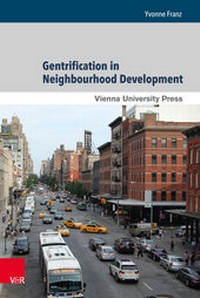
Gentrification in Neighbourhood Development
Case Studies from New York City, Berlin and Vienna
1st Edition
Published on 22. April 2015
289 pages
978-3-8470-0400-4 (ISBN)
Description

Diese Publikation zielt auf ein umfassendes Verständnis unterschiedlicher Stadterneuerungspraktiken, die sich auf die Erhaltung der baulichen Substanz beziehen, sowie Gentrification-Prozesse in New York City, Berlin und Wien ab. Dabei wird eine vergleichende Analyse von politischen Strategien und involvierten AkteurInnen angewendet, um regulierende und unterstützende Mechanismen auf der politischen und stadtplanerischen Ebene zu identifizieren. Diese Mechanismen ermöglichen die Entwicklung von kontextualisierten Parametern. Als Ergebnis dienen eine reflektierte Betrachtung von Gentrification und Empfehlungen, die auf einer stadtübergreifenden Ebene Entwicklungsleitlinien für den politischen Umgang mit Gentrification und dessen Rolle in der Stadtentwicklung aufzeigen.
This book aims at a comprehensive understanding of diverging urban rejuvenation practices and gentrification processes in New York City, Berlin and Vienna. Regulative and supportive mechanisms at policy and planning level have been identified through a comparative analysis of urban rejuvenation policies and actors' embeddedness. Those mechanisms enable the development of contextualised parameters that support projection attempts of future gentrification processes at the neighbourhood level. As a result, a reflective understanding of gentrification and policy recommendations are drawn at a general level. The recommendations refer to the political understanding of gentrification and its role in urban development. This analysis argues that cities should include gentrification as a driving force in urban policies. However, processes of gentrification require mediation and monitoring by public authorities who should be aware of the risk of social fragmentation. As a consequence, cities should move towards a social entrepreneurial city that moves beyond the simple distribution of financial resources and responsibilities and ensures social responsibility within the force field of ongoing neoliberal forces.
This book aims at a comprehensive understanding of diverging urban rejuvenation practices and gentrification processes in New York City, Berlin and Vienna. Regulative and supportive mechanisms at policy and planning level have been identified through a comparative analysis of urban rejuvenation policies and actors' embeddedness. Those mechanisms enable the development of contextualised parameters that support projection attempts of future gentrification processes at the neighbourhood level. As a result, a reflective understanding of gentrification and policy recommendations are drawn at a general level. The recommendations refer to the political understanding of gentrification and its role in urban development. This analysis argues that cities should include gentrification as a driving force in urban policies. However, processes of gentrification require mediation and monitoring by public authorities who should be aware of the risk of social fragmentation. As a consequence, cities should move towards a social entrepreneurial city that moves beyond the simple distribution of financial resources and responsibilities and ensures social responsibility within the force field of ongoing neoliberal forces.
More details
Other editions
Additional editions
Yvonne Franz
Gentrification in Neighbourhood Development
Case Studies from New York City, Berlin and Vienna
Book
04/2015
1st Edition
Brill Deutschland
€69.00
Shipment within 7-9 days
Content
- Intro
- Title Page
- Copyright
- Table of Contents
- Body
- A. Introduction: Urban Regeneration as the Key Driver of Competitive Cities
- 1. The Problem: City Embeddedness in Globalised Processes of Transformation
- Body
- Body
- 2. The Present State: Urban Development and Rejuvenation in the Current Academic Discourse
- 3. Closing of the Gap: Gentrification as a Steered Component of Urban Rejuvenation
- 4. The Analysis Approach: A Comparative Policy and Actor Analysis
- Body
- Body
- Body
- B. Assorted Theories, Terms and Concepts with Regard to Urban Rejuvenation Practices
- 5. The Approach of Urban Comparison
- 5.1 Similar Yet Different? The Nuances of Urban Terminology
- 5.2 Cycle Models of Urban Transformation
- 5.3 Existent Political Systems and Real Estate Economies
- 5.4 Evidence of Convergence and Divergence
- 6. The Concept of Gentrification
- 6.1 The Genesis of the Term "Gentrification"
- 6.2 Explanatory Concept of Gentrification
- 6.3 Current Gentrification Discourse and the Crisis of 'Gentrification'
- 6.4 Gentrification Revisited?
- 7. Bounded Rationality and the Role of Embeddedness in Urban Development
- C. From Urban Rejuvenation to Gentrification: Urban Planning Practices in New York, Vienna and Berlin
- 8. The Case Williamsburg-Brooklyn in New York City: A Neoliberal Approach To Urban Rejuvenation?
- 8.1 Location, History and the Current State of Gentrification and Urban Rejuvenation
- 8.2 The Political and Institutional Framework
- 8.2.1 The Macro-Micro Relationships
- 8.2.3 The Adaptive Component in Urban Planning Policies
- 8.2.4 Steering Gentrification Policies
- 8.2.5 Reflecting the Policy Analysis
- 8.3 Bounded Rational Choices of Actors Involved in Urban Rejuvenation Practices
- 8.3.1 The Embeddedness of Actors in Urban Rejuvenation Practices
- 8.3.2 Incorporated Values in Urban Rejuvenation Practices
- 8.3.3 The Bounded Rational Choice in Urban Rejuvenation Practices
- 8.3.4 Awareness of Gentrification Within Urban Rejuvenation Practices
- 8.3.5 Reflecting on the Actor Analysis
- 8.4 The Contextualised Interplay of Policies, Actors and Gentrification
- 9. The Case Mariahilf in Vienna: A Social Welfare State Approach To Urban Rejuvenation?
- 9.1 Location, History and the Current State of Gentrification and Urban Rejuvenation
- 9.2 The Political and Institutional Framework
- 9.2.1 The Macro-Micro Relationships
- 9.2.2 The Driving Forces Behind Urban Rejuvenation
- 9.2.3 The Adaptive Component in Urban Planning Policies
- 9.2.4 Steering Gentrification Policies
- 9.2.5 Reflecting the Policy Analysis
- 9.3 Bounded Rational Choices of Actors Involved in Urban Rejuvenation Practices
- 9.3.1 The Embeddedness of Actors in Urban Rejuvenation Practices
- 9.3.2 Incorporated Values in Urban Rejuvenation Practices
- 9.3.3 The Bounded Rational Choice in Urban Rejuvenation Processes
- 9.3.4 Awareness of Gentrification Within Urban Rejuvenation Practices
- 9.3.5 Reflecting on the Actor Analysis
- 9.4 The Contextualized Interplay of Policies, Actors and Gentrification
- 10. The Case Prenzlauer Berg in Berlin: An In-between Neoliberal and Social Welfare State Approach to Urban Rejuvenation?
- 10.1 Location, History and the Current State of Gentrification and Urban Rejuvenation
- 10.2 The Political and Institutional Framework
- 10.2.1 The Macro-Micro Relationships
- 10.2.2 Steering Gentrification
- 10.2.3 The Adaptive Component in Urban Planning Policies
- 10.2.4 Reflecting the Policy Analysis
- 10.3 Bounded Rational Choices of Actors Involved in Urban Rejuvenation Practices
- 10.3.1 The Embeddedness of Actors in Urban Rejuvenation Practices
- 10.3.2 Incorporated Values in Urban Rejuvenation Practices
- 10.3.3 The Bounded Rational Choice in Urban Rejuvenation Processes
- 10.3.4 Awareness of Gentrification within Urban Rejuvenation Practices
- 10.3.5 Reflecting on the Actor Analysis
- 10.4 The Contextualised Interplay of Policies, Actors and Gentrification
- D. Findings and Policy Recommendations
- 11. Future Necessities: The Role of Gentrification for Neighbourhood Transformation
- 12 Policy Recommendations
- E. Bibliography
- F. List of Tables
- G. List of Figures
- H. List of Maps
