

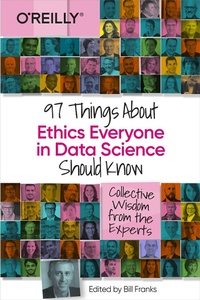
97 Things About Ethics Everyone in Data Science Should Know
Published on 6. August 2020
346 pages
978-1-4920-7263-8 (ISBN)
Description

Most of the high-profile cases of real or perceived unethical activity in data science arenâ??t matters of bad intent. Rather, they occur because the ethics simply arenâ??t thought through well enough. Being ethical takes constant diligence, and in many situations identifying the right choice can be difficult.
In this in-depth book, contributors from top companies in technology, finance, and other industries share experiences and lessons learned from collecting, managing, and analyzing data ethically. Data science professionals, managers, and tech leaders will gain a better understanding of ethics through powerful, real-world best practices.
Articles include:
- Ethics Is Not a Binary Conceptâ??Tim Wilson
- How to Approach Ethical Transparencyâ??Rado Kotorov
- Unbiased ≠ Fairâ??Doug Hague
- Rules and Rationalityâ??Christof Wolf Brenner
- The Truth About AI Biasâ??Cassie Kozyrkov
- Cautionary Ethics Talesâ??Sherrill Hayes
- Fairness in the Age of Algorithmsâ??Anna Jacobson
- The Ethical Data Storytellerâ??Brent Dykes
- Introducing Ethicizeâ?¢, the Fully AI-Driven Cloud-Based Ethics Solution!â??Brian Oâ??Neill
- Be Careful with "Decisions of the Heart"â??Hugh Watson
- Understanding Passive Versus Proactive Ethicsâ??Bill Schmarzo
More details
Other editions
Additional editions
Bill Franks
97 Things about Ethics Everyone in Data Science Should Know
Collective Wisdom from the Experts
Book
08/2020
O'Reilly
€47.00
Shipment within 15-20 days
Content
- Cover
- Copyright
- Table of Contents
- Preface
- Why Now?
- Ethics Are "Fuzzy"
- Take Ownership of Ethics!
- How the Book Is Organized
- O'Reilly Online Learning
- How to Contact Us
- Acknowledgments
- Part I. Foundational Ethical Principles
- Chapter 1. The Truth About AI Bias
- Cassie Kozyrkov
- Data and Math Don't Equal Objectivity
- What Is Algorithmic Bias?
- Datasets Have Human Authors
- This Is No Excuse to Be a Jerk
- Fairness in AI
- Fair and Aware
- Chapter 2. Introducing EthicizeT, the fully AI-driven cloud-based ethics solution!
- Brian T. O'Neill
- Chapter 3. "Ethical" Is Not a Binary Concept
- Tim Wilson
- Chapter 4. Cautionary Ethics Tales: Phrenology, Eugenics,?...and Data Science?
- Sherrill Hayes
- So What Did Phrenologists and Eugenicists Do?
- So What Was the Problem?
- What About Data Science?
- Conclusions
- Chapter 5. Leadership for the Future: How to Approach Ethical Transparency
- Rado Kotorov
- 1. Playing God
- 2. Moral Blinding
- How Should Companies Tackle Such Issues?
- Chapter 6. Rules and Rationality
- Christof Wolf Brenner
- Chapter 7. Understanding Passive Versus Proactive Ethics
- Bill Schmarzo
- What Is AI Ethics?
- The Ramifications of Unintended Consequences
- Defining the AI Utility Function
- Passive Ethics Versus Proactive Ethics
- Summary
- Chapter 8. Be Careful with "Decisions of the Heart"
- Hugh Watson
- Chapter 9. Fairness in the Age of Algorithms
- Anna Jacobson
- References
- Chapter 10. Data Science Ethics: What Is the Foundational Standard?
- Mario Vela
- Chapter 11. Understand Who Your Leaders Serve
- Hassan Masum
- Part II. Data Science and Society
- Chapter 12. Unbiased ? Fair: For Data Science, It Cannot Be Just About the Math
- Doug Hague
- Chapter 13. Trust, Data Science, and Stephen Covey
- James Taylor
- Listen First
- Extend Trust
- Clarify Expectations
- Confront Reality
- Create Transparency
- Deliver Results
- Practice Accountability
- Get Better
- Chapter 14. Ethics Must Be a Cornerstone of the Data Science Curriculum
- Linda Burtch
- Chapter 15. Data Storytelling: The Tipping Point Between Fact and Fiction
- Brent Dykes
- Chapter 16. Informed Consent and Data Literacy Education Are Crucial to Ethics
- Sherrill Hayes
- Chapter 17. First, Do No Harm
- Eric Schmidt
- Chapter 18. Why Research Should Be Reproducible
- Stuart Buck
- Chapter 19. Build Multiperspective AI
- Hassan Masum and Sébastien Paquet
- Chapter 20. Ethics as a Competitive Advantage
- Dave Mathias
- Chapter 21. Algorithmic Bias: Are You a Bystander or an Upstander?
- Jitendra Mudhol and Heidi Livingston Eisips
- Understanding Bystanderism
- Are You a Bystander or an Upstander?
- The Time to Be an Upstander Is Now
- Chapter 22. Data Science and Deliberative Justice: The Ethics of the Voice of "the Other"
- Robert J. McGrath
- Chapter 23. Spam. Are You Going to Miss It?
- John Thuma
- Chapter 24. Is It Wrong to Be Right?
- Marty Ellingsworth
- Chapter 25. We're Not Yet Ready for a Trustmark for Technology
- Hannah Kitcher and Laura James
- Part III. The Ethics of Data
- Chapter 26. How to Ask for Customers' Data with Transparency and Trust
- Rasmus Wegener
- Chapter 27. Data Ethics and the Lemming Effect
- Bob Gladden
- Chapter 28. Perceptions of Personal Data
- Irina Raicu
- Chapter 29. Should Data Have Rights?
- Jennifer Lewis Priestley
- Chapter 30. Anonymizing Data Is Really, Really Hard
- Damian Gordon
- Chapter 31. Just Because You Could, Should You? Ethically Selecting Data for Analytics
- Steve Stone
- Chapter 32. Limit the Viewing of Customer Information by Use Case and Result Sets
- Robert J. Abate
- Chapter 33. Rethinking the "Get the Data" Step
- Phil Bangayan
- Chapter 34. How to Determine What Data Can Be Used Ethically
- Leandre Adifon
- Chapter 35. Ethics Is the Antidote to Data Breaches
- Damian Gordon
- Chapter 36. Ethical Issues Are Front and Center in Today's Data Landscape
- Kenneth Viciana
- Chapter 37. Silos Create Problems-Perhaps More Than You Think
- Bonnie Holub
- Chapter 38. Securing Your Data Against Breaches Will Help Us Improve Health Care
- Fred Nugen
- Part IV. Defining Appropriate Targets & Appropriate Usage
- Chapter 39. Algorithms Are Used Differently than Human Decision Makers
- Rachel Thomas
- Chapter 40. Pay Off Your Fairness Debt, the Shadow Twin of Technical Debt
- Arnobio Morelix
- Chapter 41. AI Ethics
- Cassie Kozyrkov
- Levels of Distraction
- AI Automates the Ineffable
- AI Enables Thoughtlessness
- Am I Afraid of AI?
- Chapter 42. The Ethical Data Storyteller
- Brent Dykes
- Chapter 43. Imbalance of Factors Affecting Societal Use of Data Science
- Nenad Jukic
- Chapter 44. Probability-the Law That Governs Analytical Ethics
- Thomas Casey
- When Probability and Ethics Collide
- How Humans Try to Interject Ethics into Algorithms
- The Ethical Implications of Nonhuman Decision Making
- Chapter 45. Don't Generalize Until Your Model Does
- Michael Hind
- Chapter 46. Toward Value-Based Machine Learning
- Ron Bodkin
- An Example of the Importance of Values
- How to Proceed?
- Chapter 47. The Importance of Building Knowledge in Democratized Data Science Realms
- Justin Cochran
- Chapter 48. The Ethics of Communicating Machine Learning Predictions
- Rado Kotorov
- Chapter 49. Avoid the Wrong Part of the Creepiness Scale
- Hugh Watson
- Chapter 50. Triage and Artificial Intelligence
- Peter Bruce
- The Triage Nurse
- The Ranking of Records
- Ethics in Data Science
- Chapter 51. Algorithmic Misclassification-the (Pretty) Good, the Bad, and the Ugly
- Arnobio Morelix
- Chapter 52. The Golden Rule of Data Science
- Kris Hunt
- Chapter 53. Causality and Fairness-Awareness in Machine Learning
- Scott Radcliffe
- Chapter 54. Facial Recognition on the Street and in Shopping Malls
- Brendan Tierney
- Part V. Ensuring Proper Transparency & Monitoring
- Chapter 55. Responsible Design and Use of AI: Managing Safety, Risk, and Transparency
- Pamela Passman
- Security and Safety
- Ongoing Risk Management
- Transparency
- Conclusion
- Chapter 56. Blatantly Discriminatory Algorithms
- Eric Siegel
- Chapter 57. Ethics and Figs: Why Data Scientists Cannot Take Shortcuts
- Jennifer Lewis Priestley
- Chapter 58. What Decisions Are You Making?
- James Taylor
- Designing Ethical Decision-Making Systems
- Demonstrating Ethical Decision Making
- Chapter 59. Ethics, Trading, and Artificial Intelligence
- John Power
- Chapter 60. The Before, Now, and After of Ethical Systems
- Evan Stubbs
- Chapter 61. Business Realities Will Defeat Your Analytics
- Richard Hackathorn
- Conceiving
- Developing
- Deploying
- Governing
- Conclusion
- Chapter 62. How Can I Know You're Right?
- Majken Sander
- Data Literacy for Data Users
- Declare Your Work
- Chapter 63. A Framework for Managing Ethics in Data Science: Model Risk Management
- Doug Hague
- Data
- Math
- Performance
- Appropriate Use
- Monitoring
- Validation
- Summary
- Chapter 64. The Ethical Dilemma of Model Interpretability
- Grant Fleming
- Chapter 65. Use Model-Agnostic Explanations for Finding Bias in Black-Box Models
- Yiannis Kanellopoulos and Andreas Messalas
- Chapter 66. Automatically Checking for Ethics Violations
- Jesse Anderson
- Chapter 67. Should Chatbots Be Held to a Higher Ethical Standard than Humans?
- Naomi Arcadia Kaduwela
- Examples of Chatbots Inheriting Human Biases
- How Chatbots Perpetuate Human Biases
- Ways to Correct Biases in Chatbots
- Why Continuous Learning Is Required for Chatbots
- Chapter 68. "All Models Are Wrong." What Do We Do About It?
- Miroslava Walekova
- 1. Prevent
- 2. Rectify
- 3. Improve
- Chapter 69. Data Transparency: What You Don't Know Can Hurt You
- Janella Thomas
- Chapter 70. Toward Algorithmic Humility
- Marc Faddoul
- Part VI. Policy Guidelines
- Chapter 71. Equally Distributing Ethical Outcomes in a Digital Age
- Keyur Desai
- Chapter 72. Data Ethics-Three Key Actions for the Analytics Leader
- John F. Carter
- Chapter 73. Ethics: The Next Big Wave for Data Science Careers?
- Linda Burtch
- Chapter 74. Framework for Designing Ethics into Enterprise Data
- Keri McConnell
- Take a Tiered Approach
- Do Your Research
- Identify and Engage Your Stakeholders
- Be Agile
- Chapter 75. Data Science Does Not Need a Code of Ethics
- Dave Cherry
- Chapter 76. How to Innovate Responsibly
- Carole Piovesan
- Chapter 77. Implementing AI Ethics Governance and Control
- Steve Stone
- Adopt an AI Code of Ethical Conduct
- Stress Diversity in Hiring and Recruiting
- Ensure Compliance with an Ethical Review Board
- Establish Audit and Feedback Loops
- Chapter 78. Artificial Intelligence: Legal Liabilities amid Emerging Ethics
- Pamela Passman
- Data Privacy
- Cybersecurity
- Use for Lawful Purposes
- Chapter 79. Make Accountability a Priority
- Yiannis Kanellopoulos
- Chapter 80. Ethical Data Science: Both Art and Science
- Polly Mitchell-Guthrie
- Chapter 81. Algorithmic Impact Assessments
- Randy Guse
- Chapter 82. Ethics and Reflection at the Core of Successful Data Science
- Mike McGuirk
- Chapter 83. Using Social Feedback Loops to Navigate Ethical Questions
- Nick Hamlin
- Chapter 84. Ethical CRISP-DM: A Framework for Ethical Data Science Development
- Collin Cunningham
- Business Understanding
- Data Understanding
- Data Preparation
- Modeling
- Evaluation and Deployment
- Chapter 85. Ethics Rules in Applied Econometrics and Data Science
- Steven C. Myers
- Chapter 86. Are Ethics Nothing More than Constraints and Guidelines for Proper Societal Behavior?
- Bill Schmarzo
- Asimov's Three Laws of Robotics Ethics
- Summary
- Chapter 87. Five Core Virtues for Data Science and Artificial Intelligence
- Aaron Burciaga
- 1. Resilience
- 2. Humility
- 3. Grit
- 4. Liberal Education
- 5. Empathy
- Conclusion
- Part VII. Case Studies
- Chapter 88. Auto Insurance: When Data Science and the Business Model Intersect
- Edward Vandenberg
- Chapter 89. To Fight Bias in Predictive Policing, Justice Can't Be Color-Blind
- Eric Siegel
- Chapter 90. When to Say No to Data
- Robert J. Abate
- Chapter 91. The Paradox of an Ethical Paradox
- Bob Gladden
- Chapter 92. Foundation for the Inevitable Laws for LAWS
- Stephanie Seward
- Performance Expectation Methodology (PEM)
- LAWS Performance During PEM
- PEM: Continuous and Cyclical
- Extensions to PEM
- Chapter 93. A Lifetime Marketing Analyst's Perspective on Consumer Data Privacy
- Mike McGuirk
- Chapter 94. 100% Conversion: Utopia or Dystopia?
- Dave Cherry
- Chapter 95. Random Selection at Harvard?
- Peter Bruce
- "An art collection that could conceivably come our way..."
- Another Way
- Random Selection with Geographic Stratification
- Chapter 96. To Prepare or Not to Prepare for the Storm
- Kris Hunt
- Chapter 97. Ethics, AI, and the Audit Function in Financial Reporting
- Steven Mintz
- Chapter 98. The Gray Line
- Phil Broadbent
- Contributors
- Aaron Burciaga
- Andreas Messalas
- Anna Jacobson
- Arnobio Morelix
- Bill Schmarzo
- Bob Gladden
- Bonnie Holub
- Brendan Tierney
- Brent Dykes
- Brian T. O'Neill
- Carole Piovesan
- Cassie Kozyrkov
- Christof Wolf-Brenner
- Collin Cunningham
- Damian Gordon
- Dave Cherry
- Dave Mathias
- Doug Hague
- Edward Vandenberg
- Eric Schmidt
- Eric Siegel
- Evan Stubbs
- Fred Nugen
- Grant Fleming
- Hannah Kitcher
- Hassan Masum
- Heidi Livingston Eisips
- Hugh Watson
- Irina Raicu
- James Taylor
- Janella Thomas
- Jennifer Lewis Priestley
- Jesse Anderson
- Jitendra Mudhol
- John F. Carter
- John Power
- John Thuma
- Justin Cochran
- Kenneth Viciana
- Keri McConnell
- Keyur Desai
- Kris Hunt
- Laura James
- Leandre Adifon
- Linda Burtch
- Majken Sander
- Marc Faddoul
- Mario Vela
- Marty Ellingsworth
- Michael Hind
- Mike McGuirk
- Miroslava Walekova
- Naomi Arcadia Kaduwela
- Nenad Jukic
- Nick Hamlin
- Pamela Passman
- Peter Bruce
- Phil Bangayan
- Phil Broadbent
- Polly Mitchell-Guthrie
- Rachel Thomas
- Rado Kotorov
- Randy Guse
- Rasmus Wegener
- Richard Hackathorn
- Robert J. Abate
- Robert J. McGrath
- Ron Bodkin
- Scott Radcliffe
- Sébastien Paquet
- Sherrill W. Hayes
- Stephanie Seward
- Steve Stone
- Steven Mintz
- Steven C. Myers
- Stuart Buck
- Thomas Casey
- Tim Wilson
- Yiannis Kanellopoulos
- Index
- About the Editor
- Bill Franks
