

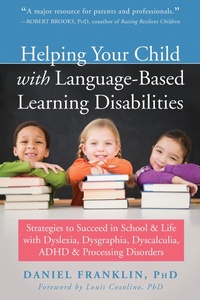
Helping Your Child with Language-Based Learning Disabilities
Description

Based in cutting-edge research in neuroscience, education, and the principles of attachment-based teaching, this important guide for parents offers tools and practices to help children transcend language-based learning difficulties, do better in school, and gain self-confidence and self-esteem.
If your child has a language-based learning difficulty¿such as dyscalculia, dyslexia, and auditory processing disorder¿they may have to work twice as hard to keep up with their peers in school. Your child may also have feelings of frustration, anger, sadness, or shame as a result of their learning differences. As a parent, it hurts to see your child struggle. But the good news is that there are proven-effective strategies you can learn to help your child be their best. This book will show you how.
Helping Your Child with Language-Based Learning Disabilities outlines an attachment-based approach to help your child succeed based in the latest...
More details
Other editions
Additional editions
Person
Daniel Franklin, PhD, holds a master's degree from the Harvard Graduate School of Education in reading, language, and learning disabilities, as well as a PhD in education from the University of California, Los Angeles. He has over thirty years of experience in education as a teacher, administrator, and consultant. Franklin is founder and president of Los Angeles, CA-based Franklin Educational Services, Inc., which provides individualized school support services for students of all ages and needs.
Content
- Intro
- Foreword
- Introduction
- Part I: An Overview of Language-Based Learning Difficulties
- Chapter 1: What Is a Language-Based Learning Difficulty?
- Chapter 2: Correctly Assessing Your Child
- Correctly Assessing Your Child
- Levels of Support in Public Schools
- Private Assessments
- Part II: Succeeding at School
- Chapter 4: Forming a Strong Bond with Your Child
- Step 1: Identify the Problem
- Step 2: Break the Cycle of Negative Feedback
- Step 3: Promote Emotional Regulation
- Step 4: Embrace the Value of Play
- Step 5: Adjust Homework and How Much You Help
- Step 6: Intervene During a Crisis
- Step 7: Stay Patient and Positive
- Chapter 5: Navigating School
- Establishing Good Relationships with Teachers and Administrators
- Establishing Good Habits in the Classroom
- Reconsidering How You Value Grades and Independent Learning
- Strategies for Promoting Active Learning
- Knowing When to Bring in a Tutor
- Chapter 6: Dyslexia: Unable to Read in a Reading World
- Creating a Culture of Language in Your Home
- How to Correct Reading Mistakes
- How to Encourage a Reluctant Reader
- How to Provide Reading Instruction to a Child with Dyslexia
- How to Develop Your Child's Vocabulary
- How to Teach Advanced Reading Skills
- How to Manage the Reading Demands of Homework
- Chapter 7: Dysgraphia: Unable to Write in a Writing World
- Creating a Culture of Writing in Your Home
- How to Develop Foundational Writing Skills
- How to Collaborate on Writing Assignments
- How to Write with Your Child
- Chapter 8: Dyscalculia: Unable to Compute in a STEM World
- Creating a Culture of Math in Your Home
- How to Make Math Enjoyable
- How to Introduce Metacognition (Thinking About Thinking)
- How to Supplement Math
- How to Help with Math Homework
- How to Manage Math Anxiety
- Chapter 9: Information Processing and Memory
- Nuts and Bolts of Memory
- Strategies to Help Your Child Process and Remember
- Why We Forget
- Chapter 10: Managing ADHD and Executive Functioning Deficits
- Getting (and Staying) Organized
- Getting Started on Homework
- Sustained Attention
- Regulating Emotion During Homework
- Chapter 11: Working with Your 11th or 12th Grader
- Managing Upper-Grade Demands
- The Importance of a Positive Mindset
- Part III: Succeeding at Life
- Chapter 12: Navigating Life Outside of School
- Promoting Social Skills
- Managing Anxiety and Stress
- Developing a Healthy Lifestyle
- Promoting Financial Responsibility
- Making the Most of Summer Vacation
