


Applications of Mass Spectrometry for the Provision of Forensic Intelligence
State-of-the-art and Perspectives
1st Edition
Published on 20. December 2023
302 pages
978-1-83767-192-2 (ISBN)
Description

Mass spectrometry is one of the most versatile analytical techniques due to the vast range of analytes that it can detect and quantify and, as such, for its contribution to a significant number of life science fields. The legal and forensics community has certainly benefited from this technique, which has been able to provide reliable evidence in court cases. Liquid Chromatography/Gas Chromatography-Mass Spectrometry (LC/GC-MS) still have a dominant role in the provision of forensic intelligence. However, in the past decade new and exciting MS-based techniques have emerged and are or have evolved to be at an operational deployment maturity, enabling either fast, ambient, non-destructive, or portable screening (or encompass all of these features).
In this book, developments of LC-MS and GC-MS based techniques are covered with respect to operational practice and new applications, accompanied by other MS-based techniques that are increasing forensic opportunities and that operate on a variety of evidence types. Whilst the underpinning working principles of each relevant mass spectrometry technique are summarised, each chapter primarily focuses on its implementation in criminal investigation and court cases. In the last chapters, this book additionally covers emerging MS technologies that are at the beginning of their operational implementation journey as well as niche applications outside the fields of traditional forensic science but with a clear potential to impact future investigations (forensics beyond the courtroom).
This book provides an up-to-date reference for the mass spectrometry-based tools that are currently available both as established and as emerging methods within forensic practice. It will help casework commissioning managers and forensic providers worldwide to make more informed decisions as to the forensic strategy and workflow when examining exhibits. It is also recommended to postgraduates and early career investigators with reference to the contribution that these techniques and methods could make if applied to classic forensic science practice.
In this book, developments of LC-MS and GC-MS based techniques are covered with respect to operational practice and new applications, accompanied by other MS-based techniques that are increasing forensic opportunities and that operate on a variety of evidence types. Whilst the underpinning working principles of each relevant mass spectrometry technique are summarised, each chapter primarily focuses on its implementation in criminal investigation and court cases. In the last chapters, this book additionally covers emerging MS technologies that are at the beginning of their operational implementation journey as well as niche applications outside the fields of traditional forensic science but with a clear potential to impact future investigations (forensics beyond the courtroom).
This book provides an up-to-date reference for the mass spectrometry-based tools that are currently available both as established and as emerging methods within forensic practice. It will help casework commissioning managers and forensic providers worldwide to make more informed decisions as to the forensic strategy and workflow when examining exhibits. It is also recommended to postgraduates and early career investigators with reference to the contribution that these techniques and methods could make if applied to classic forensic science practice.
More details
Series
Language
English
Place of publication
Cambridge
United Kingdom
Target group
Professional and scholarly
File size
5,81 MB
ISBN-13
978-1-83767-192-2 (9781837671922)
DOI
10.1039/9781837671922
Copyright in bibliographic data and cover images is held by Nielsen Book Services Limited or by the publishers or by their respective licensors: all rights reserved.
Schweitzer Classification
Other editions
Additional editions
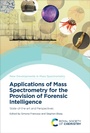
Simona Francese | Stephen Bleay
Applications of Mass Spectrometry for the Provision of Forensic Intelligence
State-of-the-art and Perspectives
E-Book
12/2023
1st Edition
Royal Society of Chemistry
€216.99
Available for download
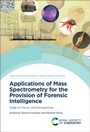
Simona Francese | Stephen Bleay
Applications of Mass Spectrometry for the Provision of Forensic Intelligence
State-of-the-art and Perspectives
Book
12/2023
Royal Society of Chemistry
€202.50
Shipment within 3-4 weeks
Persons
Simona Francese has been Professor of Forensic and Bioanalytical Mass Spectrometry at Sheffield Hallam University since 2018. She was appointed as a lecturer at Sheffield Hallam University in 2008 following a post doc at the University of Leeds in 2005 and post as Research Fellow at the Interdepartmental Centre of Mass Spectrometry, University of Florence, Italy (2005-2008). She teaches separation and detection techniques, analytical science and bioanalytical methods and is internationally recognised as a researcher in the area of Forensic and Bioanalytical Mass Spectrometry working closely with DSTL and West Yorkshire Police UK. She is also the deputy Head of the Centre for Mass Spectrometry Imaging and the Head of the Bioanalytical Research Group since 2020.
Dr Steve Bleay has been a Senior Lecturer in Forensic Science in the School of Applied Sciences at London South Bank University since January 2019. He specialises in fingermark enhancement and imaging, with interests in the interactions between trace evidence, the surface it is deposited on and the environment it is exposed to. Dr Bleay graduated in Materials Science from the University of Bath in 1988, obtaining a PhD from the same department in 1991. After 10 years working on stealth materials for the Defence Evaluation and Research Agency, he moved to the Home Office in 2003 and spent 15 years working on fingermark visualisation processes. He is one of the authors of the internationally recognised Home Office Fingermark Visualisation Manual and has over 50 publications in Forensic Science journals.
Dr Steve Bleay has been a Senior Lecturer in Forensic Science in the School of Applied Sciences at London South Bank University since January 2019. He specialises in fingermark enhancement and imaging, with interests in the interactions between trace evidence, the surface it is deposited on and the environment it is exposed to. Dr Bleay graduated in Materials Science from the University of Bath in 1988, obtaining a PhD from the same department in 1991. After 10 years working on stealth materials for the Defence Evaluation and Research Agency, he moved to the Home Office in 2003 and spent 15 years working on fingermark visualisation processes. He is one of the authors of the internationally recognised Home Office Fingermark Visualisation Manual and has over 50 publications in Forensic Science journals.
Content
The Application of Mass Spectrometry to Explosive Casework: Opportunities and Challenges;The Application of Isotope Ratio Mass Spectrometry to Forensic Casework;ICP MS and IRMS for Elemental and Isotopic Forensic Investigations;Mass Spectrometry Methods for Securing Road Traffic Drugs and Casework Toxicology Convictions;Gas Chromatography Mass Spectrometry Based Approaches for the Analysis of Seized Drugs;AccuTOF-DART for Rapid Presumptive Screening of Drugs of Abuse;Emerging Technologies: Use of Matrix Assisted Laser Desorption Ionisation Mass Spectrometry for the Analysis of Fingermark and Blood Evidence;Emerging Technologies: Use of Secondary Ion Mass Spectrometry for the Analysis of Forensic Evidence;Transferable Mass Spectrometry Methods - Sustainable Forensic Intelligence: Mass Spectrometry-based Methods for Monitoring Fentanyl-related Substances in Wastewater-based Epidemiology;Transferable Mass Spectrometry Methods: Examination of Authenticity in Artwork;Transferable Mass Spectrometry Methods: Forensics in Time: Palaeoproteomics
