

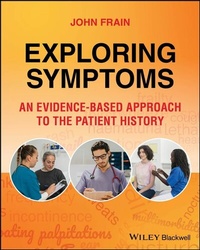
Exploring Symptoms
Description

Understand the relationship between disease and description with this invaluable guide
Correctly interpreting patient symptoms is one of the most critical components of medical diagnosis and treatment. Though each instance of any given disease will share features with others, each patient's experience is unique, and assessment of their condition depends on taking and interpreting an individual patient's history. Correct diagnosis and treatment decisions rely on a sound, evidence-based approach to this crucial clinical interaction.
Exploring Symptoms - An Evidence-based Approach to the Patient History offers a rigorous analysis of the complex relationship between symptoms and patient communication. Carefully connecting basic sciences such as anatomy and physiology with the development of symptoms in each body system, this book surveys evidence for how patients tend to experience and describe symptoms and how these descriptions can shape diagnosis and treatment. It's a must-have volume for students and clinicians looking to concretely improve patient outcomes.
Exploring Symptoms - An Evidence-based Approach to the Patient History readers will also find:
- Detailed discussion of patient thresholds for presenting symptoms to healthcare professionals
- Analysis of individual symptom epidemiology and its general expression at both the patient and population level
- An inclusive approach with concrete advice for addressing the needs of a diverse patient body
Exploring Symptoms - An Evidence-based Approach to the Patient History is ideal for undergraduate and postgraduate students, as well as healthcare educators and postgraduate-allied health professionals. It is also a useful tool for early-years practitioners and general practitioners.
More details
Other editions
Additional editions
Person
Dr. John Frain is Clinical Associate Professor and GEM Director of Clinical Skills at the University of Nottingham, UK.
Content
Preface xxiii
Abbreviations xxv
1 Exploring Symptoms 1
1.1 This History of the History 1
1.2 What Is a Symptom? 3
1.3 What Do Patients Want from Their Clinicians? 6
1.4 The Structure of a Medical History 8
1.5 Clinical Communication 11
1.6 The Opening Statement and Agreeing the Agenda 12
1.7 How Does the History Work? 15
1.8 Sources of Bias in the History 18
1.9 Ethnicity and Health 19
1.10 Statistical Concepts 23
Acknowledgements 24
References 24
2 The Skin 27
2.1 Symptoms of Skin Disease 27
2.2 About Dermatology 27
2.3 Burden of Skin Disease 28
2.4 Skin Anatomy 29
2.5 Skin Physiology 32
2.6 Assessing Skin of Colour (SOC) 32
2.7 Key Points of the History 32
2.8 The Patient Experience of Skin Disease 34
2.9 Itch (Pruritis) 34
2.10 Colour of Skin When Inflamed 37
2.11 Description of Skin Lesions 38
2.12 Assessing Conditions in Skin of Colour 38
2.13 Eczema 42
2.14 Psoriasis 44
2.15 Skin Appendages 44
2.16 Nails 45
2.17 Wounds 45
References 46
3 Respiratory 51
3.1 Ear, Nose and Throat 51
3.2 Lower Respiratory Tract 57
3.3 Anatomy and Physiology of the Lower Respiratory Tract 58
3.4 Symptoms 58
3.5 Cough 59
3.6 Breathlessness 61
3.7 Wheeze 64
3.8 Sputum 65
3.9 Haemoptysis 66
3.10 Chest Pain 69
3.11 Symptoms Clusters in Respiratory Disease 71
References 71
4 Cardiovascular 75
4.1 Global Burden of Cardiovascular Disease 75
4.2 Key Symptoms of Cardiovascular Disease 77
4.3 Prevalence of Symptoms 77
4.4 Assessment of Cardiovascular Risk 77
4.5 Pain 82
4.6 Breathlessness 90
4.7 Palpitations 93
4.8 Swelling (Oedema) 96
4.9 Syncope 99
References 101
5 Gastrointestinal 105
5.1 Overview 105
5.2 Global Burden of Gastrointestinal Disease 105
5.3 Anatomy and Function 106
5.4 Key Gastrointestinal Symptoms 108
5.5 How Common Are Gastrointestinal Symptoms? 108
5.6 Difficulty Swallowing (Dysphagia) 110
5.7 Dyspepsia 114
5.8 Nausea and Vomiting 119
5.9 Haematemesis 121
5.10 Abdominal Pain 122
5.11 Bloating and Distension 125
5.12 Change in Bowel Habit 129
5.13 Anatomy and Physiology of the Colon 130
5.14 Jaundice 132
Acknowledgements 135
References 135
6 Endocrine and Multisystem Symptoms 139
6.1 Structure and Function of the Endocrine System 139
6.2 Endocrine Symptoms 140
6.3 Burden of Disease 140
6.4 Ethnicity 142
6.5 Lgbtq+ 142
6.6 Fatigue 142
6.7 Fever/Chills/Night Sweats 146
6.8 Sepsis 149
6.9 Key Points in the History 151
6.10 Unintentional Weight Loss 151
6.11 Weight Gain 153
6.12 Dizziness 154
6.13 Thirst and Polyuria 156
6.14 Skin: Rashes/Bruising 156
6.15 Flushing 159
6.16 Long Covid 160
References 163
7 Musculoskeletal 167
7.1 Symptoms of Musculoskeletal (MSK) Disease 167
7.2 Burden of Musculoskeletal Disease 167
7.3 Community Prevalence of Symptoms 168
7.4 Distribution of Symptoms and Signs 169
7.5 Key Points in History-taking 170
7.6 Pain 171
7.7 Stiffness 173
7.8 Swelling 174
7.9 Loss of Function 175
7.10 Activities of Daily Living 176
7.11 Extra-articular Manifestations 177
7.12 Specific Joints 179
7.13 Neck 179
7.14 Thoracolumbar Spine 180
7.15 Shoulder 181
7.16 Elbow 182
7.17 Hand 182
7.18 Hip 183
7.19 Knee 183
References 186
8 Neurological 191
8.1 Impact of Neurological Disease 191
8.2 Ethnicity 191
8.3 Lgbtq+ 192
8.4 Approaching the Neurological History 192
8.5 Key Neurological Symptoms 194
8.6 Headache 194
8.7 Altered Mental Status 198
8.8 Seizures 199
8.9 Weakness 202
8.10 Sensory Symptoms 205
8.11 Tremor 206
8.12 Visual Disturbance 207
8.13 Gait Abnormality 208
8.14 Speech Abnormalities 209
References 211
9 Urinary 215
9.1 Burden of Urinary Problems 215
9.2 Community Prevalence of Urinary Symptoms 215
9.3 Ethnicity and Urinary Symptoms 216
9.4 LGBTQ+ Experience 216
9.5 Anatomy and Physiology of the Urinary Tract 217
9.6 What Causes Symptoms of the Urinary Tract? 218
9.7 Dysuria 219
9.8 Urinary Frequency 221
9.9 Urgency 222
9.10 Nocturia 223
9.11 Haematuria 224
9.12 Pain from the Urinary Tract 226
9.13 Incontinence 228
9.14 Prostatic Symptoms 230
9.15 Symptoms of Chronic Kidney Disease 232
References 233
10 Gender, Sexuality and Reproduction 237
10.1 The Scope of the Sexual History 237
10.2 Epidemiology of Gender, Sexual and Reproductive Symptoms 238
10.3 Sexual Orientation 239
10.4 Barriers to Taking a Sexual History 240
10.5 Non-consensual Sex 240
10.6 Health Professionals' Roles in Discussion and Treatment of Non-consensual Sex 241
10.7 Gender Dysphoria 241
10.8 Vaginal Discharge 245
10.9 Normal Menstruation 247
10.10 Dysmenorrhoea 247
10.11 Heavy Menstrual Bleeding (HMB) 250
10.12 Pelvic Pain 252
10.13 Menopause 254
10.14 Sexual Dysfunction 255
10.15 Erectile Dysfunction 256
10.16 Female Sexual Dysfunction 258
10.17 Fertility Problems 259
10.18 Breast Lump 261
References 263
11 Mental Health 267
11.1 Impact of Mental Health Disorders 268
11.2 Stigma and Discrimination 271
11.3 Community Prevalence of Mental Health Symptoms 271
11.4 Social Determinants of Mental Health 271
11.5 Ethnicity and Mental Health 272
11.6 LGBTQ+ and Mental Health 272
11.7 The Patient Experience 273
11.8 Approaching the Mental Health Interview 273
11.9 Anxiety 275
11.10 Mood Disorders 276
11.11 Thought Disorder 280
11.12 Sleep Disorders 282
11.13 Memory Change 284
11.14 Personality Disorders 287
11.15 Self-harm 289
11.16 Suicide 290
11.17 Assessing Risk of Self-harm and Suicide 291
References 291
12 Babies and Children 297
12.1 Burden of Disease in Childhood 297
12.2 Social Determinants of Health 297
12.3 Ethnicity 298
12.4 Phases of Childhood 298
12.5 Exploring Symptoms of Babies and Children 299
12.6 Signs of Serious Illness in Babies 301
12.7 Feeding and Growth 301
12.8 Development 303
12.9 Cardiovascular Disease 305
12.10 Respiratory 309
12.11 Neurological 310
12.12 Gastrointestinal 311
12.13 Musculoskeletal Symptoms 312
12.14 Cancer in Children 312
12.15 Emotional Disorders 313
12.16 Autistic Spectrum Disorders (ASD) 313
12.17 Attention Deficit Hyperactivity Disorder (ADHD) 316
12.18 Adolescence 317
12.19 Gender Identity and Sexual Orientation 317
12.20 Sexual Orientation Symptoms in Children 319
References 319
13 Elderly Care 325
13.1 Global Burden of Disease in Older People 325
13.2 Ethnicity and Ageing 326
13.3 LGBTQ+ and Ageing 326
13.4 Normal Ageing 327
13.5 Symptoms in the Elderly 327
13.6 Key Tips in Taking a History 329
13.7 Multimorbidity and Comorbidity 329
13.8 Frailty 330
13.9 Falls 333
13.10 Appetite and Weight 338
13.11 Hearing and Vision 338
13.12 Mobility 339
13.13 Mental Health 340
13.14 Sexuality 341
13.15 Elder Abuse 343
References 344
14 Functional Symptoms 349
14.1 Introduction 349
14.2 Burden of Functional Disorders 350
14.3 Impact on Patients and Clinicians 350
14.4 Ethnicity and Culture 350
14.5 When Is it Organic Disease? 351
14.6 Maintaining Factors 352
14.7 Disorders of Gut-Brain Interaction (DGBI) 352
14.8 The Gut-Brain Axis 354
14.9 Irritable Bowel Syndrome (IBS) 357
14.10 Functional Dyspepsia 359
14.11 Functional Cardiovascular Symptoms 361
14.12 Functional Respiratory Symptoms 363
14.13 Functional Neurological Disorder (FND) 366
14.14 Fibromyalgia 369
14.15 Patient-Doctor Communication and Functional Symptoms 371
References 373
15 Bedside Teaching 379
Teaching About Symptoms and Diseases 379
15.1 Settings 379
15.2 Bedside Teaching 380
15.3 Organising Bedside Teaching 381
15.4 Marrying Process and Content 384
15.5 Teachable Moments 388
15.6 Topics for Reflecting on the History 389
15.7 Case-Based Discussion 394
References 394
Glossary of Terms 397
Index 401
1
Exploring Symptoms
KEY POINTS
- '80% of diagnoses are made on the basis of the history'
- Physical examination and choice of investigations are directed by the history
- A good medical history requires effective communication
- History-taking can be affected by cognitive bias
- Listening to the patient is crucial
- Accurate diagnosis depends on inclusive history-taking
1.1 This History of the History
Interviewing the patient has always been essential in diagnosing illnesses and managing their health conditions. We know little about the structure of the consultation prior to the nineteenth century. However, listening was a virtue associated with the competent doctor [1]. The patient's description of their symptoms enabled the doctor to make a diagnosis. Good listening skills were essential to the doctor's employment, as only wealthier patients were able to pay for the services of a doctor [1].
1.1.1 What We Know Now
Medical students are told '80% of diagnoses are made from the history'. Where does this come from? A study by Hampton in 1975 at Queen's Medical Centre, Nottingham, UK examined 80 outpatient referral letters and compared the initial diagnosis in the letter with the final diagnosis following investigation [2]. The initial diagnosis based on the history alone was correct for 82.5% of patients. Examination clarified the diagnosis for a further 8.75% (7/80 patients) and investigation another 8.75% (7/80). Clearly, the choice of examination and investigation is also influenced by the patient's history. In six patients (7.5%), the history and examination could not make a diagnosis. However, investigation led to a confirmed diagnosis in only one of these patients. The authors concluded 'more emphasis must be placed on teaching students accurate history-taking' and 'more emphasis must be placed on research into communication between patient and physician' [2].
Surprisingly, and sadly in the era of evidence-based medicine, the diagnostic accuracy of the history is under-researched. Hampton's sample was small, and the method used does not meet modern standards for a diagnostic accuracy study [3]. Medicine has changed greatly since 1975 with the availability of more accurate imaging modalities, blood tests and other investigations. One might expect the history to have declined relatively in importance to other diagnostic methods.
Nonetheless, the available evidence is, despite advances in other diagnostic technologies, around 80% of diagnoses continue to be on the patient's history [4-6]. Furthermore, more recent studies suggest nuance for accuracy of the history exists between different specialities, types of clinical problems, levels of clinical experience and acute versus chronically ill patients [7-9]. Again, sample sizes are small and methodology could be improved. However, the maxim of 80% of diagnoses being made by the history remains correct.
Clear communication with patients, clinician understanding of patient's description of their symptoms, accurate diagnosis and patient understanding requires a more detailed and nuanced understanding of how the history works. The history may indeed be 'our greatest diagnostic technology' [10]. It is certainly likely to be our most cost-effective healthcare technology. Like any technology, it can be used well or badly. We need to better understand how it works and how to harness its potential for the benefit of patients.
1.1.2 What the History Is Not
Understanding the patient's history and making a diagnosis requires the clinician to interpret the patient's description of their symptoms in the light of the clinician's own knowledge of anatomy, physiology and the pathophysiology of how symptoms arise, develop and why patients present them to a clinician. Inattention to primary data (symptoms) from the history and failure to develop working hypotheses based on these has been described as 'clinical hypocompetence' [11].
It is important for clinicians, teachers and students to understand this. As Faith Fitzgerald has commented:
The word 'history' has changed over the years to include less and less of the story of the symptoms and the story of the patient, and more and more of the story of the patient's previous medical investigations [12].
The following contains no information about the origins, risk factors, development, patient's perspective or treatment of patient's symptoms:
Mr X went to see his GP because he had chest pain. The GP did some blood tests, an electrocardiogram (ECG) and sent him for a chest x-ray. These were all normal, so the GP referred him for an exercise test, and he is now waiting to see the consultant to find out about his diagnosis
Effective history-taking, including its presentation in verbal or written form (see Chapter 15), shows evidence of comprehensive data gathering, data synthesis and a differential diagnosis with explicit reasoning to justify the diagnosis given (Box 1.1).
The first history tells us nothing about the patient's experience of their symptoms but is just a list of events and investigations. It is the second version of this patient's history that connects the patient's description of their experience of chest pain with the clinician's, and the reader's, knowledge of the pathophysiology of coronary heart disease. An understanding of the epidemiology of coronary heart disease in a patient of this age, these risk factors and this description of pain has an 80-95% pretest probability of having this condition [13] (see Chapter 4).
1.1.3 Patient-Centred History-Taking
The post-World War II era has seen further development of the Enlightenment's understanding of the person, autonomy and human rights. Individuals, communities and nations expect to determine their own lives. Article 25 of the Universal Declaration of Human Rights stipulates the right of all to a standard of living adequate for themselves and their families including medical care [14]. Healthcare is now not only 'what is the matter with the patient?' but also 'what matters to the patient?' [15].
Our ideal now is patient-centred care based on the belief that each patient 'has to be understood as a unique human being' [16]. This is scientifically rational, for while patients with, for example, coronary heart disease all have the same condition, they do not all have the same threshold for presentation to a clinician, give the same identical history, describe their symptoms the same way or have the same concerns about their meaning nor do they always fit the textbook or lecturer's description of how they should do so. This is easily appreciated by listening to online resources such as http://Healthtalk.org where one can follow several patients with the same condition from initial symptoms through to treatment and living with their condition [17].
Box 1.1 The Patient with Chest Pain
Mr Heaney is a 58-year-old man who smokes and is diabetic. He presented to his GP with a two-week history of central chest pain brought on by exertion. The pain is dull and heavy in character. He says it radiates down his left arm. The pain is relieved by stopping and resting. It usually stops within 2-3 minutes though now it is lasting longer, maybe up to five minutes. It is also relieved by a glyceryl trinitrate (GTN) spray, prescribed for him by his GP. Mr Heaney has been doing some heavy work in his garden over the past three weeks as he is relaying a patio. He is worried this may be a heart problem as his father developed angina at a similar age and died of a heart attack at 66 years of age.
Mr Heaney's problems are pain which is brought on by exertion. It causes him to stop until the rest allows it to settle. The pain radiates and is getting worse. He has a family history of ischaemic heart disease.
Based on his description of the character and distribution of the pain, I think Mr Heaney has typical angina which is possibly worsening. He has risk factors for cardiovascular disease of smoking, diabetes and has now been found to be mildly hypertensive today which give him an increased pretest probability for coronary heart disease. My other diagnoses would be musculoskeletal chest pain due to the heavy work in his garden or physical deconditioning.
A frequent comment from students taking their first histories is 'but I don't know what questions to ask.'. This arises from the assumption that history-taking requires simply administering a preset list of questions for the patient's condition and it will generate the correct diagnosis. As of 2024, there are more than 10 000 known diseases [18]. It is a misconception that history-taking could ever require simply asking the right questions for the condition. If you don't know the diagnosis at the outset, how would you know which set of questions to ask? If diagnoses were simply a case of asking the right...
