

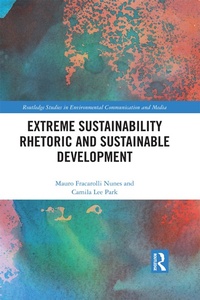
Extreme Sustainability Rhetoric and Sustainable Development
1st Edition
Published on 1. August 2022
256 pages
978-1-000-62637-7 (ISBN)
Description

This book considers the nature, causes, and consequences of extreme pro- and anti-sustainability rhetoric, exploring how and why the expressions of radical views on sustainability-related themes may prevent real sustainable development.
Following a thorough introduction on sustainability rhetoric, on dialogue, and on the role played by ideologies in the building of environmental beliefs, Fracarolli Nunes and Lee Park examine positions and statements expressed or made by individuals, companies, governments, and NGOs in the last decades. The outcomes of these considerations lead to the classification of expressions in different categories of sustainability rhetoric, laying the groundwork for the development of a 'sustainability spectrum': a metric for the level of radicalization of sustainability positions, which ranges from apocalyptic views to ultimate denial. Through the combination of historical perspectives, theoretical frameworks, and conceptual developments, this book provides a foundation for a more informed and productive dialogue between radically opposing views on sustainability issues.
This volume will be of great interest to students, scholars, and practitioners researching and working in the areas of environmental communication and media, environmental politics, and sustainable development.
Following a thorough introduction on sustainability rhetoric, on dialogue, and on the role played by ideologies in the building of environmental beliefs, Fracarolli Nunes and Lee Park examine positions and statements expressed or made by individuals, companies, governments, and NGOs in the last decades. The outcomes of these considerations lead to the classification of expressions in different categories of sustainability rhetoric, laying the groundwork for the development of a 'sustainability spectrum': a metric for the level of radicalization of sustainability positions, which ranges from apocalyptic views to ultimate denial. Through the combination of historical perspectives, theoretical frameworks, and conceptual developments, this book provides a foundation for a more informed and productive dialogue between radically opposing views on sustainability issues.
This volume will be of great interest to students, scholars, and practitioners researching and working in the areas of environmental communication and media, environmental politics, and sustainable development.
More details
Series
Edition
1. Auflage
Language
English
Place of publication
London
United Kingdom
Publishing group
Taylor & Francis Ltd
Target group
College/higher education
Professional and scholarly
Product notice
Reflowable
Illustrations
2 Tables, black and white; 3 Line drawings, black and white; 3 Illustrations, black and white
ISBN-13
978-1-000-62637-7 (9781000626377)
Copyright in bibliographic data and cover images is held by Nielsen Book Services Limited or by the publishers or by their respective licensors: all rights reserved.
Schweitzer Classification
Other editions
Additional editions
Mauro Fracarolli Nunes | Camila Lee Park
Extreme Sustainability Rhetoric and Sustainable Development
Book
10/2024
1st Edition
Routledge
€63.40
Shipment within 15-20 days
Mauro Fracarolli Nunes | Camila Lee Park
Extreme Sustainability Rhetoric and Sustainable Development
Book
08/2022
1st Edition
Routledge
€207.80
Shipment within 15-20 days
Persons
Mauro Fracarolli Nunes is Associate Professor, Researcher, and Writer. He is affiliated to OCRE Research Laboratory, EDC Paris Business School. He holds a Ph.D. in Business Administration from ESCP Europe, Paris campus, as part of the Ecole Doctorale de Management Pantheon-Sorbonne; he also holds a Master of Science and a Bachelor in Business Administration from Escola de Administracao de Empresas de Sao Paulo at Fundacao Getulio Vargas (FGV-EAESP). Dr Fracarolli Nunes engages in multidisciplinary research, approaching issues such as sustainability, sustainable development, corporate social responsibility, corporate environmental responsibility, sustainable supply chain management, and business ethics. His work has been published in several journals, including the International Journal of Operations and Production Management and the International Journal of Production Economics.
Camila Lee Park is Associate Professor and Researcher. She is affiliated to OCRE Research Laboratory, EDC Paris Business School. She holds a Ph.D. in Business Administration from ESCP Europe, Paris campus, as part of the Ecole Doctorale de Management Pantheon-Sorbonne; she also holds a Master of Science and a Bachelor in Business Administration from Escola de Administracao de Empresas de Sao Paulo at Fundacao Getulio Vargas (FGV-EAESP). Dr. Lee Park uses a multidisciplinary approach for researching international business, intercultural management, strategy, behavioural operations, supply chain management, CSR and sustainability, and business ethics. Her work has been featured in several journals, including the International Journal of Operations and Production Management and the International Journal of Production Economics, and she has twice been awarded Best Paper at the 5th P&OM World Conference and the 4th Interdisciplinary Insights on Fraud and Corruption Conference.
Camila Lee Park is Associate Professor and Researcher. She is affiliated to OCRE Research Laboratory, EDC Paris Business School. She holds a Ph.D. in Business Administration from ESCP Europe, Paris campus, as part of the Ecole Doctorale de Management Pantheon-Sorbonne; she also holds a Master of Science and a Bachelor in Business Administration from Escola de Administracao de Empresas de Sao Paulo at Fundacao Getulio Vargas (FGV-EAESP). Dr. Lee Park uses a multidisciplinary approach for researching international business, intercultural management, strategy, behavioural operations, supply chain management, CSR and sustainability, and business ethics. Her work has been featured in several journals, including the International Journal of Operations and Production Management and the International Journal of Production Economics, and she has twice been awarded Best Paper at the 5th P&OM World Conference and the 4th Interdisciplinary Insights on Fraud and Corruption Conference.
Content
Table of Contents
PART I. THE NATURE OF EXTREME SUSTAINABILITY RHETORIC *
1. Sustainability Rhetoric *
Abstract *
Introduction *
Rhetoric *
Sustainability Rhetoric *
The Sustainability Part of Sustainability Rhetoric: Lessons from Management Literature *
The Sustainability Cause *
Pro-sustainability Rhetoric *
Anti-Sustainability Rhetoric *
Reference list *
2. Sustainability and Dialogue *
Abstract *
Introduction *
Small Talk, Apocalypse, and Other Forms of Environmental Dialogue *
Impossible Dialogues *
Reference list *
3. Right Thinking, Left Thinking *
Abstract *
Philosophical, Political, and Economic Traditions *
The Problem with Ideologies *
Dissemination of Right and Left Ideas *
Resentment as Left's Origins *
Selfishness as Right's Origins *
Personal Effort *
Risk Taking *
Corruption of Free Market Mechanisms *
Reference list *
4. The Sustainability Spectrum *
Abstract *
Spectrums *
The Political-economic Spectrum *
The Carnivorous Left (Extreme Left) *
Trotskyism *
Leninism *
Stalinism *
The Herbivorous Left (Centre-Left) *
The Centre *
The Herbivorous Right (Centre-Right) *
The Carnivorous Right (Extreme Right) *
The Sustainability Spectrum *
Eco-Revolutionaries *
Social / Environmental Warriors *
Eco-Moderates *
Eco-Skepticals *
Eco-Refractory *
Final Considerations *
Reference list *
5. Skeptical Views of Sustainability *
Abstract *
Skepticism and Denial *
Skepticism and Practice: Impacts on the Sustainability Debate *
Reference list *
6. Apocalyptic Views of Sustainability *
Abstract *
Apocalypticism *
Apocalyptic Environmentalism *
Reference list *
7. Moderate Views of Sustainability *
Abstract *
Introduction and Definition *
Causes *
Unfamiliarity with Issues *
Disinterest *
Fear of Reprisals *
Conviviality Issues *
On the Usefulness of Moderate Views *
Reference list *
PART II. THE CAUSES OF EXTREME SUSTAINABILITY RHETORIC *
8. The Psychology of Extremism *
Abstract *
Initial Thoughts *
General Thoughts *
Final Thoughts *
Reference list *
9. Sustainability, Politics, and Money *
Abstract *
Sustainability and Politics *
Sustainability Pyramid *
Sustainability and Money *
Reference list *
10. Panic, Sustainability, and Marketing *
Abstract *
Consumer Behaviour *
Sustainability and Panic Marketing *
Reference list *
PART III. THE CONSEQUENCES OF EXTREME SUSTAINABILITY RHETORIC *
11. Science and the Erosion of Credibility Capital *
Abstract *
Credibility Capital *
Scientific Credibility *
Science, Politics, and Economics *
Reference list *
12. Eco-anxiety and Other Psychological Outcomes *
Abstract *
Extremism and Emotions *
Fear *
Envy and Frustration *
Denial and Emotions *
Eco-anxiety *
New Forms of Authoritarism *
Reference list *
13. Dialogue and Collaboration *
Abstract *
Segregation and Polarization *
On Healthy Dialogues *
Reference list *
14. Economic Development and Innovation *
Abstract *
Green Products, Innovation, and Inequality *
Sustainability, Performance, and Protecionism *
Reference list *
PART IV. LESSONS AND PRACTICE *
15. Extreme Sustainability Rhetoric: Lessons Learned *
Abstract *
References *
16. Reconnecting Dialogue in Sustainability: Prescriptive Measures *
Abstract *
Introduction *
The Bursting of Cognitive Bubbles (Clusters) *
Dissociation of the Sustainability Debate from Economic and Political Ideologies *
Spotting Hypocrisy *
Reinforcement of Objectivism *
Reopening of the Academic Debate *
Enough with Celebrities *
Greater Skepticism towards Political Correctness *
Humility: The Topics are Complex *
Development of the Triple Bottom Line *
Less Protectionism *
No More Labelling: "Enemies" *
Reference list *
PART I. THE NATURE OF EXTREME SUSTAINABILITY RHETORIC *
1. Sustainability Rhetoric *
Abstract *
Introduction *
Rhetoric *
Sustainability Rhetoric *
The Sustainability Part of Sustainability Rhetoric: Lessons from Management Literature *
The Sustainability Cause *
Pro-sustainability Rhetoric *
Anti-Sustainability Rhetoric *
Reference list *
2. Sustainability and Dialogue *
Abstract *
Introduction *
Small Talk, Apocalypse, and Other Forms of Environmental Dialogue *
Impossible Dialogues *
Reference list *
3. Right Thinking, Left Thinking *
Abstract *
Philosophical, Political, and Economic Traditions *
The Problem with Ideologies *
Dissemination of Right and Left Ideas *
Resentment as Left's Origins *
Selfishness as Right's Origins *
Personal Effort *
Risk Taking *
Corruption of Free Market Mechanisms *
Reference list *
4. The Sustainability Spectrum *
Abstract *
Spectrums *
The Political-economic Spectrum *
The Carnivorous Left (Extreme Left) *
Trotskyism *
Leninism *
Stalinism *
The Herbivorous Left (Centre-Left) *
The Centre *
The Herbivorous Right (Centre-Right) *
The Carnivorous Right (Extreme Right) *
The Sustainability Spectrum *
Eco-Revolutionaries *
Social / Environmental Warriors *
Eco-Moderates *
Eco-Skepticals *
Eco-Refractory *
Final Considerations *
Reference list *
5. Skeptical Views of Sustainability *
Abstract *
Skepticism and Denial *
Skepticism and Practice: Impacts on the Sustainability Debate *
Reference list *
6. Apocalyptic Views of Sustainability *
Abstract *
Apocalypticism *
Apocalyptic Environmentalism *
Reference list *
7. Moderate Views of Sustainability *
Abstract *
Introduction and Definition *
Causes *
Unfamiliarity with Issues *
Disinterest *
Fear of Reprisals *
Conviviality Issues *
On the Usefulness of Moderate Views *
Reference list *
PART II. THE CAUSES OF EXTREME SUSTAINABILITY RHETORIC *
8. The Psychology of Extremism *
Abstract *
Initial Thoughts *
General Thoughts *
Final Thoughts *
Reference list *
9. Sustainability, Politics, and Money *
Abstract *
Sustainability and Politics *
Sustainability Pyramid *
Sustainability and Money *
Reference list *
10. Panic, Sustainability, and Marketing *
Abstract *
Consumer Behaviour *
Sustainability and Panic Marketing *
Reference list *
PART III. THE CONSEQUENCES OF EXTREME SUSTAINABILITY RHETORIC *
11. Science and the Erosion of Credibility Capital *
Abstract *
Credibility Capital *
Scientific Credibility *
Science, Politics, and Economics *
Reference list *
12. Eco-anxiety and Other Psychological Outcomes *
Abstract *
Extremism and Emotions *
Fear *
Envy and Frustration *
Denial and Emotions *
Eco-anxiety *
New Forms of Authoritarism *
Reference list *
13. Dialogue and Collaboration *
Abstract *
Segregation and Polarization *
On Healthy Dialogues *
Reference list *
14. Economic Development and Innovation *
Abstract *
Green Products, Innovation, and Inequality *
Sustainability, Performance, and Protecionism *
Reference list *
PART IV. LESSONS AND PRACTICE *
15. Extreme Sustainability Rhetoric: Lessons Learned *
Abstract *
References *
16. Reconnecting Dialogue in Sustainability: Prescriptive Measures *
Abstract *
Introduction *
The Bursting of Cognitive Bubbles (Clusters) *
Dissociation of the Sustainability Debate from Economic and Political Ideologies *
Spotting Hypocrisy *
Reinforcement of Objectivism *
Reopening of the Academic Debate *
Enough with Celebrities *
Greater Skepticism towards Political Correctness *
Humility: The Topics are Complex *
Development of the Triple Bottom Line *
Less Protectionism *
No More Labelling: "Enemies" *
Reference list *
