

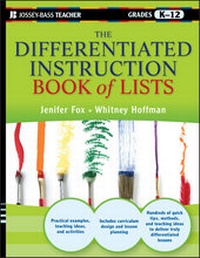
The Differentiated Instruction Book of Lists
Published on 2. August 2011
288 pages
978-1-118-09440-2 (ISBN)
Description

Hundreds of useful ideas for meeting the needs of each child
The Differentiated Instruction Book of Lists is thedefinitive reference for DI for teachers in grades K-12. Ready forimmediate use, it offers over 150 up-to-date lists for developinginstructional materials, lesson planning, and assessment. Organizedinto 12 convenient sections, the book is full of practicalexamples, teaching ideas, and activities that can be used oradapted to meet students' diverse needs. Coverage includescurriculum design, lesson planning, instructional strategies,assessment, classroom management, strategies by subject area (fromLanguage Arts to Math to Physical Education), new media, etc.
* Offers an easy-to-use guide that gives quick tips and methodsto plan effectively for delivering truly differentiatedlessons
* Filled with helpful DI lists, lesson plans, strategies,assessments, and more
* Jennifer Fox is the author of the bestselling book YourChild's Strengths
The Differentiated Instruction Book of Lists is ahands-on guide for meeting the instructional needs of all studentsso that they can reach their full potential.
More details
Other editions
Additional editions
Jenifer Fox | Whitney Hoffman
The Differentiated Instruction Book of Lists
Book
09/2011
1st Edition
Jossey-Bass
€31.00
Shipment within 10-20 days
Persons
The Authors
JENIFER FOX, MEd, has worked for more than twenty-five years as a public and private school teacher and administrator. She is a school consultant and creator of Strong Planet, a media-driven interactive curriculum to help all kinds of learners discover their strengths. Fox authored the best-selling book Your Child's Strengths and is an acclaimed international speaker.
WHITNEY HOFFMAN is CEO and director of Hoffman Digital Media and creator of the successful LD Podcast (www.ldpodcast.com), where she has interviewed many of the leading voices in the special education field. Hoffman speaks regularly before education and business audiences on the use of social media platforms to create communities of learning.
Content
- Cover
- Title Page
- Copyright
- Contents
- The Authors
- Acknowledgments
- Preface
- Introduction
- Section 1 Understanding Differentiated Instruction
- List 1.1. A Vision for the Differentiated Instruction Classroom
- List 1.2. One-Size-Fits-All Teaching Versus Differentiated Teaching
- List 1.3. Small Things That Make a Big Difference
- List 1.4. Common Misconceptions
- List 1.5. Differentiate the Materials
- List 1.6. Differentiate the Task
- List 1.7. Differentiate the Homework
- List 1.8. Differentiate Checking for Understanding
- List 1.9. Differentiate the Outcome
- List 1.10. Are You Ready for Differentiated Instruction? A Few More Examples of What Is Expected
- List 1.11. Definitions of Concepts Commonly Associated with Differentiated Instruction
- Section 2 Teaching with the Individual in Mind
- List 2.1. Building Relationships
- List 2.2. Strategies to Determine Individual Strengths
- List 2.3. Interest Inventories
- List 2.4. Planning with Learning Styles in Mind
- List 2.5. Multiple Intelligences and Differentiated Instruction
- List 2.6. Tips for Raising Students' Comfort Level
- List 2.7. Tips to Help Struggling Students
- List 2.8. Tips for Motivating All Students
- List 2.9. Class Discussion Strategies
- Section 3 Planning the Differentiated Curriculum
- List 3.1. Where to Begin and What to Do
- List 3.2. Tips for Keeping Records for Differentiated Lesson Plans
- List 3.3. How to Create Differentiated Lesson Plans with Bloom's Taxonomy
- List 3.4. Differentiated Assessments
- List 3.5. Curriculum Compacting: Why and How
- List 3.6. What Are Authentic Choices? How to Plan with Them
- List 3.7. General Planning Tips for the Differentiated Classroom
- Section 4 Most Commonly Used Differentiated Instruction Techniques and How to Use Them
- List 4.1. Tiered Lessons
- Readiness Tier
- Interest Tier
- Learning Style Tier
- List 4.2. Scaffolding Tools
- List 4.3. Project-Based Learning
- List 4.4. Learning Contracts
- List 4.5. Graphic Organizers
- Which One Should You Use or Recommend?
- Basic Examples of Graphic Organizers
- Applications of Graphic Organizers Across Content Areas
- List 4.6. Flexible Grouping
- List 4.7. Learning Stations
- List 4.8. Rubrics
- Section 5 Differentiated Classroom Management
- List 5.1. Arranging the Classroom for Optimal Differentiated Instruction Management
- List 5.2. Strategies for Differentiated Classroom Management
- List 5.3. Why Students Misbehave
- List 5.4. Discipline Strategies
- Social Autopsy
- List 5.5. Strength-Based Discipline: An Individualized Approach
- List 5.6. Examples of Strength-Based Versus Deficit-Based Labels
- List 5.7. Classroom Management and Parental Communication Tips
- Section 6 Roles and Responsibilities
- List 6.1. Classroom Teacher
- List 6.2. Students
- List 6.3. Administrators
- List 6.4. Parents
- List 6.5. Support Staff
- Section 7 Using Differentiated Instruction Techniques at Different Grade Levels
- List 7.1. Kindergarten
- List 7.2. Grades 1-5
- List 7.3. Middle School
- List 7.4. High School
- Section 8 Strategies for Differentiating Language Arts
- List 8.1. What Exemplary Reading Teachers Do to Differentiate Reading Instruction
- List 8.2. Strategies to Improve Reading
- List 8.3. Tips for Differentiating Small-Group Reading Instruction
- List 8.4. Assigned Reading: Dealing with Low Interest
- List 8.5. Differentiated Writing Assignments and Strategies
- List 8.6. Examples of Exciting Differentiated Language Arts Assignments
- List 8.7. Tips for Differentiating Instruction for English Language Learners
- List 8.8. Tips for Differentiating Writing Assignments
- Section 9 Strategies for Differentiating Math
- List 9.1. Using Reading and Writing to Differentiate Math Instruction
- List 9.2. Five Specific Ways to Integrate Writing in the Math Curriculum
- List 9.3. Group Work as a Way to Differentiate the Math Class
- List 9.4. Ways to Integrate Group Work in the Math Curriculum
- List 9.5. Math Manipulatives
- List 9.6. Project-Based Learning Ideas and the Math Class
- Prepare Packets for Student Success
- List 9.7. Beyond Traditional Quizzes and Tests: Differentiated Assessments in Math
- List 9.8. Math Anxiety and Differentiated Instruction
- Section 10 Strategies for Differentiating Science
- List 10.1. General Differentiated Strategies for Science
- List 10.2. Inquiry-Based Instruction and Science
- List 10.3. Multimedia Projects, Science, and Differentiated Instruction
- List 10.4. Practical Advice for the Laboratory
- List 10.5. Technology, Differentiated Instruction, and Science Class
- Section 11 Strategies for Differentiating Social Studies
- List 11.1. Gallery Walks
- List 11.2. Time Lines
- List 11.3. Political Cartoons
- List 11.4. Authentic Civic Projects
- Examples of Authentic Civic Projects
- List 11.5. Multimedia Presentations
- List 11.6. Research Methods
- List 11.7. Class Discussion
- Educators for Social Responsibility (ESR) Model
- Debate
- Socratic Seminars
- Decision Making
- Problem Solving
- Section 12 Strategies for Differentiating the Arts
- List 12.1. Group Work in the Arts
- Examples of ''Design Your Dream'' Prompts
- Points of Differentiation in Group Work
- List 12.2. Ways to Help All Students Feel Successful in Art
- List 12.3. Technology, Differentiated Instruction, and Visual Arts
- List 12.4. Technology, Differentiated Instruction, and Performing Arts
- Section 13 Strategies for Physical Education and Health
- List 13.1. Tips on Using Differentiated Instruction in Physical Education
- List 13.2. Strategies for Differentiating Skill Training
- List 13.3. How to Encourage Everyone's Participation
- List 13.4. Ideas for Coaches
- List 13.5. Physical Education and the Unhealthy Student
- Section 14 New Media Strategies that Naturally Differentiate Instruction
- List 14.1. How Online Tools Can Help Organize and Differentiate Instruction
- List 14.2. Ways to Use Facebook in the Classroom
- List 14.3. Ways to Use Twitter in the Classroom
- List 14.4. Using Ning in the Classroom
- List 14.5. Blogging in the Classroom
- List 14.6. Wikis in the Classroom
- List 14.7. Cultivating a Positive Digital Footprint
- List 14.8. Administrative Considerations When Using New Media in the Classroom
- List 14.9. New Media Uses That Are Not OK
- Section 15 Special Considerations
- List 15.1. Differentiated Instruction and the Gifted Student
- List 15.2. Differentiated Instruction and the Advanced Placement Curriculum
- List 15.3. Differentiated Instruction and the At-Risk Student
- List 15.4. Differentiated Instruction and Diversity Inclusion
- References
- Index
- EULA
