

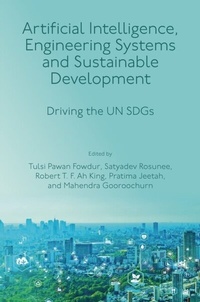
Artificial Intelligence, Engineering Systems and Sustainable Development
Driving the UN SDGs
1st Edition
Published on 18. January 2024
304 pages
978-1-83753-540-8 (ISBN)
Description

Development in any country is impossible if reliable and affordable energy, safe water and sanitation, as well as telecommunication facilities, are not easily accessible. Artificial intelligence and machine learning techniques are now widely used in all branches of engineering to build and optimize systems. The combination of AI and engineering can indeed act as a real catalyst to achieve the UN SDGs.
The volume editors present an analysis of different concepts and case studies in engineering disciplines such as chemical, civil, electrical, telecommunications and mechanical engineering, demonstrating how engineering systems and processes can leverage the power of AI to drive and achieve the UN SDGs. Topics covered include sustainable crop production and consumption, AI based clean water and sanitation monitoring, intelligent transport systems and achieving affordable and clean energy through AI and 5G powered internet of energy.
Such a study is of paramount importance and is a valuable source of information for researchers, engineers, and policy makers to be able to better design and adopt AI enabled techniques in different engineering areas, with a view to catalyze the achievement of the UN SDGs.
The volume editors present an analysis of different concepts and case studies in engineering disciplines such as chemical, civil, electrical, telecommunications and mechanical engineering, demonstrating how engineering systems and processes can leverage the power of AI to drive and achieve the UN SDGs. Topics covered include sustainable crop production and consumption, AI based clean water and sanitation monitoring, intelligent transport systems and achieving affordable and clean energy through AI and 5G powered internet of energy.
Such a study is of paramount importance and is a valuable source of information for researchers, engineers, and policy makers to be able to better design and adopt AI enabled techniques in different engineering areas, with a view to catalyze the achievement of the UN SDGs.
More details
Language
English
Place of publication
Bingley
United Kingdom
Target group
Professional and scholarly
File size
4,78 MB
ISBN-13
978-1-83753-540-8 (9781837535408)
Copyright in bibliographic data and cover images is held by Nielsen Book Services Limited or by the publishers or by their respective licensors: all rights reserved.
Schweitzer Classification
Other editions
Additional editions
Tulsi Pawan Fowdur | Satyadev Rosunee | Robert T. F. Ah King
Artificial Intelligence, Engineering Systems and Sustainable Development
Driving the UN SDGs
Book
01/2024
Emerald Publishing Limited
€123.00
Shipment within 3-4 weeks
Persons
Tulsi Pawan Fowdur is Associate Professor in the Department of Electrical and Electronic Engineering of the University of Mauritius.
Satyadev Rosunee is Associate Professor in the Department of Applied Sustainability and Enterprise Development at the University of Mauritius.
Robert T. F. Ah King is Associate Professor in the Department of Electrical and Electronic Engineering at the University of Mauritius.
Pratima Devi Jeetah is Associate Professor in the Department of Chemical and Environmental Engineering at the University of Mauritius.
Mahendra Gooroochurn is Senior Lecturer in the Mechanical and Production Engineering Department of the University of Mauritius.
Satyadev Rosunee is Associate Professor in the Department of Applied Sustainability and Enterprise Development at the University of Mauritius.
Robert T. F. Ah King is Associate Professor in the Department of Electrical and Electronic Engineering at the University of Mauritius.
Pratima Devi Jeetah is Associate Professor in the Department of Chemical and Environmental Engineering at the University of Mauritius.
Mahendra Gooroochurn is Senior Lecturer in the Mechanical and Production Engineering Department of the University of Mauritius.
Content
Chapter 1. Advances of Artificial Intelligence in Engineering; Tulsi Pawan Fowdur, Satyadev Rosunee, Robert T. F. Ah King, Pratima Jeetah and Mahendra Gooroochurn
Part 1: Impact of AI Enabled Chemical and Environmental Engineering Systems on UN SDGs
Chapter 2. Adoption of machine learning for sustainable solid waste management; P D Jeetah, G D Somaroo, D Surroop, A K Ragen, and N S Amode
Chapter 3. Smart fertilizer application in agricultural land for sustainable crop production and consumption; Robert T. F. Ah King, Bhimsen Rajkumarsingh, Pratima Jeetah, Geeta Somaroo, and Deejaysing Jogee
Chapter 4. Predicting household plastic level consumption using machine learning and AI; Jeetah P D , Chuttur, Hurry N , Tahalooa K , and Seebun D
Chapter 5. Ant colony, bee colony and elephant herd optimizations for estimating aqueous-phase adsorption model parameters; Ackmez Mudhoo, Gaurav Sharma, Khim Hoong Chu, and Mika Sillanpaeae
Part 2: Impact of AI Enabled Civil Engineering Systems on UN SDGs
Chapter 6. Artificial Intelligence based clean water and sanitation monitoring; Deejaysing Jogee, Manta Devi Nowbuth, Virendra Proag, and Jean-Luc Probst
Chapter 7. Achieving SDG targets in the land transport sector using Intelligent Transportation Systems; Zaheer Doomah, Asish Seeboo, and Tulsi Pawan Fowdur
Part 3: Impact of AI Enabled Electrical Electronic and Telecommunications Engineering Systems on UN SDGs
Chapter 8. Achieving affordable and clean Energy through AI and 5G Powered Internet of Energy (IoE); Tulsi Pawan Fowdur and Ashven Sanghan
Chapter 9. Leveraging the power of Blockchain in Industry 4.0 and Intelligent Real-time Systems for achieving the SDGs; Tulsi Pawan Fowdur, Visham Hurbungs, and, and Lavesh Babooram
Chapter 10. A Reliability-based Two Stage PMU Placement Optimisation Model using Mathematical and Nature-based Evolutionary Algorithms; Robert T. F. Ah King and Samiah Mohangee
Chapter 11. Quantitative Assessment of Models and Indices for Interior Thermal Comfort taking into account the Effects of Solar Radiation and Wind; Bhimsen Rajkumarsingh, Robert T. F. Ah King, and Khalid Adam Joomun
Chapter 12. The role of the Internet of Things for a more Sustainable Future; Anshu Prakash Murdan, and Vishwamitra Oree
Part 4: Impact of AI Enabled Mechanical and Mechatronics Engineering Systems on UN SDGs
Chapter 13. Mechatronics implementation of passive building elements to improve thermal comfort and promote energy efficiency in buildings; Mahendra Gooroochurn
Chapter 14. Demystifying climate change and climate action through the circular homes concept - an educational tool for community engagement; Mahendra Gooroochurn
Chapter 15. Robotics and automated systems for enabling an Industry 4.0 transformation in Mauritius; Mahendra Gooroochurn and Riaan Stopforth
Chapter 16. Potential beneficial impact of AI-driven atmospheric corrosion prediction on the UN SDGs; Yashwantraj Seechurn
Chapter 17. In-situ Durability Assessment of Natural Composite Structures by Considering ANN Modelling; Ramful Raviduth
Part 5: Impact of AI Enabled Sustainability and Enterprise Development on UN SDGs
Chapter 18. The Manufacturing Sector in Mauritius: Building Supply Chain Resilience & Business Value with AI; Satyadev Rosunee and Roshan Unmar
Chapter 19. AI for Social Good: Opportunities for Inclusive & Sustainable Development; Satyadev Rosunee and Roshan Unmar
Chapter 20. The Applications of Artificial Intelligence in the Textile Industry; Naraindra Kistamah
Part 1: Impact of AI Enabled Chemical and Environmental Engineering Systems on UN SDGs
Chapter 2. Adoption of machine learning for sustainable solid waste management; P D Jeetah, G D Somaroo, D Surroop, A K Ragen, and N S Amode
Chapter 3. Smart fertilizer application in agricultural land for sustainable crop production and consumption; Robert T. F. Ah King, Bhimsen Rajkumarsingh, Pratima Jeetah, Geeta Somaroo, and Deejaysing Jogee
Chapter 4. Predicting household plastic level consumption using machine learning and AI; Jeetah P D , Chuttur, Hurry N , Tahalooa K , and Seebun D
Chapter 5. Ant colony, bee colony and elephant herd optimizations for estimating aqueous-phase adsorption model parameters; Ackmez Mudhoo, Gaurav Sharma, Khim Hoong Chu, and Mika Sillanpaeae
Part 2: Impact of AI Enabled Civil Engineering Systems on UN SDGs
Chapter 6. Artificial Intelligence based clean water and sanitation monitoring; Deejaysing Jogee, Manta Devi Nowbuth, Virendra Proag, and Jean-Luc Probst
Chapter 7. Achieving SDG targets in the land transport sector using Intelligent Transportation Systems; Zaheer Doomah, Asish Seeboo, and Tulsi Pawan Fowdur
Part 3: Impact of AI Enabled Electrical Electronic and Telecommunications Engineering Systems on UN SDGs
Chapter 8. Achieving affordable and clean Energy through AI and 5G Powered Internet of Energy (IoE); Tulsi Pawan Fowdur and Ashven Sanghan
Chapter 9. Leveraging the power of Blockchain in Industry 4.0 and Intelligent Real-time Systems for achieving the SDGs; Tulsi Pawan Fowdur, Visham Hurbungs, and, and Lavesh Babooram
Chapter 10. A Reliability-based Two Stage PMU Placement Optimisation Model using Mathematical and Nature-based Evolutionary Algorithms; Robert T. F. Ah King and Samiah Mohangee
Chapter 11. Quantitative Assessment of Models and Indices for Interior Thermal Comfort taking into account the Effects of Solar Radiation and Wind; Bhimsen Rajkumarsingh, Robert T. F. Ah King, and Khalid Adam Joomun
Chapter 12. The role of the Internet of Things for a more Sustainable Future; Anshu Prakash Murdan, and Vishwamitra Oree
Part 4: Impact of AI Enabled Mechanical and Mechatronics Engineering Systems on UN SDGs
Chapter 13. Mechatronics implementation of passive building elements to improve thermal comfort and promote energy efficiency in buildings; Mahendra Gooroochurn
Chapter 14. Demystifying climate change and climate action through the circular homes concept - an educational tool for community engagement; Mahendra Gooroochurn
Chapter 15. Robotics and automated systems for enabling an Industry 4.0 transformation in Mauritius; Mahendra Gooroochurn and Riaan Stopforth
Chapter 16. Potential beneficial impact of AI-driven atmospheric corrosion prediction on the UN SDGs; Yashwantraj Seechurn
Chapter 17. In-situ Durability Assessment of Natural Composite Structures by Considering ANN Modelling; Ramful Raviduth
Part 5: Impact of AI Enabled Sustainability and Enterprise Development on UN SDGs
Chapter 18. The Manufacturing Sector in Mauritius: Building Supply Chain Resilience & Business Value with AI; Satyadev Rosunee and Roshan Unmar
Chapter 19. AI for Social Good: Opportunities for Inclusive & Sustainable Development; Satyadev Rosunee and Roshan Unmar
Chapter 20. The Applications of Artificial Intelligence in the Textile Industry; Naraindra Kistamah
