

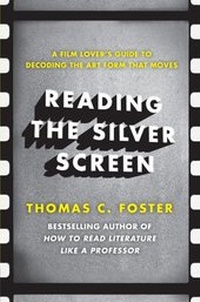
Reading the Silver Screen
Description

From the New York Times bestselling author of How to Read Literature Like a Professor comes an indispensable analysis of our most celebrated medium, film.
No art form is as instantly and continuously gratifying as film. When the house lights go down and the lion roars, we settle in to be shocked, frightened, elated, moved, and thrilled. We expect magic. While we're being exhilarated and terrified, our minds are also processing data of all sorts-visual, linguistic, auditory, spatial-to collaborate in the construction of meaning.
Thomas C. Foster's Reading the Silver Screen will show movie buffs, students of film, and even aspiring screenwriters and directors how to transition from merely being viewers to becoming accomplished readers of this great medium. Beginning with the grammar of film, Foster demonstrates how every art form has a grammar, a set of practices and if-then propositions that amount to rules. He goes on to explain how the language of film enables movies to communicate the purpose behind their stories and the messages they are striving to convey to audiences by following and occasionally breaking these rules.
Using the investigative approach readers love in How to Read Literature Like a Professor, Foster examines this grammar of film through various classic and current movies both foreign and domestic, with special recourse to the "AFI 100 Years-100 Movies" lists. The categories are idiosyncratic yet revealing.
In Reading the Silver Screen, readers will gain the expertise and confidence to glean all they can from the movies they love.
This essential guide for movie lovers will teach you how to see films in a new light, including how to:
- Deconstruct the Grammar of Film: Go beyond plot and characters to understand the hidden rules that filmmakers from Alfred Hitchcock to George Miller use to tell stories and create meaning.
- Analyze Shots, Scenes, and Sequences: Learn the difference between these core building blocks and see how directors assemble them to build suspense, emotion, and unforgettable moments.
- Decode Visual and Auditory Cues: Discover how camera angles, lighting, color, and sound design aren't just technical details?they are the language of film speaking directly to you.
- Connect with Classic and Modern Movies: Apply Foster's investigative approach to everything from Citizen Kane to modern blockbusters, using examples from the AFI's greatest films.
- Become an Accomplished Reader of Film: Transition from being a passive viewer to an active, insightful critic who can appreciate the art and craft behind your favorite movies on a much deeper level.
All prices
More details
Other editions
Additional editions
Person
Thomas C. Foster is the author of How to Read Literature Like a Professor, How to Write Like a Writer, How to Read Nonfiction Like a Professor, and other works. He is professor emeritus of English at the University of Michigan, Flint, where he taught classes in contemporary fiction, drama, and poetry as well as creative writing and freelance writing. He is also the author of several books on twentieth-century British and Irish literature and poetry.
Content
- Intro
- Titlepage
- Dedication
- Contents
- Preface
- Introduction
- 1. Seeing Is Believing
- 2. The Camera Does the Thinking for Us
- 3. Shot, Scene, Sequence!
- 4. Silence Is Golden
- 5. In Between the Dark and the Light
- 6. Image Is Everything
- 7. Near and Far
- 8. Art Without Color
- 9. What Happens During Popcorn Time
- 10. Whose Story Is It? And What's His Story?
- Interlude
- 11. How Many Heads-and Where Are They?
- 12. In the Frame
- 13. Highly Generic
- 14. Novels into Films
- 15. Movie Magic
- 16. You Can't Step into the Same Movie Twice
- 17. Listen to the Music
- Homework Assignment
- 18. Figuratively Speaking
- 19. Masters of All That They Survey
- 20. Put It to the Test
- Conclusion
- Acknowledgments
- Appendix
- About the Author
- Also by Thomas C. Foster
- Copyright
- About the Publisher
