

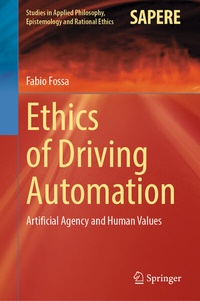
Ethics of Driving Automation
Description

This book offers a systematic and thorough philosophical analysis of the ways in which driving automation crosses path with ethical values. Upon introducing the different forms of driving automation and examining their relation to human autonomy, it provides readers with in-depth reflections on safety, privacy, moral judgment, control, responsibility, sustainability, and other ethical issues. Driving is undoubtedly a moral activity as a human act. Transferring it to artificial agents such as connected and automated vehicles necessarily raises many philosophical questions. When driving is automated, what happens to its ethical dimensions? Could artificial agents accomplish ethical objectives on our behalf, take moral decisions in our place, and drive us into a more ethical transportation future? In doing so, would they be "moral" as we are or in a way that is similar to, but also remarkably different from, our own? And what role is yet to be played by human responsibility and commitment? The book addresses these questions with the aim of stimulating an interdisciplinary dialogue between different stakeholders. They include automotive engineers, computer scientists, and moral philosophers, as well as industry representatives, policymakers, regulators, transportation experts, and the general public. Indeed, connected and automated vehicles will not take the high road for us . We must drive them there.
More details
Other editions
Additional editions
Person
