

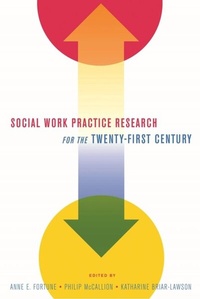
Social Work Practice Research for the Twenty-First Century
1st Edition
Published on 25. September 2015
336 pages
978-0-231-51264-0 (ISBN)
Description

Social work professionals must demonstrate their effectiveness to legislators and governments, not to mention clients and incoming practitioners. A thorough evaluation of the activities, ethics, and outcomes of social work practice is critical to maintaining investment and interest in the profession and improving the lives of underserved populations.
Incorporating the concerns of a new century into a consideration of models for practice research, this volume builds on the visionary work of William J. Reid (1928-2003) who transformed social work research through empirically based and task-centered approaches-and, more recently, synthesized intervention knowledge for framing future study. This collection reviews the task-centered model and other contemporary Evidence-Based Practice models for working with individuals, families, groups, communities, and organizations. Essays demonstrate the value of these pragmatic approaches in the United States and international settings. Contributors summarize state-of-the-art methods in several key fields of service, including children and families, aging, substance abuse, and mental health. They also evaluate the research movement itself, outlining an agenda for today's sociopolitical landscape and the profession. This volume inspires practice research to prioritize evidence as a base for the profession.
Incorporating the concerns of a new century into a consideration of models for practice research, this volume builds on the visionary work of William J. Reid (1928-2003) who transformed social work research through empirically based and task-centered approaches-and, more recently, synthesized intervention knowledge for framing future study. This collection reviews the task-centered model and other contemporary Evidence-Based Practice models for working with individuals, families, groups, communities, and organizations. Essays demonstrate the value of these pragmatic approaches in the United States and international settings. Contributors summarize state-of-the-art methods in several key fields of service, including children and families, aging, substance abuse, and mental health. They also evaluate the research movement itself, outlining an agenda for today's sociopolitical landscape and the profession. This volume inspires practice research to prioritize evidence as a base for the profession.
All prices
More details
Other editions
Additional editions
Anne E. Fortune | Philip McCallion | Katharine Briar-Lawson
Social Work Practice Research for the Twenty-First Century
Book
09/2010
Columbia University Press
€84.25
Shipment within 10-20 days
Persons
Anne E. Fortune is professor and associate dean for academic affairs at the School of Social Welfare, University at Albany, State University of New York. With William J. Reid, she is the author of Research in Social Work.
Philip McCallion is professor at the University at Albany's School of Social Welfare, director of the Center for Excellence in Aging and Community Wellness, and a Hartford Geriatric Social Work Faculty Scholar and Mentor. He is the author of Housing for the Elderly: Policy and Practice Issues.
Katharine Briar-Lawson is dean and professor at the University at Albany's School of Social Welfare. She is the coeditor of Globalization, Social Justice, and the Helping Professions and coauthor of Family-Centered Policies and Practices.
Philip McCallion is professor at the University at Albany's School of Social Welfare, director of the Center for Excellence in Aging and Community Wellness, and a Hartford Geriatric Social Work Faculty Scholar and Mentor. He is the author of Housing for the Elderly: Policy and Practice Issues.
Katharine Briar-Lawson is dean and professor at the University at Albany's School of Social Welfare. She is the coeditor of Globalization, Social Justice, and the Helping Professions and coauthor of Family-Centered Policies and Practices.
Content
Preface, by Anne E. Fortune, Philip McCallion, and Katharine Briar-Lawson
Tribute: William J. Reid: A Personal Remembrance, by Stuart Kirk
Part 1. A Historical Mapping of Social Work Practice Research
1. Critical Infrastructures for Social Work Practice Research: Pondering the Past, Framing the Future, by Ronald A. Feldman
2. Empirical Practice in Social Work, by Anne E. Fortune
3. Qualitative Social Work Practice Research, by Ian Shaw
Part 2. Status of Evidence-Based Practice in Selected Areas of Social Work
4. Group Work Research: Past, Present, and Future, by Charles D. Garvin
5. Social Development Interventions Have Extensive, Long-Lasting Effects, by Richard F. Catalano, Karl G. Hill, Kevin P. Haggerty, Charles B. Fleming, and J. David Hawkins
6. Advances in Children's Mental Health, by Mark W. Fraser and Mary A. Terzian
7. Evidence-Based Services to Children in a Conservative Environment, by June G. Hopps, Tony B. Lowe, and Latrice S. Rollins
8. Social-Behavioral Research in Aging and the Social Work Research Agenda, by Barbara Berkman
9. A Culturally Grounded Approach to Drug Use Prevention with Latino Children and Youth, by Flavio Francisco Marsiglia
10. Development of Intervention Models with "New Overwhelmed Clients", by June G. Hopps, Tony B. Lowe, and Ollie G. Christian
11. Pulling Together Research Studies to Inform Social Work Practice: The Science of Research Synthesis, by Julia H. Littell
Part 3. An Example of Empirical Model Development and Dissemination: The Task-Centered Model
12. The Intellectual Legacy of William J. Reid, by Lynn Videka and James A. Blackburn
13. Task-Centered Practice in the United States, by Ronald H. Rooney
14. Task-Centered Practice in Great Britain, by Peter Marsh
15. Task-Centered Practice in the Netherlands, by Nel Jagt and Louwerus Jagt
16. Task-Centered Practice in Germany, by Matthias Naleppa
17. Task-Centered Practice in Switzerland, by Alexander Kobbel and Matthias Naleppa
18. Task-Centered Practice in Norway, by Rita Elisabeth Eriksen
19. Task-Centered Practice in Australia, by Christopher Trotter
20. Task-Centered Practice in Japan, by Fujie Ito
21. Task-Centered Practice in South Korea, by Nam-Soon Huh and Yun-Soon Koh
22. Task-Centered Practice in Hong Kong, by T. Wing Lo
23. Task-Centered Practice in Taiwan, by Yueh-Ching Chou and Ronald H. Rooney
Part 4. Future Directions
24. The Question of Questions: An Agenda for Social Work Practice Research, by Enola K. Proctor
25. Building Capacity for Intervention Research, by Jack M. Richman
26. Building Evidence-Based Intervention Models, by Anne E. Fortune, Philip McCallion, and Katharine Briar-Lawson
Index
Tribute: William J. Reid: A Personal Remembrance, by Stuart Kirk
Part 1. A Historical Mapping of Social Work Practice Research
1. Critical Infrastructures for Social Work Practice Research: Pondering the Past, Framing the Future, by Ronald A. Feldman
2. Empirical Practice in Social Work, by Anne E. Fortune
3. Qualitative Social Work Practice Research, by Ian Shaw
Part 2. Status of Evidence-Based Practice in Selected Areas of Social Work
4. Group Work Research: Past, Present, and Future, by Charles D. Garvin
5. Social Development Interventions Have Extensive, Long-Lasting Effects, by Richard F. Catalano, Karl G. Hill, Kevin P. Haggerty, Charles B. Fleming, and J. David Hawkins
6. Advances in Children's Mental Health, by Mark W. Fraser and Mary A. Terzian
7. Evidence-Based Services to Children in a Conservative Environment, by June G. Hopps, Tony B. Lowe, and Latrice S. Rollins
8. Social-Behavioral Research in Aging and the Social Work Research Agenda, by Barbara Berkman
9. A Culturally Grounded Approach to Drug Use Prevention with Latino Children and Youth, by Flavio Francisco Marsiglia
10. Development of Intervention Models with "New Overwhelmed Clients", by June G. Hopps, Tony B. Lowe, and Ollie G. Christian
11. Pulling Together Research Studies to Inform Social Work Practice: The Science of Research Synthesis, by Julia H. Littell
Part 3. An Example of Empirical Model Development and Dissemination: The Task-Centered Model
12. The Intellectual Legacy of William J. Reid, by Lynn Videka and James A. Blackburn
13. Task-Centered Practice in the United States, by Ronald H. Rooney
14. Task-Centered Practice in Great Britain, by Peter Marsh
15. Task-Centered Practice in the Netherlands, by Nel Jagt and Louwerus Jagt
16. Task-Centered Practice in Germany, by Matthias Naleppa
17. Task-Centered Practice in Switzerland, by Alexander Kobbel and Matthias Naleppa
18. Task-Centered Practice in Norway, by Rita Elisabeth Eriksen
19. Task-Centered Practice in Australia, by Christopher Trotter
20. Task-Centered Practice in Japan, by Fujie Ito
21. Task-Centered Practice in South Korea, by Nam-Soon Huh and Yun-Soon Koh
22. Task-Centered Practice in Hong Kong, by T. Wing Lo
23. Task-Centered Practice in Taiwan, by Yueh-Ching Chou and Ronald H. Rooney
Part 4. Future Directions
24. The Question of Questions: An Agenda for Social Work Practice Research, by Enola K. Proctor
25. Building Capacity for Intervention Research, by Jack M. Richman
26. Building Evidence-Based Intervention Models, by Anne E. Fortune, Philip McCallion, and Katharine Briar-Lawson
Index

