

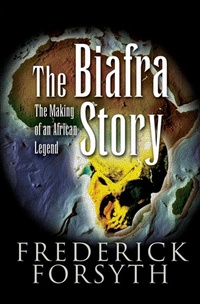
The Biafra Story
The Making of an African Legend
Published on 20. February 2019
291 pages
978-1-84884-606-7 (ISBN)
Description

A fearless act of journalism in 1960s Nigeria and the true story behind the international bestselling novel
The Dogs of War.
The Nigerian civil war of the late 1960s was one of the first occasions when Western consciences were awakened and deeply affronted by the level of suffering and the scale of atrocity being played out in the African continent. This was thanks not just to advances in communication technology but to the courage and journalistic skills of foreign correspondents like Frederick Forsyth, who had already earned an enviable reputation for tenacity and accuracy working for Reuters and the BBC.
In The Biafra Story, Forsyth reveals the depth of the British Government's active involvement in the conflict-information which many in power would have preferred to remain secret. General Gowon's genocide of the Biafran people was facilitated by a ready supply of British arms and advice. Still tragically relevant in its depiction of global affairs, this powerful book also launched Frederick Forsyth to literary stardom by providing him with the background material for The Dogs of War.
The dramatic events and shocking political exposures, all delivered with Forsyth's bold and perceptive style, makes The Biafra Story a compelling lesson in courage.
The Nigerian civil war of the late 1960s was one of the first occasions when Western consciences were awakened and deeply affronted by the level of suffering and the scale of atrocity being played out in the African continent. This was thanks not just to advances in communication technology but to the courage and journalistic skills of foreign correspondents like Frederick Forsyth, who had already earned an enviable reputation for tenacity and accuracy working for Reuters and the BBC.
In The Biafra Story, Forsyth reveals the depth of the British Government's active involvement in the conflict-information which many in power would have preferred to remain secret. General Gowon's genocide of the Biafran people was facilitated by a ready supply of British arms and advice. Still tragically relevant in its depiction of global affairs, this powerful book also launched Frederick Forsyth to literary stardom by providing him with the background material for The Dogs of War.
The dramatic events and shocking political exposures, all delivered with Forsyth's bold and perceptive style, makes The Biafra Story a compelling lesson in courage.
More details
Other editions
Additional editions
Frederick Forsyth
Biafra Story: The Making of an African Legend
Book
04/2007
Pen & Sword Military
€19.00
Shipment within 10-20 days
Book
08/2001
Pen & Sword Books Ltd
€41.02
Article exhausted; check different version
Person
Frederick Forsyth (b. 1938) is an English author of thrillers. Born in Kent, he joined the Royal Air Force in 1956, becoming one of the youngest pilots to ever fly in Her Majesty's service. After two years in the RAF, he began working as a journalist. He later turned his journalism skills to writing fiction, and his first novel, The Day of the Jackal (1970), was a great success. Forsyth continued to use real figures and criminal organizations as inspiration, writing popular books like The Odessa File (1972) and The Dogs of War (1974). His most recent novel is The Cobra (2010).
Content
- Intro
- Title Page
- Copyright
- Contents
- Prologue
- Preface
- Part One: The Road to Partition
- Chapter 1: The Background
- Chapter 2: The Coup that Failed
- Chapter 3: The Man Called Ironside
- Chapter 4: The Second Coup that Failed
- Chapter 5: Two Colonels
- Chapter 6: The Autumn Atrocities
- Chapter 7: Aburi - Nigeria's Last Chance
- Part Two: The Fight to Survive
- Chapter 8: The Character of Biafra
- Chapter 9: Thirty Months of Fighting
- Chapter 10: The Role of the Wilson Government
- Chapter 11: Refugees, Hunger and Help
- Chapter 12: The Peace Conferences
- Chapter 13: The Question of Genocide
- Chapter 14: The Role of the Press
- Chapter 15: Conclusion
- Epilogue
