

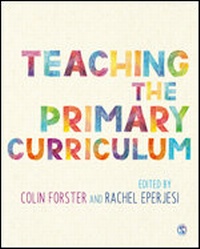
Teaching the Primary Curriculum
1st Edition
Published on 6. December 2019
248 pages
978-1-5297-0884-4 (ISBN)
Description

Planning for authentic learning begins with engaging children. This book explores each subject in the primary curriculum offering clear guidance on the distinctive elements of each and effective pedagogical approaches that support informed teaching.
Key aspects include:
? Real-life case studies including student teacher and expert commentaries
? Critical tasks for reflection and evaluation with suggested responses
? How effective teaching can nurture children's intellectual development
This is essential reading for all students on primary initial teacher education courses including university-based (PGCE, BEd, BA with QTS), and schools-based (School Direct, SCITT, Teach First) routes into teaching.
Key aspects include:
? Real-life case studies including student teacher and expert commentaries
? Critical tasks for reflection and evaluation with suggested responses
? How effective teaching can nurture children's intellectual development
This is essential reading for all students on primary initial teacher education courses including university-based (PGCE, BEd, BA with QTS), and schools-based (School Direct, SCITT, Teach First) routes into teaching.
Reviews / Votes
The chapter offers accessible practical ideas which trainee teachers can relate to. Selected critical tasks with detailed responses enables them to reflect on creating robust, inclusive teaching environments. By understanding the purpose of segmental analysis, trainee teachers have a clear focus when addressing individual needs and developing physical literacy. -- Gwenda LappinMore details
Language
English
Place of publication
London
United Kingdom
Publishing group
Sage Publications Ltd (Digital)
Target group
College/higher education
ISBN-13
978-1-5297-0884-4 (9781529708844)
Copyright in bibliographic data and cover images is held by Nielsen Book Services Limited or by the publishers or by their respective licensors: all rights reserved.
Schweitzer Classification
Other editions
Additional editions
Colin Forster | Rachel Eperjesi
Teaching the Primary Curriculum
Book
12/2019
1st Edition
SAGE Publications Ltd
€66.40
Shipment within 15-20 days
Colin Forster | Rachel Eperjesi
Teaching the Primary Curriculum
Book
12/2019
1st Edition
SAGE Publications Ltd
€132.50
Shipment within 15-20 days
Persons
Much to the surprise of anyone who meets him now, when he was a young man, Colin Forster spent two years working as an outdoor activities instructor and it was during this time that he developed an interest in education. He began his primary teaching career in south west London before moving to Gloucestershire, where he continued to gain school leadership experience. He is currently a senior lecturer in primary education at the University of Gloucestershire, where he has gained considerable experience of primary teacher education course leadership and in supporting students, at both undergraduate and postgraduate level, with research projects focused on improving practice. His areas of interest include primary science, behaviour management and action research and he has undertaken research into children's experience of homework in the primary years.
Rachel Eperjesi knew she wanted to be a teacher from the age of 5. However, some rather poor careers advice led her to embark on a medical degree, which quickly resulted in her declaring it 'too messy' and she decided to follow her heart into teaching instead. After completing a BEd Hons, Rachel taught in Foundation Stage and Key Stage 1 (also quite messy) in Gloucestershire, as well as undertaking English consultancy for the local authority. She now works at the University of Gloucestershire, lecturing in primary English and professional studies, as well as currently leading the School Direct PGCE Primary course. Rachel has supported many students, both undergraduate and postgraduate, with research projects focusing on improving their educational practice.
Rachel Eperjesi knew she wanted to be a teacher from the age of 5. However, some rather poor careers advice led her to embark on a medical degree, which quickly resulted in her declaring it 'too messy' and she decided to follow her heart into teaching instead. After completing a BEd Hons, Rachel taught in Foundation Stage and Key Stage 1 (also quite messy) in Gloucestershire, as well as undertaking English consultancy for the local authority. She now works at the University of Gloucestershire, lecturing in primary English and professional studies, as well as currently leading the School Direct PGCE Primary course. Rachel has supported many students, both undergraduate and postgraduate, with research projects focusing on improving their educational practice.
Content
Chapter 1: Introduction - Colin Forster and Rachel Eperjesi
Chapter 2: Art and design: Modelling to promote creativity - Rachel Eperjesi with Alice Parkin
Chapter 3: Computing: Developing computational thinking - Richard Brice and Lindsay Evans
Chapter 4: Design and technology: Using real world applications - Richard Brice
Chapter 5: English: Developing children's ability to form, articulate and justify opinions - Rachel Eperjesi and Tracey Wire
Chapter 6: Geography: Using practical approaches to promote engagement - Joanna Rigg
Chapter 7: History: Developing children's higher order thinking through historical inquiry - Kate Thomson and Tracey Wire
Chapter 8: Languages: Creating purposeful communication through meaningful context - Cathy Burch
Chapter 9: Mathematics: Promoting talk to develop reasoning - Ruth Hollier, Emma Howell and Jackie McNeil
Chapter 10: Music: Developing collaborative skills - Colin Forster
Chapter 11: Physical education: Meeting individual and diverse needs - Barbara Brown
Chapter 12: Personal, social, health and economic education: Developing empathy - Jude Penny
Chapter 13: Religious education: Developing children's understanding of lived experienceslived - Simon Hyde-White
Chapter 14: Science: Questioning skilfully to promote intelligent answers - Colin Forster and Jude Penny
Chapter 15: Conclusion - Rachel Eperjesi and Colin Forster
Chapter 2: Art and design: Modelling to promote creativity - Rachel Eperjesi with Alice Parkin
Chapter 3: Computing: Developing computational thinking - Richard Brice and Lindsay Evans
Chapter 4: Design and technology: Using real world applications - Richard Brice
Chapter 5: English: Developing children's ability to form, articulate and justify opinions - Rachel Eperjesi and Tracey Wire
Chapter 6: Geography: Using practical approaches to promote engagement - Joanna Rigg
Chapter 7: History: Developing children's higher order thinking through historical inquiry - Kate Thomson and Tracey Wire
Chapter 8: Languages: Creating purposeful communication through meaningful context - Cathy Burch
Chapter 9: Mathematics: Promoting talk to develop reasoning - Ruth Hollier, Emma Howell and Jackie McNeil
Chapter 10: Music: Developing collaborative skills - Colin Forster
Chapter 11: Physical education: Meeting individual and diverse needs - Barbara Brown
Chapter 12: Personal, social, health and economic education: Developing empathy - Jude Penny
Chapter 13: Religious education: Developing children's understanding of lived experienceslived - Simon Hyde-White
Chapter 14: Science: Questioning skilfully to promote intelligent answers - Colin Forster and Jude Penny
Chapter 15: Conclusion - Rachel Eperjesi and Colin Forster
