

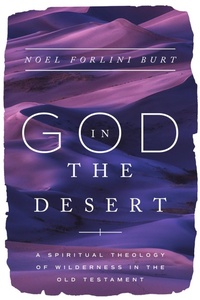
God in the Desert
Description

Find Meaning in the Wilderness through Scripture and Spiritual Practice
The desert is a place of paradox. In the desert we encounter silence and revelation, hunger and provision, barrenness and abundance, absence of God andintimate awareness of God's presence. The image of wilderness is a key theme in Scripture, from Abraham, Moses, and the prophets to Jesus. And throughout church history, people of faith have found it to be a useful metaphor for the spiritual life.
In God in the Desert, Old Testament scholar and spiritual director Noel Forlini Burt explores Old Testament wilderness narratives in conversation with wise voices from throughout church history, bridging the gap between biblical studies and spiritual formation. Journeying through stories such as Hagar, Elijah, and the Israelites at Sinai, each chapter also engages with figures like the desert fathers and mothers, Parker Palmer, Henri Nouwen, Richard Rohr, and Eugene Peterson.
God in the Desert
- connects biblical studies and spiritual formation,
- traces the theme of wilderness in the Old Testament and its implications for Christians, and
- combines scholarly depth with practical and inspiring spiritual reflection.
In this book, you'll walk through key themes and practices in spiritual formation like solitude, rebirth, prayer, spiritual reading, attachment, and how they can nurture the souls of readers today. Connecting biblical texts to her own experiences and those of Christians across time, Forlini Burt unpacks how wilderness can still be a place of transformation as God's people respond to the God of the desert. Whether you're a scholar, student, pastor, or spiritual formation practitioner, you'll find deep engagement with the Scriptures and spiritual wisdom for the Christian life in God in the Desert.
More details
Other editions
Additional editions
Person
Noel Forlini Burt (PhD, Drew University) teaches and lectures widely in the intersection of biblical studies and spiritual formation. She is the author of Hope in the Wilderness: Spiritual Reflections for When God Feels Far Away and Encounters in the Dark: Identity Formation in the Jacob Story. She is certified as a spiritual director (Truett Seminary) and in spiritual formation (Upper Room Academy for Spiritual Formation).
Content
Introduction: Letters from the Desert 1. Vision and Confession: Casting Ourselves into the Wilderness and Setting Hagar Free 2. Dreams and Ladders: Jacob at Bethel 3. Feasting on the Word: Eucharistic Reading in Exodus and Numbers 4. The Darkness of Disorientation: Moses, Sinai, and Liminality in the Spiritual Life 5. Narrating Our Lives with God: Storytelling as the Practice of Spiritual Direction in Deuteronomy 8 6. The Sacred Pause: Practicing Solitude and Silence with Elijah 7. Purgation and Belovedness in the Spiritual Life: Yahweh and Israel in Hosea's Metaphorical Desert (Hosea 2) 8. Aleph, Bet, Gimmel, Dalet, He: Learning Our Letters and Praying with Psalm 63 Conclusion: Spiritual Formation in the Desert Acknowledgments Bibliography Scripture Index
