

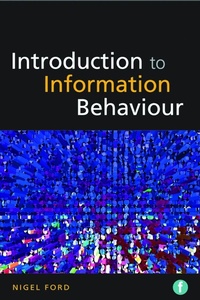
Introduction to Information Behaviour
Description

This landmark textbook is an essential primer for students and practitioners interested in information seeking, needs and behaviour, user studies and information literacy.
Introduction to Information Behaviour uses a combination of theory and practical context to map out what information behaviour is and what we currently know about it, before addressing how it can be better understood in the future. Nigel Ford argues that new understandings of information behaviour research may help maximise the quality and effectiveness of the way information is presented, sought, discovered, evaluated and used.
The book introduces the key concepts, issues and themes of information behaviour, illustrates them using key research studies, and provides a clear path through the complex maze of theories and models. The book is structured to move from the basics to the more complex and employs the pedagogical device of "THINK" boxes which invite the reader to think about concepts as they are introduced in order to consolidate their understanding before moving on. Case studies are included throughout the text and each chapter concludes with a round-up of what has been covered, highlighting the implications for professional information practice.
The key topics covered include:
- Defining information behaviour and why is it useful to know about it
- Information needs
- Information seeking and acquisition
- Collaborative information behaviour
- Factors affecting information behaviour
- Models and theories of information behaviour
- Research approaches and methodologies
- Designing information systems
- The future trajectory of information behaviour research and practice.
Readership: This book will be core reading for students around the world, particularly those on library and information science courses. It will also be of interest to practitioners and professional information users, providers and developers.
More details
Other editions
Additional editions
Persons
Nigel Ford is Professor of Information Science at Sheffield University, and is currently Deputy Director of the Information School's Centre for Information Literacy Research. He has taught information behaviour at undergraduate and Masters level for 30 years and is a leading researcher in the field, with an extensive publication record spanning journals and books.
Content
1. Introduction 2. What is information behaviour and why do we need to know about it? 3. Changing conceptions of information needs 4. Information seeking and acquisition are key components of information behaviour 5. Information behaviour can be collaborative 6. Factors influencing information behaviour 7. Models and theories in information behaviour research 8. Research approaches 9. Research methodologies in action 10. Using knowledge of information behaviour to design information systems 11. Conclusion
