

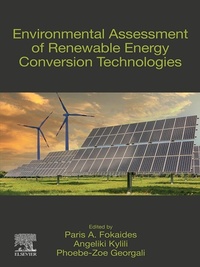
Environmental Assessment of Renewable Energy Conversion Technologies
Published on 11. June 2022
330 pages
978-0-12-817376-3 (ISBN)
Description

Environmental Assessment of Renewable Energy Conversion Technologies provides state-of-the-art coverage in both non-fossil energy conversion and storage techniques, as well as in their environmental assessment. This includes goal and scope, analysis boundaries, inventory and the impact assessment employed for the evaluation of these applications, as well as the environmental footprint of the technologies. The book compiles information currently available only in different sources concerning the environmental assessment of sustainable energy technologies, allowing for the comparative assessments of different technologies given specific boundary conditions, such as renewable potential and other specific features of discussed technologies.
It offers readers a comprehensive overview of the entire energy supply chain, namely from production to storage, by allowing the consideration of different production and storage combinations, based on their environmental assessment.
- Provides an overview of the environmental assessment process of renewable energy conversion and storage technologies
- Includes state-of-the-art approaches and techniques for the comprehensive environmental assessment of individual sustainable energy conversion and storage technologies and their applications
- Features comparative assessments of different technologies
More details
Other editions
Additional editions
Paris A. Fokaides | Phoebe-Zoe Morsink-Georgali | Angeliki Kylili
Environmental Assessment of Renewable Energy Conversion Technologies
Book
06/2022
Elsevier
€149.50
Shipment within 15-20 days
Content
Part A: Introduction1. State-of-the-art in Environmental Assessment Techniques2. European and Global Legislative Framework of Energy Technologies Environmental AssessmentPart B: Environmental Assessment of Renewable Energy Conversion Technologies3. Solar Energy - PV4. Solar Energy - Low-Heat Solar Thermal Applications (for heating)5. Solar Energy - High Temperature Solar Thermal Applications (CSPs) (for power)6. Wind Technologies - Wind Turbines7. Biomass to Biofuels - Thermochemical Conversion Routes (Torrefaction, Pyrolysis, Gasification)8. Biomass to Biofuels - Biochemical Conversion Routes (Anaerobic Digestion, Fermentation)9. Biomass to Biofuels - Mechanical Conversion Routes (Pelleting, Briquetting)10. Geothermal Energy - Shallow Geothermal Applications (for heating)11. Geothermal Energy - High Enthalpy Geothermal Applications (for power)12. Hydro Energy - Hydropower stations13. Hydro Energy - Tidal Power14. Water to Hydrogen Conversion RoutesPart C: Environmental Assessment of Renewable Energy Storage Technologies15. Heat Storage (Heat Capacity, Latent Heat)16. Pumped Hydrostorage17. Compressed Gas Storage18. Battery StoragePart D: Comparative Environmental Assessment of Renewable Energy Conversion and Storage Techniques19. Environmental Assessment of Renewable Energy Conversion Techniques20. Environmental Assessment of Renewable Energy Storage Techniques
