

Counting on Computers
Description
Alles über E-Books | Antworten auf Fragen rund um E-Books, Kopierschutz und Dateiformate finden Sie in unserem Info- & Hilfebereich.
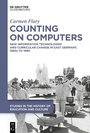
Counting on Computers: New Information Technologies and Curricular Change in East Germany, 1960s to 1990 is a compelling exploration of socialist ambitions for a computerised future and how computer technology was imagined to reshape education and socialist society in the German Democratic Republic (GDR). It delves into the positive visions of a computerised future embraced by the country's one-party leadership, and examines how these visions influenced educational policy and curricula as computers were introduced into workplaces and schools.
The book provides readers with a comprehensive perspective on the historical development of computer education in the GDR, highlighting the crucial links between the integration of computers in different sectors of the educational system, as well as in society and the socialist economy at large. By uncovering this lesser-known aspect of East German history, the book sheds light on the intricate and multifaceted relationship between technology, ideology, and education.
More details
Other editions
Additional editions

Person
Carmen Flury , Carl von Ossietzky University Oldenburg, Germany.
System requirements
File format: ePUB
Copy protection: Watermark-DRM (Digital Rights Management)
System requirements:
- Computer (Windows; MacOS X; Linux): Use a reading software that can process the file format ePUB: e.g., Adobe Digital Editions or FBReader – both free (see eBook Help).
- Tablet/Smartphone (Android; iOS): Before downloading, install the free app Adobe Digital Editions (see eBook Help).
- E-reader: Bookeen, Kobo, Pocketbook, Sony, Tolino and many more (not Kindle).
The file format ePUB works well for novels and non-fiction books – i.e., „flowing” text without complex layout. On an e-reader or smartphone, line and page breaks automatically adjust to fit the small displays.
This eBook uses Watermark-DRM, a „soft” copy protection. This means that there are no technical restrictions to prevent illegal distribution. However, there is a personalised watermark embedded in the eBook that can be used to identify the purchaser of the eBook in the event of misuse and to provide evidence for legal purposes.
For more information, see our eBook Help page.