

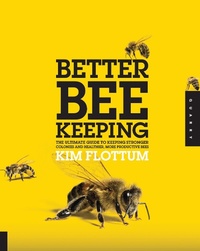
Better Beekeeping
The Ultimate Guide to Keeping Stronger Colonies and Healthier, More Productive Bees
Published on 1. August 2011
176 pages
978-1-61058-028-1 (ISBN)
Description

"Better Beekeeping is the most lucid call to action ever written about land-based beekeeping."-Tammy Horn, author of Bees in America and Beeconomy: What Women and Bees Can Teach Us about Local Trade and the Global Market
"There are numerous beekeeping books on the shelves that instruct on 'how to,' but Better Beekeeping is a book that explores 'why to,' which is essential for this ever-changing world of beekeeping today."-Jennifer Berry, research coordinator at the University of Georgia's Honey Bee Research Lab, commercial queen and nuc producer, and columnist for Bee Culture magazine
Backyard beekeepers everywhere agree: a successful colony is a thing of beauty.
Thousands of beekeepers have started beekeeping thanks to Kim Flottum's first book, The Backyard Beekeeper, and they have added to their repertoire of skills with The Backyard Beekeeper's Honey Handbook. Now, Better Beekeeping answers the question, "What do I do now that I'm a beekeeper?" This book takes serious beekeepers past the beginning stages and learning curves and offers solutions and rewards for keeping bees a better way. Better queens, better winters, better food, and better bees await any beekeeper willing to take on the challenge of having the right number of bees, of the right age, in the right place, in the right condition, at the right time.
"There are numerous beekeeping books on the shelves that instruct on 'how to,' but Better Beekeeping is a book that explores 'why to,' which is essential for this ever-changing world of beekeeping today."-Jennifer Berry, research coordinator at the University of Georgia's Honey Bee Research Lab, commercial queen and nuc producer, and columnist for Bee Culture magazine
Backyard beekeepers everywhere agree: a successful colony is a thing of beauty.
Thousands of beekeepers have started beekeeping thanks to Kim Flottum's first book, The Backyard Beekeeper, and they have added to their repertoire of skills with The Backyard Beekeeper's Honey Handbook. Now, Better Beekeeping answers the question, "What do I do now that I'm a beekeeper?" This book takes serious beekeepers past the beginning stages and learning curves and offers solutions and rewards for keeping bees a better way. Better queens, better winters, better food, and better bees await any beekeeper willing to take on the challenge of having the right number of bees, of the right age, in the right place, in the right condition, at the right time.
More details
Language
English
Place of publication
New York
United States
Publishing group
Quarto Publishing Group USA Inc
Illustrations
150
ISBN-13
978-1-61058-028-1 (9781610580281)
Copyright in bibliographic data and cover images is held by Nielsen Book Services Limited or by the publishers or by their respective licensors: all rights reserved.
Schweitzer Classification
Other editions
Additional editions
Kim Flottum
Better Beekeeping
The Ultimate Guide to Keeping Stronger Colonies and Healthier, More Productive Bees
Book
08/2011
Quarry Books
€41.07
Article exhausted; check different version
Person
Kim Flottum (d. 2023) brought a rich background of plant science, honey bee research, and basic farming to his 30 years as the editor of Bee Culture magazine, where his main occupation was finding the answers to the multitude of questions that beginning, intermediate, and even advanced and experienced beekeepers bring to the table. He taught beginning and advanced beekeeping courses, traveled extensively to educate and lecture, and contributed to a variety of other publications on the basics of honey bees and beekeeping biology, the business of bees and pollination, producing and using varietal honeys, and a host of other subjects. He was the author of The Backyard Beekeeper, First Time Beekeeping, In Business with Bees, and Common Sense Natural Beekeeping. His books, magazine articles, interviews, and blogs are widely read for both their fundamental and advanced contribution to beekeeping knowledge. He was beekeeping's leading advocate for fundamental honey bee safety, including ensuring excellent honey bee health, providing extraordinary forage, and minimizing the use of agricultural pesticides.
Content
- Cover Page
- Title Page
- Deidication
- Contents
- Introduction
- Chapter 1: Growing Your Operation:
- Trading Time for Money
- Buy Preassembled Frames
- Planning Ahead Saves Time and Money (But You Knew That)
- Use It Up, Wear It Out
- Business Goals and Bigger Pictures
- 1. Where Are You Now?
- 2. Where Do You Want to Be?
- 3. How Will You Get There?
- Buying Equipment Standardization and Value
- The Mercy Buy
- Places to Put More Bees
- Breakthrough: Lease Land for Beeyards
- Expanding Your Honey House
- New Ways to Expand
- More Better Honey
- Chapter 2: A New Look at Honey Production,
- What It Once Was and Why It Changed
- How Beekeeping Changed
- More Change: Honey Money
- A Price to Be Paid
- Non-Agricultural Areas
- Expanding Natural Bloom
- Early Nectar Crops, Then Farm Crops
- Migratory Beekeeping for Nectar Crops
- Planning a Honey Crop
- Types of Honey Crops
- Planting Perennial Shrubs and Bushes
- Long-Term, Permanent Plantings
- Growing Your Own, with Help
- Other Cost Considerations
- How Much Land Is Required?
- Working with Landowners with Lots of Land
- Costs per Acre
- More Land: Bigger, Better, More Complicated
- Recommended Plantings for Honey Bees
- Shrubs and Bushes
- Cover Crops
- Wildflowers
- Permanent Plantings
- This Land Is My Land, This Land Is Your Land
- Types of Contracts
- Chapter 3: ROYALTY:
- The Queens We Can Get
- What Do You Want from Your Bees?
- Know What You Want
- Hybrids
- Survivor Queens
- What Kind of Beekeeper Are You?
- What Kind of Beekeeper Are You, Really?
- Buying Queens
- Mated Production Queens
- Uncapped Queen Cells
- Getting Queen Cells
- Acquiring Virgin Queens
- Raising Your Own Queens
- Getting Breeder Queens
- Raising Production Queens
- Random Queen Production
- The Starter/Finisher: The King of Queen-Rearing Techniques
- The Cloake Board Method
- Background Check for Drone Colonies
- Chapter 4: The Working Class
- Preventing Springtime Swarming
- Before Spring Arrives
- Early-Season Feeding
- Opening and Repacking the Colony After Feeding
- Reducing Congestion in the Brood Nest
- Equalizing Colonies, Discarding Dinks
- Reversing
- Making Spring Splits
- Making Summer Splits
- All About Honey Production
- Measuring Growth
- Preventing a Welfare Bee Population
- Pests and Other Problems
- Rallying Cry: Varroa Mite Resistance or Death
- Signs of Hope
- Trapping, Avoidance, and IPM
- Chemicals
- The Rest of the Lot
- Controlling Nosema
- Chapter 5: Wintering Your Bees,
- Winter Rules
- Unnatural Habits
- From the Past
- Take Care of the Bees
- The Natural Question
- The New Nosema
- The Golden Rule
- How Much Honey?
- Too Cold Too Long
- Protection
- When It's Really Cold
- Planning Your Wrap
- Pollen
- Common Sense and Practical Facts
- Summary
- Glossary
- Resources
- Suppliers
- Index
- Photographer Credits
- About the Author
- Acknowledgments
- Copyright Page
