

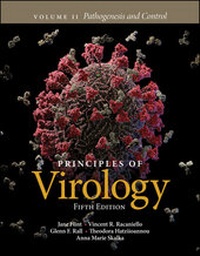
Principles of Virology, Volume 2
Description

This fifth edition was updated to keep pace with the ever-changing field of virology. In addition to the beloved full-color illustrations, video interviews with leading scientists, movies, and links to exciting blogposts on relevant topics, this edition includes study questions and active learning puzzles in each chapter, as well as short descriptions regarding the key messages of references of special interest.
Volume I: Molecular Biology focuses on the molecular processes of viral reproduction, from entry through release. Volume II: Pathogenesis and Control addresses the interplay between viruses and their host organisms, on both the micro- and macroscale, including chapters on public health, the immune response, vaccines and other antiviral strategies, viral evolution, and a brand new chapter on the therapeutic uses of viruses. These two volumes can be used for separate courses or together in a single course. Each includes a unique appendix, glossary, and links to internet resources.
Principles of Virology, Fifth Edition, is ideal for teaching the strategies by which all viruses reproduce, spread within a host, and are maintained within populations. This edition carefully reflects the results of extensive vetting and feedback received from course instructors and students, making this renowned textbook even more appropriate for undergraduate and graduate courses in virology, microbiology, and infectious diseases.
More details
Other editions
Additional editions
Persons
Jane Flint is Professor Emerita of Molecular Biology at Princeton University. Dr. Flint's research focused on investigation of the mechanisms by which viral gene products modulate host pathways and antiviral defenses to allow efficient reproduction in normal human cells of adenoviruses, viruses that are used in such therapeutic applications as gene transfer and cancer treatment.
Vincent R. Racaniello is Higgins Professor of Microbiology & Immunology at Columbia University Vagelos College of Physicians & Surgeons. Dr. Racaniello has been studying viruses for over 40 years, including polio- virus, rhinovirus, enteroviruses, hepatitis C virus, and Zika virus. He blogs about virus-es at virology.ws and is host of This Week in Virology.
Glenn F. Rall is a Professor and the Chief Academic Officer at the Fox Chase Cancer Center, and is an Adjunct Professor in the Microbiology and Immunology departments at the University of Pennsylvania, as well as Thomas Jefferson, Drexel, and Temple Universities. Dr. Rall studies viral infections of the brain and the immune responses to those infections, with the goal of defining how viruses contribute to disease.
Theodora Hatziioannou is a Research Associate Professor at Rockefeller University and is actively involved in teaching programs at Albert Einstein College of Medicine. Dr. Hatziioannou has worked on multiple viruses with a focus on retroviruses and the molecular mechanisms that govern virus tropism and on the improvement of animal models for human disease.
Anna Marie Skalka is a Professor Emerita and former Senior Vice President for Basic Research at the Fox Chase Cancer Center. Dr. Skalka is internationally recognized for her contributions to the understanding of the biochemical mechanisms by which retroviruses replicate and insert their genetic material into the host genome, as well as her research into other molecular aspects of retrovirus biology.
Content
Preface xvii
Acknowledgments xxi
About the Authors xxiii
Key of Repetitive Elements xxv
1 Infections of Populations: History and Epidemiology 2
Introduction to Viral Pathogenesis 3
A Brief History of Viral Pathogenesis 4
The Relationships among Microbes and the Diseases They Cause 4
The First Human Viruses Identified and the Role of Serendipity 5
New Methods Facilitate the Study of Viruses as Causes of Disease 7
Viral Epidemics in History 8
Epidemics Shaped History: the 1793 Yellow Fever Epidemic in Philadelphia 9
Tracking Epidemics by Sequencing: West Nile Virus Spread to the Western Hemisphere 10
Zoonotic Infections and Epidemics Caused by "New" Viruses 11
The Economic Toll of Viral Epidemics in Livestock 12
Population Density and World Travel Are Accelerators of Viral Transmission 12
Focus on Frontline Health Care: Ebolavirus in Africa 12
Emergence of a Birth Defect Associated with Infection: Zika Virus in Brazil 13
Epidemiology 14
Fundamental Concepts 14
Methods Used by Epidemiologists 17
Surveillance 17
Network Theory and Practical Applications 20
Parameters That Govern the Ability of a Virus to Infect a Population 20
Geography and Population Density 20
Climate 23
Perspectives 26
References 27
Study Questions 28
2 Barriers to Infection 30
Introduction 31
An Overview of Infection and Immunity 31
A Game of Chess Played by Masters 31
Initiating an Infection 33
Successful Infections Must Modulate or Bypass Host Defenses 34
Skin 34
Respiratory Tract 35
Alimentary Tract 38
Eyes 41
Urogenital Tract 42
Placenta 42
Viral Tropism 43
Accessibility of Viral Receptors 44
Other Host-Virus
Interactions That Regulate the Infectious Cycle 44
Spread throughout the Host 45
Hematogenous Spread 47
Neural Spread 50
Organ Invasion 51
Entry into Organs with Sinusoids 51
Entry into Organs That Lack Sinusoids 51
Organs with Dense Basement Membranes 53
Skin 53
Shedding of Virus Particles 54
Respiratory Secretions 54
Saliva 55
Feces 55
Blood 56
Urine 56
Semen 56
Milk 56
Skin Lesions 56
Tears 56
Perspectives 57
References 58
Study Questions 59
3 The Early Host Response: Cell Autonomous and Innate Immunity 60
Introduction 61
The First Critical Moments: How Do Individual Cells Detect a Virus Infection? 62
Cell Signaling Induced by Viral Entry Receptor Engagement 63
Receptor-Mediated Recognition of Microbe-Associated Molecular Patterns 64
Cell-Intrinsic Defenses 70
Apoptosis (Programmed Cell Death) 70
Programmed Necrosis (Necroptosis) 75
Autophagy 77
Epigenetic Silencing 77
Host Proteins That Restrict Virus Reproduction (Restriction Factors) 79
RNA Interference 83
CRISPR 83
The Continuum between Intrinsic and Innate Immunity 83
Secreted Mediators of the Innate Immune Response 83
Overview of Cytokine Functions 85
Interferons, Cytokines of Early Warning and Action 86
Chemokines 94
The Innate Immune Response 96
Monocytes, Macrophages, and Dendritic Cells 97
Complement 97
Natural Killer Cells 99
Other Innate Immune Cells Relevant to Viral Infections 101
Perspectives 103
References 104
Study Questions 106
4 Adaptive Immunity and Establishment of Memory 108
Introduction 109
Attributes of the Host Response 109
Speed 109
Diversity and Specificity 110
Memory 110
Self-Control 111
Lymphocyte Development, Diversity, and Activation 111
The Hematopoietic Stem Cell Lineage 111
The Two Arms of Adaptive Immunity 112
The Major Effectors of the Adaptive Response: B and T Cells 112
Diverse Receptors Impart Antigen Specificity to B and T Cells 118
Events at the Site of Infection Set the Stage for the Adaptive Response 120
Acquisition of Viral Proteins by Professional Antigen-Presenting Cells Enables Production of Proinflammatory Cytokines and Establishment of Inflammation 120
Activated Antigen-Presenting Cells Leave the Site of Infection and Migrate to Lymph Nodes 122
Antigen Processing and Presentation 125
Professional Antigen-Presenting Cells Induce Activation via Costimulation 125
Presentation of Antigens by Class I and Class II MHC Proteins 125
Lymphocyte Activation Triggers Massive Cell Proliferation 128
The CTL (Cell-Mediated) Response 130
CTLs Lyse Virus-Infected Cells 130
Control of CTL Proliferation 132
Control of Infection by CTLs without Killing 134
Rashes and Poxes 134
The Humoral (Antibody) Response 136
Antibodies Are Made by Plasma Cells 136
Types and Functions of Antibodies 137
Virus Neutralization by Antibodies 137
Antibody-Dependent Cell-Mediated Cytotoxicity: Specific Killing by Nonspecific Cells 140
Immunological Memory 140
Perspectives 142
References 143
Study Question Puzzle 145
5 Patterns and Pathogenesis 146
Introduction 147
Animal Models of Human Diseases 147
Patterns of Infection 151
Incubation Periods 151
Mathematics of Growth Correlate with Patterns of Infection 152
Acute Infections 152
Persistent Infections 155
Latent Infections 163
Abortive Infections 170
Transforming Infections 171
Viral Virulence 171
Measuring Viral Virulence 171
Approaches to Identify Viral Genes That Contribute to Virulence 171
Viral Virulence Genes 173
Pathogenesis 176
Infected Cell Lysis 176
Immunopathology 177
Immunosuppression Induced by Viral Infection 181
Oncogenesis 183
Molecular Mimicry 183
Perspectives 183
References 185
Study Question Puzzle 186
6 Cellular Transformation and Oncogenesis 188
Introduction 189
Properties of Transformed Cells 189
Control of Cell Proliferation 193
Oncogenic Viruses 197
Discovery of Oncogenic Viruses 197
Viral Genetic Information in Transformed Cells 200
The Origin and Nature of Viral Transforming Genes 205
Functions of Viral Transforming Proteins 206
Activation of Cellular Signal Transduction Pathways by Viral Transforming Proteins 206
Viral Signaling Molecules Acquired from the Cell 207
Alteration of the Production or Activity of Cellular Signal Transduction Proteins 209
Disruption of Cell Cycle Control Pathways by Viral Transforming Proteins 215
Abrogation of Restriction Point Control Exerted by the RB Protein 215
Production of Virus-Specific Cyclins 218
Inactivation of Cyclin-Dependent Kinase Inhibitors 218
Transformed Cells Increase in Size and Survive 218
Mechanisms That Permit Survival of Transformed Cells 219
Tumorigenesis Requires Additional Changes in the Properties of Transformed Cells 221
Inhibition of Immune Defenses 222
Other Mechanisms of Transformation and Oncogenesis by Human
Tumor Viruses 222
Nontransducing Oncogenic Retroviruses: Tumorigenesis with Very Long Latency 222
Oncogenesis by Hepatitis Viruses 223
Perspectives 225
References 226
Study Questions 228
7 Vaccines 230
Introduction 231
The Origins of Vaccination 231
Smallpox: a Historical Perspective 231
Worldwide Vaccination Programs Can Be Dramatically Effective 232
Vaccine Basics 237
Immunization Can Be Active or Passive 237
Active Vaccination Strategies Stimulate Immune Memory 238
The Fundamental Challenge 243
The Science and Art of Making Vaccines 243
Inactivated Virus Vaccines 244
Attenuated Virus Vaccines 247
Subunit Vaccines 250
Virus-Like Particles 252
Nucleic Acid Vaccines 253
Vaccine Technology: Delivery and Improving Antigenicity 254
Adjuvants Stimulate an Immune Response 254
Delivery and Formulation 254
Immunotherapy 255
The Ongoing Quest for an AIDS Vaccine 255
Perspectives 256
References 257
Study Question Puzzle 259
8 Antiviral Drugs 260
Introduction 261
A Brief History of Antiviral Drug Discovery 261
Discovering Antiviral Compounds 262
The Lexicon of Antiviral Discovery 262
Screening for Antiviral Compounds 264
Computational Approaches to Drug Discovery 266
The Difference between "R" and "D" 269
Drug Resistance 271
Examples of Antiviral Drugs 272
Inhibitors of Virus Attachment and Entry 272
Inhibitors of Viral Nucleic Acid Synthesis 275
Inhibition of Viral Polyprotein Processing and Assembly 282
Inhibition of Virus Particle Release 284
Expanding Targets for Antiviral Drug Development 284
Attachment and Entry Inhibitors 286
Nucleic Acid-Based Approaches 286
Proteases and Nucleic Acid Synthesis and Processing Enzymes 287
Virus Particle Assembly 287
Microbicides 287
Two Stories of Antiviral Success 287
Combination Therapy 288
Challenges Remaining 290
Perspectives 291
References 294
Study Questions 295
9 Therapeutic Viruses 296
Introduction 297
Phage Therapy 297
History 297
Some Advantages and Limitations of Phage Therapy 298
Applications in the Clinic and for Disease Prevention 299
Future Prospects 301
Oncolytic Animal Viruses 302
From Anecdotal Reports to Controlled Clinical Trials 302
Rational Design of Oncolytic Viruses 304
Two Clinically Approved Oncolytic Viruses 307
Future Directions 308
Gene Therapy 308
Introduction 308
Retroviral Vectors 309
Adenovirus-Associated Virus Vectors 316
Future Prospects 321
Vaccine Vectors 322
DNA Viruses 322
RNA Viruses 325
Perspectives 328
References 330
Study Questions 331
10 Virus Evolution 332
Virus Evolution 333
How Do Virus Populations Evolve? 333
Two General Virus Survival Strategies Can Be Distinguished 333
Large Numbers of Viral Progeny and Mutants Are Produced in Infected Cells 334
The Quasispecies Concept 335
Genetic Shift and Genetic Drift 338
Fundamental Properties of Viruses That Constrain Evolution 339
Two General Pathways for Virus Evolution 339
Evolution of Virulence 340
The Origin of Viruses 342
When and How Did They Arise? 342
Evolution of Contemporary Eukaryotic Viruses 342
Host-Virus Relationships Drive Evolution 348
DNA Virus-Host Relationships 348
RNA Virus-Host Relationships 350
The Host-Virus "Arms Race" 351
Lessons from Paleovirology 353
Endogenous Retroviruses 353
DNA Fossils Derived from Other RNA Viral Genomes 355
Endogenous Sequences from DNA Viruses 355
Short-versus Long-Term Rates of Viral Evolution 358
Perspectives 358
References 359
Study Questions 360
11 Emergence 362
The Spectrum of Host-Virus Interactions 363
Stable Interactions 363
The Evolving Host-Virus Interaction 364
The Dead-End Interaction 364
The Resistant Host 366
Encountering New Hosts: Humans Constantly Provide New Venues for Infection 368
Common Sources for Animal-to-Human Transmission 370
Viral Diseases That Illustrate the Drivers of Emergence 372
Poliomyelitis: Unexpected Consequences of Modern Sanitation 372
Introduction of Viruses into Naïve Populations 372
Hantavirus Pulmonary Syndrome: Changing Animal Populations 374
Severe Acute and Middle East Respiratory Syndromes (SARS and MERS): Zoonotic Coronavirus Infections 374
The Contribution to Emergence of Mutation, Recombination, or Reassortment 376
Canine Parvoviruses: Cat-to-Dog Host Range Switch by Two Amino Acid Changes 376
Influenza Epidemics and Pandemics: Escaping the Immune Response by Reassortment 376
New Technologies Uncover Previously Unrecognized Viruses 378
Hepatitis Viruses in the Human Blood Supply 378
A Revolution in Virus Discovery 380
Perceptions and Possibilities 381
Virus Names Can Be Misleading 382
All Viruses Are Important 382
Can We Predict the Next Viral Pandemic? 382
Preventing Emerging Virus Infections 383
Perspectives 384
References 384
Study Questions 385
12 Human Immunodeficiency Virus Type I Pathogenesis 386
Introduction 387
Worldwide Impact of AIDS 387
HIV-1 Is a Lentivirus 387
Discovery and Characterization 387
Distinctive Features of the HIV-1 Reproduction Cycle and the Functions of HIV-1 Proteins 390
The Viral Capsid Counters Intrinsic Defense Mechanisms 398
Entry and Transmission 400
Entry in the Cell 400
Entry into the Body 401
Transmission in Human Populations 402
The Course of Infection 403
The Acute Phase 403
The Asymptomatic Phase 406
The Symptomatic Phase and AIDS 406
Effects of HIV-1 on Other Tissues and Organs 406
Virus Reproduction 408
Dynamics in the Absence of Treatment 408
Dynamics of Virus Reproduction during Treatment 408
Latency 410
Immune Responses to HIV-1 411
Innate Response 411
Humoral Responses 411
HIV-1 and Cancer 412
Kaposi's Sarcoma 412
B-Cell Lymphomas 413
Anogenital Carcinomas 413
Prospects for Treatment and Prevention 414
Antiviral Drugs 414
Confronting the Problems of Persistence and Latency 415
Gene Therapy Approaches 415
Immune System-Based Therapies 417
Antiviral Drug Prophylaxis 417
Perspectives 417
References 418
Study Questions 419
13 Unusual Infectious Agents 420
Introduction 421
Viroids 421
Replication 421
Sequence Diversity 424
Movement 424
Pathogenesis 425
Satellite Viruses and RNAs 425
Replication 426
Pathogenesis 426
Hepatitis Delta Virus 426
Prions and Transmissible Spongiform Encephalopathies 427
Scrapie 427
Physical Properties of the Scrapie Agent 429
Human TSEs 429
Hallmarks of TSE Pathogenesis 429
Prions and the prnp Gene 429
Prion Strains 434
Bovine Spongiform Encephalopathy 435
Chronic Wasting Disease 436
Treatment of Prion Diseases 437
Perspectives 438
References 439
Study Questions 439
Appendix Epidemiology and Pathogenesis of Selected Human Viruses 441
Glossary 471
Index 477
Preface
The enduring goal of scientific endeavor, as of all human enterprise, I imagine, is to achieve an intelligible view of the universe. One of the great discoveries of modern science is that its goal cannot be achieved piecemeal, certainly not by the accumulation of facts. To understand a phenomenon is to understand a category of phenomena or it is nothing. Understanding is reached through creative acts.
A. D. HERSHEY
Carnegie Institution Yearbook 65
All five editions of this textbook have been written according to the authors' philosophy that the best approach to teaching introductory virology is by emphasizing shared principles. Studying the common steps of the viral reproductive cycle, illustrated with a set of representative viruses, and considering mechanisms by which these viruses can cause disease provides an integrated overview of the biology of these infectious agents. Such knowledge cannot be acquired by learning a collection of facts about individual viruses. Consequently, the major goal of this book is to define and illustrate the basic principles of virus biology.
In this information-rich age, the quantity of data describing any given virus can be overwhelming, if not indigestible, for student and expert alike. The urge to write more and more about less and less is the curse of reductionist science and the bane of those who write textbooks meant to be used by students. In the fifth edition, we continue to distill information with the intent of extracting essential principles, while providing descriptions of how the information was acquired and tools to encourage our readers' exploration of the primary literature. Boxes are used to emphasize major principles and to provide supplementary material of relevance, from explanations of terminology to descriptions of trailblazing experiments. Our goal is to illuminate process and strategy as opposed to listing facts and figures. In an effort to make the book readable, we have been selective in our choice of viruses that are used as examples. The encyclopedic Fields' Virology [Knipe DM, Howley PM (ed). 2020. Fields Virology, 7th ed. Lippincott Williams & Wilkins, Philadelphia, PA] is recommended as a resource for detailed reviews of specific virus families.
What's New
This edition is marked by a welcome addition to the author team. Our new member, Theodora Hatziioannou, brings expertise in retrovirology, entry, and intrinsic immunity, as well as authority regarding ancient Greek mythology and philosophy that the attentive reader will see is generously sprinkled throughout the text.
We have added an important new chapter in Volume II, "Therapeutic Viruses." While the majority of the chapters define how viruses reproduce and cause mayhem to both cell and host, this new chapter turns the tables to discuss how viruses can be beneficial to eliminate tumor cells, deliver therapeutic genes to specific cells, and expand our arsenal of vaccines for prevention of virus-mediated diseases.
The authors continually strive to make this text accessible and relevant to our readers, many of whom are undergraduates, graduate students, and postdoctoral fellows. Consequently, for this edition, we enlisted the aid of more than twenty of these trainees to provide guidance and commentary on our chapters and ensure that concepts are clearly explained and that the text is compelling to read. This unique group of editors has been invaluable in the design of all of our fully reworked and up-to-date chapters and appendices, and we extend a particular thank-you to them for sharing their perspectives.
A new feature is the inclusion of a set of study questions and/or, in some cases, puzzles, as aids to ensure that the key principles are evident within each chapter. This section complements the Principles that begin each chapter, focusing on unifying core concepts.
Finally, although the SARS-CoV-2 pandemic began as we were preparing to go to press, we have included additions to relevant chapters on the epidemiology, emergence, and replication of this global scourge, as well as some hopeful information concerning vaccine development. What is apparent is that, now more than ever, an appreciation of how viruses impact their hosts is not just an academic pursuit, but rather literally a matter of life and death. We extend our gratitude to all those who serve in patient care settings.
Principles Taught in Two Distinct, but Integrated Volumes
Volume I covers the molecular biology of viral reproduction, and Volume II focuses on viral pathogenesis, control of virus infections, and virus evolution. The organization into two volumes follows a natural break in pedagogy and provides considerable flexibility and utility for students and teachers alike. The two volumes differ in content but are integrated in style and presentation. In addition to updating the chapters and appendices for both volumes, we have organized the material more efficiently, and as noted above, added a new chapter that we believe reflects an exciting direction for the field. Links to Internet resources such as websites, podcasts, blog posts, and movies are provided within each chapter; the digital edition provides one-click access to these materials.
As in our previous editions, we have tested ideas for inclusion in the text in our own classes. We have also received constructive comments and suggestions from other virology instructors and their students. Feedback from our readers was particularly useful in finding typographical errors, clarifying confusing or complicated illustrations, and pointing out inconsistencies in content.
For purposes of readability, references are not included within the text; each chapter ends with an updated list of relevant books, review articles, and selected research papers for readers who wish to pursue specific topics. New to this edition are short descriptions of the key messages from each of the cited papers of special interest. Finally, each volume has a general glossary of essential terms.
These two volumes outline and illustrate the strategies by which all viruses reproduce, how infections spread within a host, and how they are maintained in populations. We have focused primarily on animal viruses, but have drawn insights from studies of viruses that reproduce in plants, bacteria, and archaea.
Volume I: The Science of Virology and the Molecular Biology of Viruses
This volume examines the molecular processes that take place in an infected host cell. Chapter 1 provides a general introduction and historical perspective, and includes descriptions of the unique properties of viruses. The unifying principles that are the foundations of virology, including the concept of a common strategy for viral propagation, are then described. The principles of the infectious cycle, descriptions of the basic techniques for cultivating and assaying viruses, and the concept of the single-step growth cycle are presented in Chapter 2.
The fundamentals of viral genomes and genetics, and an overview of the surprisingly limited repertoire of viral strategies for genome replication and mRNA synthesis, are topics of Chapter 3. The architecture of extracellular virus particles in the context of providing both protection and delivery of the viral genome in a single vehicle is considered in Chapter 4. Chapters 5 to 13 address the broad spectrum of molecular processes that characterize the common steps of the reproductive cycle of viruses in a single cell, from decoding genetic information to genome replication and production of progeny virions. We describe how these common steps are accomplished in cells infected by diverse but representative viruses, while emphasizing common principles. Volume I concludes with a chapter that presents an integrated description of cellular responses to illustrate the marked, and generally irreversible, impact of virus infection on the host cell.
The appendix in Volume I provides concise illustrations of viral reproductive cycles for members of the main virus families discussed in the text. It is intended to be a reference resource when reading individual chapters and a convenient visual means by which specific topics may be related to the overall infectious cycles of the selected viruses.
Volume II: Pathogenesis, Control, and Evolution
This volume addresses the interplay between viruses and their host organisms. In Chapter 1, we introduce the discipline of epidemiology, and consider basic aspects that govern how the susceptibility of a population is controlled and measured. Physiological barriers to virus infections, and how viruses spread in a host, and to other hosts, are the topics of Chapter 2. The early host response to infection, comprising cell-autonomous (intrinsic) and innate immune responses, are the topics of Chapter 3, while the next chapter considers adaptive immune defenses, which are tailored to the pathogen, and immune memory. Chapter 5 focuses on the classical patterns of virus infection within cells and hosts, and the myriad ways that viruses cause illness. In Chapter 6, we discuss virus infections that transform cells in culture and promote oncogenesis (the formation of tumors) in animals. Next, we consider the principles underlying treatment and control of infection. Chapter 7 focuses on vaccines, and Chapter 8 discusses the approaches and challenges of antiviral drug discovery. In Chapter 9, the new chapter in this edition, we describe the rapidly expanding applications of viruses as...
