

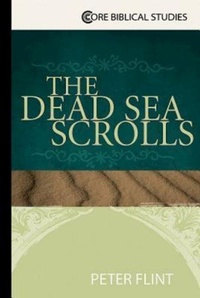
The Dead Sea Scrolls
Published on 1. February 2013
250 pages
978-1-4267-7107-1 (ISBN)
Description

In 1947, a Bedouin shepherd literally stumbled upon a cave near the Dead Sea, a settlement now called Qumran, to the east of Jerusalem. This cave, along with the others located nearby, contained jars holding hundreds of scrolls and fragments of scrolls of texts both biblical and nonbiblical-in Hebrew, Aramaic, and Greek. The biblical scrolls would be the earliest evidence of the Hebrew Scriptures, or Old Testament, by hundreds of years; and the nonbiblical texts would shed dramatic light on one of the least-known periods of Jewish history-the Second Temple period. This find is, quite simply, the most important archaeological event in two thousand years of biblical studies.
The scrolls provide information on nearly every aspect of biblical studies, including the Old Testament, text criticism, Second Temple Judaism, the New Testament, and Christian origins. It took more than fifty years for the scrolls to be completely and officially published, and there is no comparable brief, introductory resource.
Core Biblical Studies fulfill the need for brief, substantive, yet highly accessible introductions to key subjects and themes in biblical studies. In the shifting tides of biblical interpretation, these books are designed to help students locate relevant meanings in conversation with the text. As a first step toward substantive and subsequent learning, the series draws on the best scholarship in order to provide foundational concepts and contextualized information on a broad scope of issues, methods, perspectives, and trends.
The scrolls provide information on nearly every aspect of biblical studies, including the Old Testament, text criticism, Second Temple Judaism, the New Testament, and Christian origins. It took more than fifty years for the scrolls to be completely and officially published, and there is no comparable brief, introductory resource.
Core Biblical Studies fulfill the need for brief, substantive, yet highly accessible introductions to key subjects and themes in biblical studies. In the shifting tides of biblical interpretation, these books are designed to help students locate relevant meanings in conversation with the text. As a first step toward substantive and subsequent learning, the series draws on the best scholarship in order to provide foundational concepts and contextualized information on a broad scope of issues, methods, perspectives, and trends.
More details
Other editions
Additional editions
Person
Peter W. Flint held the Canada Research Chair in Dead Sea Scrolls Studies and was Director of the Dead Sea Scrolls Institute at Trinity Western University in British Columbia. He edited or co-edited almost thirty Dead Sea Scrolls for publication, including the Cave 1 Isaiah Scrolls, the Cave 4 Psalms Scrolls, and the translation, The Dead Sea Scrolls Bible. He authored numerous books and articles and co-edited a major two-volume study collection (The Dead Sea Scrolls After Fifty Years).
Content
- Cover
- Half title
- Title
- Copyright
- Contents
- Abbreviations, Definitions, and Key Words
- Ancient Groups and Figures
- Introduction: The Greatest Find of Our Times
- 1. The Discovery of the Scrolls in the Judean Desert
- 1. The First Cave at Qumran and Its Seven Scrolls
- 2. The Other Ten Qumran Caves and Their Scrolls
- 3. Dead Sea Scrolls from Other Sites in the Judean Desert
- 4. The Quest for Further Caves and Scrolls
- 2. Archaeology of the Qumran Site: The Caves, Buildings, and Cemeteries
- 1. Archaeology and the Qumran Caves
- 2. Archaeology of the Qumran Buildings
- 3. The Qumran Cemeteries
- 3. Dating the Scrolls Found at Qumran
- 1. Dating the Scrolls and the Qumran Site by Archaeology
- 2. Internal Datings in the Scrolls
- 3. Dating Dead Sea Scrolls Using Paleography
- 4. Radiocarbon Methods of Dating
- 4. The Bible Before the Scrolls
- 1. The Masoretic Text
- 2. The Samaritan Pentateuch
- 3. The Septuagint or Greek Bible
- 4. Other Versions (Translations) of the Hebrew Bible/Old Testament
- 5. The Biblical Scrolls
- 1. The Pentateuch (or Torah)
- 2. The Historical Books
- 3. The Poetical Books
- 4. The Prophets
- 6. The Dead Sea Scrolls and the Biblical Text
- 1. Observations on the Biblical Scrolls
- 2. The Scrolls and the Text of the Hebrew Bible/Old Testament
- 7. The Scrolls, the Apocrypha, and the Pseudepigrapha
- 1. The Apocrypha and Pseudepigrapha
- 2. Apocrypha and Pseudepigrapha in the Dead Sea Scrolls
- 8. The Shape and Contents of the Scriptures Used at Qumran
- 1. Hebrew Bible or Old Testament?
- 2. Ancient Evidence Outside the Scrolls Found at Qumran
- 3. Evidence from the Scrolls Found at Qumran
- 9. The Nonbiblical Scrolls
- 1. Rules
- 2. Legal Texts
- 3. Commentaries on Authoritative Texts
- 4. Poetic Texts, Calendars, Prayers, and Liturgies
- 5. Wisdom (Sapiential) Texts
- 6. Eschatological Texts
- 7. The Copper Scroll, Other Documentary Texts, and Nonsectarian Texts
- 10. The Movement Associated with Qumran: Not Pharisees or Sadducees, but Essenes
- 1. Were the Scrolls Found at Qumran Associated with the Pharisees?
- 2. Were the Scrolls Found at Qumran Associated with the Sadducees?
- 3. The Scrolls Found Near Qumran Were Associated with a Group of Essenes
- 4. Concluding Statement on the Pharisees, Sadducees, and Essenes
- 5. History of the Essene Movement
- 11. Religious Thought and Practice Reflected in the Qumran Scrolls
- 1. Concept of God
- 2. Predeterminism (or Fate), the Two Ways, and the Supernatural Origins of Evil
- 3. One Overall Principle (Law)
- 4. Interpretation of Scripture
- 5. Experiencing God and the Divine
- 6. The End of Days and the Messiahs
- 12. The New Testament and the Dead Sea Scrolls
- 1. The Scrolls and Early Christian Writings: New Testament Writings at Qumran?
- 2. Jesus and the Dead Sea Scrolls (the Gospels and the Scrolls)
- 3. The Scrolls and the Early Church: Acts, Paul, and the Other Letters
- 4. The Dead Sea Scrolls and the Book of Revelation
- Bibliography
- Editions, English Translations, and Computer Software
- Books and Articles Mentioned in this Volume
- Index of Modern Authors
- Comment on the Website and Online Material
