

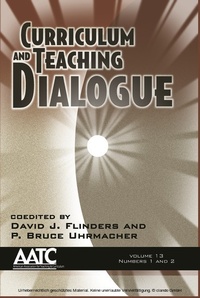
Curriculum and Teaching Dialogue
Vol. 13 # 1 & 2
1st Edition
Published on 12. January 2012
323 pages
978-1-61735-607-0 (ISBN)
Description

Curriculum and Teaching Dialogue (CTD) is a publication of the American Association of Teaching and Curriculum (AATC), a national learned society for the scholarly field of teaching and curriculum. The field includes those working on the theory, design and evaluation of educational programs at large. At the university level, faculty members identified with this field are typically affiliated with the departments of curriculum and instruction, teacher education, educational foundations, elementary education, secondary education, and higher education. CTD promotes all analytical and interpretive approaches that are appropriate for the scholarly study of teaching and curriculum. In fulfillment of this mission, CTD addresses a range of issues across the broad fields of educational research and policy for all grade levels and types of educational programs.
All prices
More details
Other editions
Additional editions
David J. Flinders | P. Bruce Uhrmacher
Curriculum and Teaching Dialogue Vol 13 Issue 1 & 2
Volume 13, Numbers 1 & 2
Book
09/2011
Information Age Publishing
€70.80
Article not available at the moment
Content
- Intro
- Curriculum and Teaching Dialogue
- Volume 13, Numbers 1 and 2
- CONTENTS
- Volume 13, number 1
- 1. What I Learned on the Road to Mississauga: Democracy and Curriculum
- 2. Balancing Interests With Needs: Conceiving an Encyclopedia for Curriculum Studies
- 3. Bloom's Taxonomy: Its Evolution, Revision, and Use in the Field of Education
- 4. The City as Classroom: Teaching in and With Historic Places
- 5. Voices of Preservice Teachers in the Borderlands: Exploring Cultural Identity Through Language
- 6. Developing Globalized Teacher Education Curriculum Through Interdisciplinarity
- 7. Problematizing Notions of Decontextualized "Best Practice"
- 8. Triangulating the Theory-Practice Connection: Explicit Linkage between Personal Experiences, Field Based Experiences, and Certification Requirements in a Satellite Program for Bilingual Education Teacher Candidates
- 9. Equity in Education: Practicing Educators' Experiences and Perspectives
- 10. Henry David Thoreau: Spirituality and Experiential Education
- Volume 13, number 2
- 1. The Dilemmas of Male Elementary Preservice Teachers
- 2. Using Dyad Learning in a Science Methods Course With Preservice Elementary Teachers
- 3. Our Friend Martin: Using Culturally Relevant Video to Initiate Critical Conversations About Race in an Urban Classroom
- 4. Transitioning to a Culturally Responsive Field-Based Model for Educator Preparation
- 5. "I Love Kids! Doesn't That Mean I Will Be a Successful Preservice Teacher?"
- 6. Stay True or Start New: Dichotomy in First Year Kindergarten Teacher Experiences
- 7. Experiencing the Social Issues That Impact America's Classrooms: A Study of Academic Service-Learning in Education Courses
- 8. America's Race To the Top, Our Fall From Grace
- 9. Confessions of a Former Painter-by-the-Numbers
- Information Age Publishing, Inc.
- Charlotte, North Carolina www.infoagepub.com
- Curriculum and Teaching Dialogue AATC Leadership for 2010-2011
- President: J. Wesley Null, Baylor University
- Past President: David Callejo Perez, Saginaw Valley State University
- President-Elect: Richard Biffle, Thomas College
- Executive Secretary: Lynne Bailey, American Public University System
- Executive Committee
- Laurie Bennett, University of Denver
- Chara Bohan, Georgia State University
- Kevin Cloninger, University of Denver
- Amy Masko, Grand Valley State University
- Denise McDonald, University of Houston: Clear
- Lake
- Vicki Ross, Northern Arizona University
- Gretchen Schwarz, Baylor University
- Michelle Sharpswain, Wingra School, Madison, WI
- Pamela Thompson, Thomas College
- Curriculum and Teaching Dialogue Coeditors
- David Flinders
- Indiana University
- Bruce Uhrmacher
- Denver University
- Associate Editor
- Christy Moroye
- Regis University
- Editorial Review Board
- Robert Boostrom
- University of Southern Indiana
- Robert Donmoyer
- University of San Diego
- J. Randall Koetting
- Marian College
- William Veal
- College of Charleston
- Lyn Forester
- Doane College
- Alan Garrett
- Eastern New Mexico University
- Jeanne L. Tunks
- University of North Texas
- Editorial Advisory Board
- Michael Apple
- University of Wisconsin-Madison
- Thomas Barone
- Arizona State UniversityRobert Donmoyer
- D. Jean Clandinin
- University of Alberta, Canada
- Elliot Eisner
- Stanford University
- William Pinar
- The University of British Columbia
- Steve Selden
- University of Maryland at College Park
- Curriculum and Teaching Dialogue
- coedited by
- David J. Flinders Indiana University
- and
- P. Bruce Uhrmacher
- University of Denver
- Acknowledgments
- President's Message
- Curriculum Through a Rainstorm
- Wesley Null
- Editor's Notes
- Playing by the Numbers
- P. Bruce Uhrmacher
- Notes
- References
- volume 13, number 1
- WHAT I LEARNED ON THE ROAD TO MISSISSAUGA
- Democracy and Curriculum
- David Callejo Pérez
- You do not have to be good. You do not have to walk on your knees For a hundred miles through the desert, repenting. You only have to let the soft animal of your body love what it loves. Tell me about your despair, yours, and I will tell you mine. Me...
- Mary Oliver (1994) from Wild Geese
- 2011 AATC Presidential Address
- Introduction
- REALITIES OF DEMOCRATIC LIFE IN THE United States
- WHO IS TO BLAME? WHY WE FAIL TO CHANGE
- TENURE, ANGER, AND THE PROFESSOR
- COMBATING THE ANGER NARRATIVE: ISSUES PROFESSORS NEED TO DISCUSS
- Whoever you are, no matter how lonely, the world offers itself to your imagination, calls to you like the wild geese, harsh and exciting- over and over announcing your place in the family of things.
- REFERENCES
- CHAPTER 1
- Balancing Interests with Needs
- Conceiving an Encyclopedia for Curriculum Studies
- Craig Kridel
- The Nature of the Field and the Purpose of an Encyclopedia
- Commonalities and Distinctions: The Cohesiveness of Fields of Study
- 1. Biography and Prosopography
- 2. Concepts and Terms
- 3. Content Descriptions
- 4. Influences on Curriculum Studies
- 5. Inquiry and Research
- 6. Nature of the Curriculum Studies
- 7. Organizations, Schools, and Projects
- 8. Publications
- 9. Theoretical Perspectives
- 10. Types of Curricula
- A Need for Articulated Visions of Curriculum Studies: Knowledge or Modes of Inquiry
- ****
- Acknowledgment
- Notes
- Reference
- CHAPTER 2
- BLOOM'S TAXONOMY
- Its Evolution, Revision, and Use in the Field of Education
- Mark Seaman
- INTRODUCTION
- DEVELOPMENT OF THE HANDBOOK, 1948-1956
- THE USE AND VALIDITY OF THE TAXONOMY
- REVISION OF THE TAXONOMY, 2001
- CONCLUSION
- APPENDIX A
- The Taxonomy of Educational Objectives: Cognitive Domain (1956)
- 1.0 KNOWLEDGE
- 2.0 COMPREHENSION
- 3.0 APPLICATION
- 4.0 ANALYSIS
- SYNTHESIS
- EVALUATION
- APPENDIX B
- Participants in One or More of the Conferences on the Taxonomy Between 1949 and 1953
- APPENDIX C
- The Taxonomy Table (2001)
- REFERENCES
- CHAPTER 3
- Table 4.1. City as Classroom Field Experiences and PERSIA Framework
- THE CITY AS CLASSROOM
- Teaching in and With Historic Places
- Barbara Slater Stern and Mark Stern
- Introduction
- Background and Relevant Literature
- Authentic Learning
- Place-Based Education
- Experiential Learning
- Digital Storytelling
- The City as Classroom: Course Design and Implementation
- The Field Experiences
- Methodology
- Church of Santa Croce: The Instructor Modeled Visit
- Palazzo Vecchio: An Example of a Student-Led Field Trip
- A Site Visit With Unexpected Results: Casa Guidi
- Digital Story Telling: A Summative Project and Event
- Educational Significance
- REFERENCES
- CHAPTER 4
- Voices of Preservice Teachers in the Borderlands
- Exploring Cultural Identity Through Language
- Diana Linn
- "I am proud of my race and culture because that makes me be what I am."
- -Manuel, 22-year-old Latino preservice teacher1
- "It is very important to me that my children understand their Mexican culture and be proud of who they are . I want . to help them learn the language."
- -Carmen, 38-year-old Latina preservice teacher
- "As a future teacher, it is important to learn how to make students feel comfortable with the language they speak and with the language they are learning."
- -Pamela, 22-year-old Latina preservice teacher
- Methodology
- Participants' Context
- Procedure
- Data Analysis
- Preservice Teachers' Stories
- Bilingualism as Advantageous
- Educational Experience as a Vehicle for Informing Parenting Practices
- Educational Experience as a Vehicle for Informing Teacher Practices
- Conclusions and Significance
- Note
- References
- CHAPTER 5
- Table 6.1. IDS Core Course Titles and Descriptions
- Table 6.3. Interdisciplinary Themes and Subthemes
- Table 6.2. Essential Questions
- DEVELOPING GLOBALIZED TEACHER EDUCATION CURRICULUM THROUGH INTERDISCIPLINARITY
- Audrey M. Dentith, Anna Cohen Miller, George Jackson, and Debra Root
- THE INTERDISCIPLINARY STUDIES PROGRAM IN TEACHER EDUCATION
- Problem of Interdisciplinary Curriculum Development in Higher Education
- THEORY AND PRACTICE IN COURSE DEVELOPMENT
- CONSIDERING THE PRACTICAL: PROCESSES OF DELIBERATION
- THE COMMON FRAMEWORKS
- Identities Versus Subjectivities
- Apathy Versus Action
- Empathy Versus Denial
- Interdependence Versus Egocentrism
- THEMATIC STUDY, SCOPE, AND ESSENTIAL QUESTIONS
- CONCLUSION AND IMPLICATIONS
- REFERENCES
- CHAPTER 6
- PROBLEMATIZING NOTIONS OF DECONTEXTUALIZED "BEST PRACTICE"
- Jacob W. Neumann and Bryan Meadows
- INTRODUCTION
- METHODOLOGY
- SOCIAL STUDIES
- SECOND LANGUAGE ACQUISITION
- DISCUSSION
- CONCLUSION
- NOTE
- REFERENCES
- CHAPTER 7
- Triangulating the Theory- Practice Connection
- Explicit Linkage Between Personal Experiences, Field Based Experiences, and Certification Requirements in a Satellite Program for Biligual Education Teacher Candidates
- Angela López Pedrana, Christal G. Burnett, Laura Mitchell, William L. White, and Alma Lara
- Framing the Context for Pedagogical Decisions
- Course Load
- Site Selection for Block Classes
- Block Coordinators and University Supervisors
- Sixty Hour Field Experience Requirement
- Teacher Certification Examinations
- Program Uniqueness
- Relevant Literature as Foundation for Our Work
- Guided Instructional Conversations
- Guided Reflections
- Narrative Authority
- Family Connections
- Agency Through Sociocultural Theory
- Navigating the Test Driven Curriculum
- Linking Teacher Candidates' Personal Experiences to Teacher Education Practices
- Family Matters
- Cultural Identity
- Linking Teacher Candidates' Field Based Experiences and Certification Requirements to Teacher Education Practices
- Field Based Assignments
- Theory to Practice
- Test Preparation
- Academic Bilingualism
- Implications for Future Research and Practice
- Conclusions Leading to Beginnings
- Note
- References
- CHAPTER 8
- Equity in Education
- Practicing Educators' Experiences and Perspectives
- Stephanie Morris, Sarah Selmer, Ashley Martucci, William White, and Erin Goodykoontz
- Introduction
- Experiences and Perspectives
- Preschool as a Right
- Equity Among Courses and Curricula Within the High School Experience
- Gender Equity in Mathematics
- Conclusion
- References
- CHAPTER 9
- HENRY DAVID THOREAU
- Spirituality and Experiential Education
- Benjamin C. Ingman
- IMPORTANT CONCEPTS
- Spirituality and Spiritual Experience
- Experiential Learning and Experiential Education
- THE PROBLEM WITH EXPERIENTIAL EDUCATION
- METHODOLOGY
- THOREAUVIAN PHILOSOPHY
- American Transcendentalism: Individuality and Spirituality
- Henry David Thoreau: Education, Experience, and Spirituality
- Nature and Aesthetic Spiritual Experience
- Spiritual-Experiential Learning
- APPLICATION TO CONTEMPORARY EXPERIENTIAL EDUCATION
- Notes
- REFERENCES
- CHAPTER 10
- volume 13, number 2
- Editor's Notes
- Haunted but Hopeful
- David J. Flinders
- References
- The Dilemmas of Male Elementary Preservice Teachers
- Mark Malaby and Sarah J. Ramsey
- Introduction
- Literature Review
- A Feminized Profession in Need of More Men?
- Educating Male Teachers
- Methodology
- Context
- Participants
- Data Collection
- Analysis
- Findings
- What They Have Known
- How They Want To Be Known
- Anything but a Disciplinarian
- Role-Model Contradictions and Gender Resistance
- Conclusions
- References
- CHAPTER 1
- Using Dyad Learning in a Science Methods Course with Preservice Elementary Teachers
- María G. Arreguín-Anderson
- Learning awakens a variety of internal developmental processes that are able to operate only when the child is interacting with people in his environment and in cooperation with his peers.
- (Vygotsky, 1978, p. 90)
- Rationale
- Purpose of the Study
- Designing Dyadic Interactions
- Methods
- Participants
- Data Collection
- Data Analysis
- Results
- Preservice Teachers' Definition of Cooperative Learning
- Learning Science in Pairs: The Power of Explanation Giving and Explanation Receiving
- Guided Peer Questioning: Ensuring Comprehension and Adapting to Context
- Paraphrasing Pairs: Refining Listening Skills
- Think-Pair-Share-Create: A Matter of Moral Responsibility and Accountability
- Planning Science Lessons With Unstructured and Semistructured Dyadic Interactions in Mind
- Discussion and Implications for Teacher Education
- Conclusions
- References
- CHAPTER 2
- Our Friend Martin
- Using Culturally Relevant Video to Initiate Critical Conversations About Race in an Urban Classroom
- Nichelle C. Boyd, Paula B. Mathis, and Erika Swift
- Introduction
- The Video
- Culturally Responsive Teaching
- 1. Establishing inclusion-creating a learning atmosphere in which students and teachers feel respected by and connected to one another.
- 2. Developing attitude-creating a favorable disposition toward the learning experience through personal relevance and choice.
- 3. Enhancing meaning-creating challenging, thoughtful learning experiences that include student perspectives and values.
- 4. Engendering competence-creating an understanding that students are effective in learning something they value (p. 19).
- The Activity
- Why is This Video Needed?
- Conclusion
- Note
- Appendix A
- Additional Learning Experiences
- Appendix B-Possible Topics to Cover from Movie
- References
- CHAPTER 3
- Table 4.1. Establishing a Culture for Learning
- Table 4.2. Caring
- Table 4.3. Fostering Self-Actualization
- Table 4.4. Pedagogy
- Transitioning to a Culturally Responsive Field-based Model for Educator Preparation
- Rubén Garza
- My Initial Experiences as a Teacher Educator
- Emergent Professionals
- Self-study as a Inquiry
- Methodology
- Data Sources
- Data Analysis
- What Does It Mean To Be a Culturally Responsive Professional?
- How Do I, in a Culturally Responsive Manner, Assist My Students to Transition From Student to Professional?
- What Does That Look Like in a Field-Based Model?
- Concluding Thoughts
- Appendix A
- Framework for a Culturally Responsive Field-Based Model
- References
- CHAPTER 4
- Table 5.1. Qualities of Successful Preservice Teachers as Indicated by Preservice and Cooperating Teachers
- "I Love Kids! Doesn't That Mean I Will Be a Successful Preservice Teacher?"
- Marjori M. Krebs and Cheryl A. Torrez
- The Literature on Preservice and Cooperating Teachers
- The Role of the Preservice Teacher
- Methodology
- Purpose of the Study and Participants
- Data Collection and Analysis
- The Themes Related to Preservice Teacher Success
- What Do These Qualities Look Like?
- "If I Am Motivated and Love Kids, What Do I Really Need to KNOW?"
- Implications for Elementary Teacher Education
- Conclusion
- References
- CHAPTER 5
- Stay True or Start New
- Dichotomy in First Year Kindergarten Teacher Experiences
- Rebecca Pruitt
- Background for the Study
- Researcher's Statement and Study Limitations
- Research Design
- Setting
- Teacher Preparation Programs
- Elementary Schools
- Participants
- Sarah
- Amanda
- Data Collection
- Data Analysis
- Themes
- To Keep the Whole Class Running Smoothly
- You Know These Wonderful Theories, There Has To Be the Reality of It
- My Kids Could Not Do That
- Discussion Emerging from Presentation
- Conclusion and Implications
- References
- CHAPTER 6
- Table 7.1. Application of the Course Content, 2008-2009
- Table 7.4. Understanding of Society's Impact on Education, Winter 2010
- Table 7.2. Understanding of Society's Impact on Education, Fall 2009
- Table 7.3. Relevance of the Course to Teaching, Fall 2009
- Experiencing the Social Issues that Impact America's Classrooms
- A Study of Academic Service-Learning in Education Courses
- Paul J. Ramsey
- Introduction
- Academic Service Learning
- Social Foundations of Education
- Context: Foundations Course and Students
- A Small-Scale Study
- Results of the Study
- Conclusions
- Note
- References
- CHAPTER 7
- Table 7.8. Student Enjoyment of the Course, Fall 2009 and Winter 2010
- Table 7.5. Relevance of the Course to Teaching, Winter 2010
- Table 7.6. Understanding of Society's Impact on Education, Fall 2009 and Winter 2010
- Table 7.7. Relevance of the Course to Teaching, Fall 2009 and Winter 2010
- Table 7.9. Understanding of Course Content, Fall 2009 and Winter 2010
- America's Race to the Top, Our Fall from Grace
- Michelle Tenam-Zemach and Joseph Flynn
- Introduction
- "The students are alive, and the purpose of education is to stimulate and guide their self-development."
- (Whitehead, 1929, p. xi)
- What is an Educated Student?
- "Does the phrase well-educated refer to a quality of the schooling you received or to something about you? Does it denote what you were taught or what you learned (and remember)."
- (Kohn, 2003, p. 25)
- Historic Purposes of Education
- To Standardize or Not to Standardize: That is the Question
- What Aims Do Standards-Based-Education Meet?
- Race to the Top: A Not-So-Quiet Move For Global Competitiveness
- Common Core Standards: America's Road to World Dominance
- Conclusion
- References
- CHAPTER 8
- Confessions of a Former Painter-by-the-Numbers
- O. L. Davis, Jr.
- References
- CHAPTER 9
- About the Authors

