

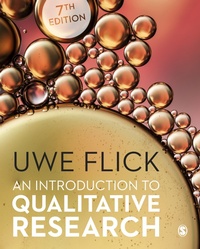
An Introduction to Qualitative Research
7th Edition
Published on 23. September 2022
632 pages
978-1-5297-8552-4 (ISBN)
Description

Continuing to be THE guide to the whole qualitative research process for students, this book looks at both the theory behind qualitative research and how to put it into practice in your own work. For students across a range of social science disciplines and beyond, this is a must to help you enhance your research project.
This edition introduces:
a decolonisation of methodologies
a range of indigenous, queer and feminist perspectives on methodologies
assistance with defending a viva and alternative forms of assessment to suit a changing world.
More additions to this seventh edition include a section on the subjectivity of a researcher, and how your identity will shape your research. The further reading has been curated to include more than just western voices, providing you with global perspectives on qualitative research. This text introduces how to sensitively undertake ethical and inclusive research with marginalised groups.
This book will help you master a comprehensive understanding of qualitative research.
This edition introduces:
a decolonisation of methodologies
a range of indigenous, queer and feminist perspectives on methodologies
assistance with defending a viva and alternative forms of assessment to suit a changing world.
More additions to this seventh edition include a section on the subjectivity of a researcher, and how your identity will shape your research. The further reading has been curated to include more than just western voices, providing you with global perspectives on qualitative research. This text introduces how to sensitively undertake ethical and inclusive research with marginalised groups.
This book will help you master a comprehensive understanding of qualitative research.
Reviews / Votes
Professor Uwe Flick has been a leading qualitative methodologist in the social sciences for decades. His methods texts reflect his considerable talent for presenting complex concepts and approaches in a thorough and accessible manner. This latest text is no exception. -- Darrin Hodgetts An Introduction to Qualitative Research is a comprehensive guide to the qualitative research process written by an accomplished expert in the field. Uwe Flick is relentless in his efforts and ambition to spread knowledge about a rich research tradition that is continually evolving and refined within the social sciences. It is a volume with both breadth and depth containing what you need to know about qualitative research to be able to try it out. Also more experienced qualitative researchers will find this text valuable and insightful. By covering different research traditions and the use of many examples from real research, the author points out a variety of vital themes for qualitative research and captures its richness. -- Katarina Jacobsson In the 7th edition of his well-proven Introduction to Qualitative Research the marked expert on qualitative Research, Prof. Flick, has upgraded the scope of his thoroughly basic textbook (e.g.: actual debates on post-colonial perspectives, mixed-methods, qualitative online research). A special merit of the Introduction is, that students get a feeling of what qualitative research is about: many well conditioned didactically examples of classic studies as well as of Flicks and his students? own research encourage students to do their first steps in Qualitative Research. -- Ernst von Kardorff A gentle, supportive, engaging guidebook to the complex terrain of qualitative research. I recommend this book to students because it introduces key debates without jargon, and provides a practical scaffolding for one's own research design by synthesising each chapter's learning in a series of critical questions. -- Flora CornishMore details
Edition
Seventh Edition
Language
English
Place of publication
London
United Kingdom
Publishing group
Sage Publications Ltd (Digital)
Target group
College/higher education
Product notice
Reflowable
File size
16,99 MB
ISBN-13
978-1-5297-8552-4 (9781529785524)
Copyright in bibliographic data and cover images is held by Nielsen Book Services Limited or by the publishers or by their respective licensors: all rights reserved.
Schweitzer Classification
Other editions
Additional editions
Uwe Flick
An Introduction to Qualitative Research
Book
10/2022
7th Edition
SAGE Publications Ltd
€216.00
Shipment within 15-20 days
Uwe Flick
An Introduction to Qualitative Research
Book
10/2022
7th Edition
SAGE Publications Ltd
€52.55
Shipment within 15-20 days
Person
Uwe Flick is Senior Professor of Qualitative Research in Social Science and Education at the Freie Universitaet Berlin, Germany. He is a trained psychologist and sociologist and received his PhD from the Freie Universitaet Berlin in 1988 and his Habilitation from the Technical University Berlin in 1994. He has been Professor of Qualitative Research at Alice Salomon University of Applied Sciences in Berlin, Germany and at the University of Vienna, Austria. Previously, he was Adjunct Professor at the Memorial University of Newfoundland in St. John's, Canada; a Lecturer in research methodology at the Freie Universitaet Berlin; a Reader and Assistant Professor in qualitative methods and evaluation at the Technical University Berlin; and Associate Professor and Head of the Department of Medical Sociology at the Hannover Medical School. He has held visiting appointments at the London School of Economics, the Ecole des Hautes Etudes en Sciences Sociales in Paris, Cambridge University (UK), Memorial University of St John's (Canada), University of Lisbon (Portugal), Institute of Higher Studies in Vienna, in Italy and Sweden, and the School of Psychology at Massey University, Auckland (New Zealand). His main research interests are qualitative methods, social representations in the fields of individual and public health, vulnerability in fields like youth homelessness or (forced) migration and chronical illness in everyday live. He is the editor of The SAGE Handbook of Qualitative Research Design (2 Vols.; Sage 2022). The SAGE Handbook of Qualitative Data Analysis (Sage, 2014), The SAGE Qualitative Research Kit (Sage, 2nd edn, 2018), A Companion to Qualitative Research (Sage, 2004), Psychology of the Social (Cambridge University Press, 1998). His most recent publications are the seventh edition of An Introduction to Qualitative Research (Sage, 2023), Doing Grounded Theory (Sage, 2018), Doing Triangulation and Mixed Methods (Sage, 2018), The SAGE Handbook of Qualitative Data Collection (editor, Sage, 2018), the third edition of Introducing Research Methodology - Thinking Your Way through Your Research Project (Sage, 2020) and Doing Interview Research - The Essential How To Guide (Sage 2022). In 2019, Uwe Flick received the Lifetime Award in Qualitative Inquiry at the 15th International Congress of Qualitative Inquiry.
Content
Part 1: Foundations of Qualitative Research
Chapter 1: Why and How to Do Qualitative Research
Chapter 2: The Qualitative-Quantitative Distinction
Chapter 3: Theoretical Frameworks
Chapter 4: Methods and Data in Qualitative Research
Chapter 5: Subjectivity, Identity, and Texts in Qualitative Research
Part 2: Research Design
Chapter 6: Formulating a Research Question
Chapter 7: Choosing and Constructing the Research Design
Chapter 8: Planning the Process in Qualitative Research
Chapter 9: Ethics of Doing Qualitative Research
Chapter 10: Using The Existing Literature
Chapter 11: Access, Fields Relations, and Participatory Research
Chapter 12: Sampling
Chapter 13: Qualitative Designs with Multiple Methods
Part 3: Verbal Data
Chapter 14: Collecting Verbal Data
Chapter 15: Doing Interviews
Chapter 16: Doing Focus Groups
Chapter 17: Using Narrative Data
Part 4: Data Beyond Talk
Chapter 18: Collecting Data Beyond Talk
Chapter 19: Observation and Ethnography
Chapter 20: Visual Data: Photography, Film and Video
Chapter 21: Documents as Data and Secondary Data Analysis
Chapter 22: Digital and Social Media Research
Part 5: Qualitative Data Analysis
Chapter 23: Analysing Qualitative Data
Chapter 24: Transcription and Data Management
Chapter 25: Grounded Theory Coding
Chapter 26: Thematic Coding and Content Analysis
Chapter 27: Analysing Naturally Occurring Data: Conversation and Discourse
Chapter 28: Using Software in Qualitative Data Analysis
Part 6: Grounding, Writing And Outlook
Chapter 29: Quality of Qualitative Research: Criteria and Beyond
Chapter 30: Writing Up and Assessment in Qualitative Research
Chapter 31: State of the Art and the Future
Chapter 1: Why and How to Do Qualitative Research
Chapter 2: The Qualitative-Quantitative Distinction
Chapter 3: Theoretical Frameworks
Chapter 4: Methods and Data in Qualitative Research
Chapter 5: Subjectivity, Identity, and Texts in Qualitative Research
Part 2: Research Design
Chapter 6: Formulating a Research Question
Chapter 7: Choosing and Constructing the Research Design
Chapter 8: Planning the Process in Qualitative Research
Chapter 9: Ethics of Doing Qualitative Research
Chapter 10: Using The Existing Literature
Chapter 11: Access, Fields Relations, and Participatory Research
Chapter 12: Sampling
Chapter 13: Qualitative Designs with Multiple Methods
Part 3: Verbal Data
Chapter 14: Collecting Verbal Data
Chapter 15: Doing Interviews
Chapter 16: Doing Focus Groups
Chapter 17: Using Narrative Data
Part 4: Data Beyond Talk
Chapter 18: Collecting Data Beyond Talk
Chapter 19: Observation and Ethnography
Chapter 20: Visual Data: Photography, Film and Video
Chapter 21: Documents as Data and Secondary Data Analysis
Chapter 22: Digital and Social Media Research
Part 5: Qualitative Data Analysis
Chapter 23: Analysing Qualitative Data
Chapter 24: Transcription and Data Management
Chapter 25: Grounded Theory Coding
Chapter 26: Thematic Coding and Content Analysis
Chapter 27: Analysing Naturally Occurring Data: Conversation and Discourse
Chapter 28: Using Software in Qualitative Data Analysis
Part 6: Grounding, Writing And Outlook
Chapter 29: Quality of Qualitative Research: Criteria and Beyond
Chapter 30: Writing Up and Assessment in Qualitative Research
Chapter 31: State of the Art and the Future
