

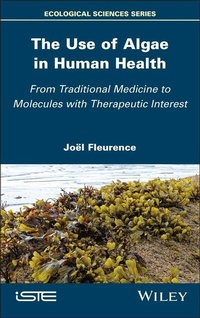
The Use of Algae in Human Health
Description

The Use of Algae in Human Health explores the use of algae in traditional Asian medicine, for both preventive and curative purposes. The book looks at both historical and current uses, as algae is still used on an empirical basis in popular medicine in Asia.
The first part of this book focuses on the integration of algae into the therapeutic practice of ethnomedicine. The second part focuses on molecules derived from algae, which include fucoidans, alginates, carrageenans and polyphenols; they have been described in the scientific literature as having therapeutic activities both in vitro and in vivo.
These varied functions (antitumoral, antiviral, antibacterial, antithrombotic, anti-inflammatory and antioxidant) are of major interest in human health. However, new drugs based on algal molecules are proving slow to develop. The book reviews the scientific, technological and economic obstacles that may explain why development is lagging.
More details
Other editions
Additional editions
Person
Joël Fleurence is a professor at the University of Nantes. His research focuses on aquatic biotechnologies, particularly the valuation of algae. He has contributed to more than 100 international publications, three international patents and several books, including Aquatic Biotechnologies, published by ISTE Ltd and Wiley.
Content
Preface vii
Introduction ix
Chapter 1. Algae in Traditional Medicine 1
1.1. Traditional Asian medicines 1
1.1.1. Chinese medicine 1
1.1.2. Japanese medicine 8
1.1.3. Korean medicine 13
1.1.4. Vietnamese medicine 15
1.1.5. Filipino medicine 16
1.1.6. Indonesian medicine 21
1.2. Other traditional medicines 23
1.2.1. African medicine 23
1.2.2. European medicine 25
1.2.3. Medicine on the American continent 31
1.2.4. Polynesian medicine 33
Chapter 2. Activities of Therapeutic Interest 35
2.1. Antioxidant activities 35
2.1.1. Methodology 35
2.1.2. Active algae extracts 37
2.2. Antibacterial activity 42
2.3. Antifungal activity 47
2.4. Antiviral activities 49
2.5. Anticoagulant and antithrombotic activity 53
2.6. Anti-inflammatory activities 57
2.7. Anti-allergenic activities 62
2.8. Antitumor activity 65
2.9. Anti-cholesterol activity 68
2.10. Other activities 70
Chapter 3. Molecules 77
3.1. Polysaccharides 77
3.1.1. Alginates 77
3.1.2. Laminarin 88
3.1.3. Fucans 93
3.1.4. Carrageenans 97
3.1.5. Porphyrans 111
3.1.6. Ulvans 115
3.2. Proteins and peptides 119
3.3. Lipids, fatty acids and sterols 136
3.4. Phenolic derivatives 146
Chapter 4. Therapeutic Development: Strategies and Limits 155
4.1. Epidemiological studies 155
4.2. Clinical studies 159
4.3. Patents 163
4.4. Resource availability, accessibility and biochemical variations 165
4.5. Perception and ignorance of the resource 172
Conclusion 179
References 181
Index 197
