

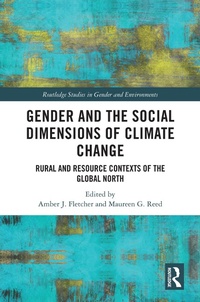
Gender and the Social Dimensions of Climate Change
Rural and Resource Contexts of the Global North
1st Edition
Published on 1. September 2022
218 pages
978-1-000-64521-7 (ISBN)
Description

Dispelling the myth that people in the Global North share similar experiences of climate change, this book reveals how intersecting social dimensions of climate change-people, processes, and institutions-give rise to different experiences of loss, adaptation, and resilience among those living in rural and resource contexts of the Global North.
Bringing together leading feminist researchers and practitioners from three countries-Australia, Canada, and Spain-this collection documents gender relations in fossil fuel, mining, and extractive industries, in land-based livelihoods, in approaches for inclusive environmental policy, and in the lived experience of climate hazards. Uniquely, the book brings together the voices, expertise, and experiences of both academic researchers and women whose views have not been prioritized in formal policies-for example, women in agriculture, Indigenous women, immigrant women, and women in male-dominated professions. Their contributions are insightful and compelling, highlighting the significance of gaining diverse perspectives for a fuller understanding of climate change impacts, more equitable processes and strategies for climate change adaptation, and a more welcoming climate future.
This book will be vital reading for students and scholars of gender studies, environmental studies, environmental sociology, geography, and sustainability science. It will provide important insights for planners, decision makers, and community advocates to strengthen their understanding of social dimensions of climate change and to develop more inclusive and equitable adaptation policies, plans, and practices.
Bringing together leading feminist researchers and practitioners from three countries-Australia, Canada, and Spain-this collection documents gender relations in fossil fuel, mining, and extractive industries, in land-based livelihoods, in approaches for inclusive environmental policy, and in the lived experience of climate hazards. Uniquely, the book brings together the voices, expertise, and experiences of both academic researchers and women whose views have not been prioritized in formal policies-for example, women in agriculture, Indigenous women, immigrant women, and women in male-dominated professions. Their contributions are insightful and compelling, highlighting the significance of gaining diverse perspectives for a fuller understanding of climate change impacts, more equitable processes and strategies for climate change adaptation, and a more welcoming climate future.
This book will be vital reading for students and scholars of gender studies, environmental studies, environmental sociology, geography, and sustainability science. It will provide important insights for planners, decision makers, and community advocates to strengthen their understanding of social dimensions of climate change and to develop more inclusive and equitable adaptation policies, plans, and practices.
More details
Series
Edition
1. Auflage
Language
English
Place of publication
London
United Kingdom
Publishing group
Taylor & Francis Ltd
Target group
College/higher education
Product notice
Reflowable
Illustrations
5 Line drawings, black and white; 2 Halftones, black and white; 7 Illustrations, black and white
ISBN-13
978-1-000-64521-7 (9781000645217)
Copyright in bibliographic data and cover images is held by Nielsen Book Services Limited or by the publishers or by their respective licensors: all rights reserved.
Schweitzer Classification
Other editions
Additional editions
Amber J. Fletcher | Maureen G. Reed
Gender and the Social Dimensions of Climate Change
Rural and Resource Contexts of the Global North
Book
05/2024
1st Edition
Routledge
€63.10
Shipment within 10-20 days
Amber J. Fletcher | Maureen G. Reed
Gender and the Social Dimensions of Climate Change
Rural and Resource Contexts of the Global North
Book
09/2022
1st Edition
Routledge
€206.20
Shipment within 15-20 days
Persons
Amber J. Fletcher is Associate Professor of Sociology & Social Studies and Academic Director of the Community Engagement and Research Centre at the University of Regina, Canada. Her research examines how gender and social inequality affect the lived experience of climate disaster in rural and Indigenous communities of the Canadian Prairies. In 2017, she edited the book Women in Agriculture Worldwide with Dr Wendee Kubik. She has served as a consultant to the United Nations World Water Assessment Programme and as an official delegate to the United Nations Commission on the Status of Women. She is a contributing author to a 2019 special report of the Intergovernmental Panel on Climate Change (IPCC) and is former President of the Canadian Research Institute for the Advancement of Women. She holds two medals from the Governor General of Canada for her research and advocacy on gender equality in Canada. In 2020 she was the Greeley Scholar for Peace Studies at the University of Massachusetts Lowell.
Maureen G. Reed is Distinguished Professor and a UNESCO Chair in Biocultural Diversity, Sustainability, Reconciliation, and Renewal at the University of Saskatchewan, Canada. Her research programme focuses on the social dimensions of sustainability-how people, processes, and institutions shape decisions about environment and development. She has received many awards for her work, including the Canadian Association of Geographers Award for Scholarly Distinction in Geography; the University of Saskatchewan Distinguished Researcher Award; the YWCA-Saskatoon Women of Distinction Lifetime Achievement Award and the University of Saskatchewan Distinguished Graduate Supervisor Award.
Maureen G. Reed is Distinguished Professor and a UNESCO Chair in Biocultural Diversity, Sustainability, Reconciliation, and Renewal at the University of Saskatchewan, Canada. Her research programme focuses on the social dimensions of sustainability-how people, processes, and institutions shape decisions about environment and development. She has received many awards for her work, including the Canadian Association of Geographers Award for Scholarly Distinction in Geography; the University of Saskatchewan Distinguished Researcher Award; the YWCA-Saskatoon Women of Distinction Lifetime Achievement Award and the University of Saskatchewan Distinguished Graduate Supervisor Award.
Content
Chapter 1
Wildfire in Northern Saskatchewan: Reflections for Intersectional Climate Hazards Research and Adaptation Practice
Heidi Walker
Reflection on Chapter 1
From Point A to Point B
Nancy Lafleur
Chapter 2
Seeking Safe Refuge in Regional Australia: Experiences of Hazards and Practices of Safety among Women from Refugee Backgrounds
Shefali Juneja Lakhina and Christine Eriksen
Reflection on Chapter 2
Diversity and Inclusion in Humanitarian Protection, Refugee Resettlement, and Emergency Services in Australia
Sherryl Reddy
Chapter 3
Moving Away from Climate Crises: Women's Engagement in Natural Resource Decision-Making and Community Monitoring
Leah Levac, Jane Stinson, and Deborah Stienstra
Reflection on Chapter 3
Anchoring the Hope: Decision-making Safeguards to Make Women's Voices Count
Anna Johnston
Chapter 4
Tracing Resistance: Hypermasculinity and Climate Change Denial in the Heart of Alberta's Oil Country
Angeline Letourneau and Debra Davidson
Reflection on Chapter 4
Finding Balance: Gender, Extractive Industries, and Climate Change
Mary Boyden
Chapter 5
Embodied Perceptions, Everydayness, and Simultaneity in Climate Governance by Spanish Women Pastoralists
Federica Ravera, Elisa Oteros-Rozas, and Maria Fernandez Gimenez
Reflection on Chapter 5
The Scarlett Attack
Lucia Cobos
Chapter 6
Leadership in Mountain and Wildland Professions in Canada: Examining the Impacts of Gender, Safety, and Climate Change
Rachel Reimer and Christine Eriksen
Reflection on Chapter 6
Where is the Climbing Ranger?
Alison Criscitiello
Chapter 7
Contemporary Feminist Analysis of Australian Farm Women in the Context of Climate Changes
Margaret Alston, Josephine Clarke, and Kerri Whittenbury
Reflection on Chapter 7
What is Man-Made can be Unmade
Alana Johnson
Index
Wildfire in Northern Saskatchewan: Reflections for Intersectional Climate Hazards Research and Adaptation Practice
Heidi Walker
Reflection on Chapter 1
From Point A to Point B
Nancy Lafleur
Chapter 2
Seeking Safe Refuge in Regional Australia: Experiences of Hazards and Practices of Safety among Women from Refugee Backgrounds
Shefali Juneja Lakhina and Christine Eriksen
Reflection on Chapter 2
Diversity and Inclusion in Humanitarian Protection, Refugee Resettlement, and Emergency Services in Australia
Sherryl Reddy
Chapter 3
Moving Away from Climate Crises: Women's Engagement in Natural Resource Decision-Making and Community Monitoring
Leah Levac, Jane Stinson, and Deborah Stienstra
Reflection on Chapter 3
Anchoring the Hope: Decision-making Safeguards to Make Women's Voices Count
Anna Johnston
Chapter 4
Tracing Resistance: Hypermasculinity and Climate Change Denial in the Heart of Alberta's Oil Country
Angeline Letourneau and Debra Davidson
Reflection on Chapter 4
Finding Balance: Gender, Extractive Industries, and Climate Change
Mary Boyden
Chapter 5
Embodied Perceptions, Everydayness, and Simultaneity in Climate Governance by Spanish Women Pastoralists
Federica Ravera, Elisa Oteros-Rozas, and Maria Fernandez Gimenez
Reflection on Chapter 5
The Scarlett Attack
Lucia Cobos
Chapter 6
Leadership in Mountain and Wildland Professions in Canada: Examining the Impacts of Gender, Safety, and Climate Change
Rachel Reimer and Christine Eriksen
Reflection on Chapter 6
Where is the Climbing Ranger?
Alison Criscitiello
Chapter 7
Contemporary Feminist Analysis of Australian Farm Women in the Context of Climate Changes
Margaret Alston, Josephine Clarke, and Kerri Whittenbury
Reflection on Chapter 7
What is Man-Made can be Unmade
Alana Johnson
Index
