

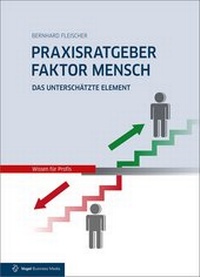
Praxisratgeber Faktor Mensch
Das unterschätzte Element
1st Edition
Published in January 2017
294 pages
978-3-8343-6220-9 (ISBN)
Description

Menschen, die im Beruf Verantwortung tragen, treffen manchmal Fehlentscheidungen. Die Konsequenzen sind unterschiedlich schwer und hängen natürlich auch mit der Art der Tätigkeit zusammen. Im besten Fall kosten falsche Entscheidungen Unternehmen viel Geld, im schlimmsten Fall sogar Menschenleben.
Der "Praxisratgeber Faktor Mensch" erläutert die Grundzüge menschlichen (Fehl)verhaltens. Der Autor erläutert, wie äußere und innere Faktoren unsere Tätigkeiten beeinflussen, wie das Gehirn Informationen aufnimmt und verarbeitet und wie sich Stress, Bewegung, Ernährung und Schlaf auf die Leistungsfähigkeit des Menschen auswirken.
Verschiedene Übungen machen deutlich, warum wir Menschen falsche Entscheidungen treffen. Sie ermöglichen, im Buch vorgestellte Techniken zur Risikominimierung in die Praxis umzusetzen. Diese Kombination aus theoretischem und praktischem Wissen soll den Leser für den "Risikofaktor Mensch" sensibilisieren und dafür sorgen, dass er Fallstricke künftiger Entscheidungen besser erkennen und minimieren kann.
Betrieblicher Umgang mit Fehlern
Physikalische und organisatorische Einflussfaktoren in der Arbeitsumgebung
Fehlerquellen in der Informationsaufnahme und Informationsverarbeitung
Leistungsbeeinflussende Faktoren
Erhalt der Leistungsfähigkeit und Stressabbau
All prices
More details
Other editions
Additional editions
Book
01/2017
1st Edition
Vogel Communications Group GmbH & Co. KG
€9.80
Shipment within 5-7 days
Person
Author
Jahrgang 1968,
absolvierte nach dem Abitur eine Ausbildung zum Technischen Zeichner (Fa. Kiekert /
Kiekert-Automatiktüren, Heiligenhaus / Velbert), danach Studium Maschinentechnik,
Fertigungstechnik (UGH Essen)
Teilstudium Wirtschaftslehre / Politik
1999 Technischer Angestellter in der Normung (Fa. Intensiv-Filter, Velbert)
Seit August 1999 Lehrer für Entwicklung und Konstruktion sowie Human Factors am
Berufskolleg Platz der Republik in Mönchengladbach
Seit 2001 Unterricht in der Fachschule Luftfahrzeugtechnik im Fach "Human Factors"
Seit 2005 Abteilungsleitung (StD) Fachschule Maschinenbautechnik
Planung und Durchführung von Mitarbeiterschulungen u.a. bei den Unternehmen Air-
Berlin, Honeywell Aerospace, LTU
Praktika in Luftfahrtunternehmen (u.a. LTU)
Betreuung von Abschlussarbeiten in der Fachschule für Technik zum Thema "Human
Factors" bei den Unternehmen Lufthansa, LTU (aufgegangen in AirBerlin) und Beechcraft
Seit Ende 2011Prüfungsleiter Luftfahrt (als Ansprechpartner für das Luftfahrtbundesamt
im Zusammenhang mit Zertifizierungen nach CAT A und CAT B)
Content
1 - Unbenannt [Seite 3]
2 - Copyright / Impressum [Seite 4]
3 - Vorwort [Seite 5]
4 - Übungen [Seite 241]
5 - Stichwortverzeichnis [Seite 291]
6 - Inhaltsverzeichnis [Seite 7]
6.1 - 1 Zielsetzung des Fachgebietes [Seite 11]
6.1.1 - 1.1 Warum Human Factors? [Seite 11]
6.1.2 - 1.2 Wissenschaftsdisziplin Human Factors [Seite 13]
6.1.3 - 1.3 Intention des Buches [Seite 15]
6.2 - 2 Betrieblicher Umgang mit Fehlern [Seite 21]
6.2.1 - 2.1 Theoriemodelle zur Fehlerentstehung [Seite 21]
6.2.2 - 2.2 Fehlergruppierung und Fehlerarten [Seite 22]
6.2.3 - 2.3 Null-Fehler-Strategie als Leitgedanke [Seite 24]
6.2.4 - 2.4 Fehlermanagement in Unternehmen [Seite 26]
6.2.5 - 2.5 Abschließende Betrachtung [Seite 43]
6.2.6 - 2.6 Einstiegsübung: Absturz der Wuppertaler Schwebebahn [Seite 44]
6.3 - 3 Physikalische und organisatorische Einflussfaktoren in der Arbeitsumgebung [Seite 49]
6.3.1 - 3.1 Lärm [Seite 49]
6.3.2 - 3.2 Beleuchtung [Seite 59]
6.3.3 - 3.3 Klimatische Bedingungen [Seite 60]
6.3.4 - 3.4 Schwingungen [Seite 63]
6.3.5 - 3.5 Schichtarbeit [Seite 64]
6.3.6 - 3.6 Sicherheitskultur [Seite 65]
6.4 - 4 Fehlerquellen in der Informationsaufnahme [Seite 69]
6.4.1 - 4.1 Der Körper als Ergebnis von Evolution [Seite 69]
6.4.2 - 4.2 Sinneswahrnehmungen Riechen und Schmecken [Seite 70]
6.4.3 - 4.3 Sinneswahrnehmung Tasten [Seite 74]
6.4.4 - 4.4 Sinneswahrnehmung Sehen [Seite 75]
6.4.5 - 4.5 Sinneswahrnehmung Hören [Seite 84]
6.4.6 - 4.6 Weitere Sinne der Natur [Seite 87]
6.4.7 - 4.7 Kombination und Kompensation von Sinnen [Seite 88]
6.4.8 - 4.8 Variationen in der Sinneswahrnehmung [Seite 92]
6.5 - 5 Fehlerquellen in derInformationsverarbeitung [Seite 93]
6.5.1 - 5.1 Aufbau und Entwicklung des Gehirns [Seite 93]
6.5.2 - 5.2 Informationsverarbeitung [Seite 104]
6.5.3 - 5.3 Erklärungsmodelle zu Lernprozessen [Seite 128]
6.5.4 - 5.4 Gedächtnisbildung [Seite 136]
6.6 - 6 Leistungsbeeinflussende Faktoren [Seite 149]
6.6.1 - 6.1 Anforderungsprofil des Mitarbeiters [Seite 149]
6.6.2 - 6.2 Leistungsfähigkeit im Tages-, Jahres- und Lebenszyklus [Seite 151]
6.6.3 - 6.3 Kommunikation und Sprache [Seite 154]
6.6.4 - 6.4 Stress [Seite 171]
6.6.5 - 6.5 Motivation [Seite 178]
6.6.6 - 6.6 Mitarbeiterführung [Seite 181]
6.6.7 - 6.7 Teamfähigkeit und Wissen [Seite 184]
6.6.8 - 6.8 Aufmerksamkeit [Seite 187]
6.6.9 - 6.9 Gruppendynamik [Seite 188]
6.6.10 - 6.10 Hilfsmittel [Seite 192]
6.6.11 - 6.11 Normen [Seite 194]
6.6.12 - 6.12 Ermüdung [Seite 195]
6.6.13 - 6.13 Nachlässigkeit / Routine [Seite 198]
6.6.14 - 6.14 Ablenkung [Seite 202]
6.6.15 - 6.15 (Zeit-)Druck und Durchsetzungsfähigkeit [Seite 204]
6.7 - 7 Erhalt der Leistungsfähigkeit und Stressabbau [Seite 207]
6.7.1 - 7.1 Der heutige Mensch als Zwischenstufe in der Evolution [Seite 207]
6.7.2 - 7.2 Bedeutung von Bewegung [Seite 208]
6.7.3 - 7.3 Ernährung [Seite 214]
6.7.4 - 7.4 Schlaf [Seite 221]
6.7.5 - 7.5 Umgang mit Krankheiten und Medikamenten [Seite 227]
6.7.6 - 7.6 "Alltagsdrogen" und leistungsfördernde Substanzen [Seite 228]
6.7.7 - 7.7 Verbesserte Selbstorganisation / Zeitmanagement [Seite 230]
6.7.8 - 7.8 Konfliktbewältigung [Seite 232]
6.7.9 - 7.9 Entspannungstechniken [Seite 233]
6.7.10 - 7.10 Resilienz [Seite 237]
2 - Copyright / Impressum [Seite 4]
3 - Vorwort [Seite 5]
4 - Übungen [Seite 241]
5 - Stichwortverzeichnis [Seite 291]
6 - Inhaltsverzeichnis [Seite 7]
6.1 - 1 Zielsetzung des Fachgebietes [Seite 11]
6.1.1 - 1.1 Warum Human Factors? [Seite 11]
6.1.2 - 1.2 Wissenschaftsdisziplin Human Factors [Seite 13]
6.1.3 - 1.3 Intention des Buches [Seite 15]
6.2 - 2 Betrieblicher Umgang mit Fehlern [Seite 21]
6.2.1 - 2.1 Theoriemodelle zur Fehlerentstehung [Seite 21]
6.2.2 - 2.2 Fehlergruppierung und Fehlerarten [Seite 22]
6.2.3 - 2.3 Null-Fehler-Strategie als Leitgedanke [Seite 24]
6.2.4 - 2.4 Fehlermanagement in Unternehmen [Seite 26]
6.2.5 - 2.5 Abschließende Betrachtung [Seite 43]
6.2.6 - 2.6 Einstiegsübung: Absturz der Wuppertaler Schwebebahn [Seite 44]
6.3 - 3 Physikalische und organisatorische Einflussfaktoren in der Arbeitsumgebung [Seite 49]
6.3.1 - 3.1 Lärm [Seite 49]
6.3.2 - 3.2 Beleuchtung [Seite 59]
6.3.3 - 3.3 Klimatische Bedingungen [Seite 60]
6.3.4 - 3.4 Schwingungen [Seite 63]
6.3.5 - 3.5 Schichtarbeit [Seite 64]
6.3.6 - 3.6 Sicherheitskultur [Seite 65]
6.4 - 4 Fehlerquellen in der Informationsaufnahme [Seite 69]
6.4.1 - 4.1 Der Körper als Ergebnis von Evolution [Seite 69]
6.4.2 - 4.2 Sinneswahrnehmungen Riechen und Schmecken [Seite 70]
6.4.3 - 4.3 Sinneswahrnehmung Tasten [Seite 74]
6.4.4 - 4.4 Sinneswahrnehmung Sehen [Seite 75]
6.4.5 - 4.5 Sinneswahrnehmung Hören [Seite 84]
6.4.6 - 4.6 Weitere Sinne der Natur [Seite 87]
6.4.7 - 4.7 Kombination und Kompensation von Sinnen [Seite 88]
6.4.8 - 4.8 Variationen in der Sinneswahrnehmung [Seite 92]
6.5 - 5 Fehlerquellen in derInformationsverarbeitung [Seite 93]
6.5.1 - 5.1 Aufbau und Entwicklung des Gehirns [Seite 93]
6.5.2 - 5.2 Informationsverarbeitung [Seite 104]
6.5.3 - 5.3 Erklärungsmodelle zu Lernprozessen [Seite 128]
6.5.4 - 5.4 Gedächtnisbildung [Seite 136]
6.6 - 6 Leistungsbeeinflussende Faktoren [Seite 149]
6.6.1 - 6.1 Anforderungsprofil des Mitarbeiters [Seite 149]
6.6.2 - 6.2 Leistungsfähigkeit im Tages-, Jahres- und Lebenszyklus [Seite 151]
6.6.3 - 6.3 Kommunikation und Sprache [Seite 154]
6.6.4 - 6.4 Stress [Seite 171]
6.6.5 - 6.5 Motivation [Seite 178]
6.6.6 - 6.6 Mitarbeiterführung [Seite 181]
6.6.7 - 6.7 Teamfähigkeit und Wissen [Seite 184]
6.6.8 - 6.8 Aufmerksamkeit [Seite 187]
6.6.9 - 6.9 Gruppendynamik [Seite 188]
6.6.10 - 6.10 Hilfsmittel [Seite 192]
6.6.11 - 6.11 Normen [Seite 194]
6.6.12 - 6.12 Ermüdung [Seite 195]
6.6.13 - 6.13 Nachlässigkeit / Routine [Seite 198]
6.6.14 - 6.14 Ablenkung [Seite 202]
6.6.15 - 6.15 (Zeit-)Druck und Durchsetzungsfähigkeit [Seite 204]
6.7 - 7 Erhalt der Leistungsfähigkeit und Stressabbau [Seite 207]
6.7.1 - 7.1 Der heutige Mensch als Zwischenstufe in der Evolution [Seite 207]
6.7.2 - 7.2 Bedeutung von Bewegung [Seite 208]
6.7.3 - 7.3 Ernährung [Seite 214]
6.7.4 - 7.4 Schlaf [Seite 221]
6.7.5 - 7.5 Umgang mit Krankheiten und Medikamenten [Seite 227]
6.7.6 - 7.6 "Alltagsdrogen" und leistungsfördernde Substanzen [Seite 228]
6.7.7 - 7.7 Verbesserte Selbstorganisation / Zeitmanagement [Seite 230]
6.7.8 - 7.8 Konfliktbewältigung [Seite 232]
6.7.9 - 7.9 Entspannungstechniken [Seite 233]
6.7.10 - 7.10 Resilienz [Seite 237]
