

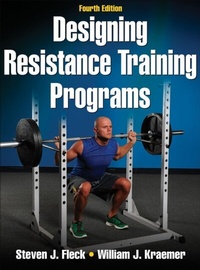
Designing Resistance Training Programs
4th Edition
Published on 17. March 2014
520 pages
978-1-4925-8431-5 (ISBN)
Description

Designing Resistance Training Programs, Fourth Edition, is a guide to developing individualized training programs for both serious athletes and fitness enthusiasts. In this updated and expanded fourth edition, two of the world's leading experts on strength training explore how to design scientifically based resistance training programs, modify and adapt programs to meet the needs of special populations, and apply the elements of program design in the real world.
Fleck and Kraemer provide readers with a thorough understanding of the process of designing resistance training programs from both scientific and practical perspectives. As with previous editions, the fourth edition includes comprehensive tables that compare data and conclusions from research on core topics related to design of resistance training programs. By summarizing research and content for the reader, these tables offer a study guide, on-the-job reference, or starting point for further research. Designing Resistance Training Programs, Fourth Edition, is the only resource available that presents the body of research in the field in this organized and comprehensive format.
The fourth edition has been thoroughly revised to present the most current information while retaining the studies that are the basis for concepts, guidelines, and applications in resistance training. Meticulously updated and heavily referenced, the fourth edition contains the following updates:
* A full-color interior provides stronger visual appeal for the text.
* Sidebars focus on a specific practical question or an applied research concept, allowing readers to connect research to real-life situations.
* Multiple detailed tables summarize research from the text, offering an easy way to compare data and conclusions.
* A glossary makes it simple to find key terms in one convenient location.
* Newly added instructor ancillaries make the fourth edition a true learning resource for the classroom.
Designing Resistance Training Programs, Fourth Edition, begins by outlining the principles of resistance training and exercise prescription, and examines the various types of strength training, including isometrics and eccentric training. This is followed by a discussion of resistance training from a physiological perspective and an overview of how resistance training programs interact with the other conditioning components such as aerobic, interval, plyometric, and flexibility training. Readers will then explore advanced training techniques, how to manipulate training variables in a long-term resistance training program, and ways to plan rest into long-term training that minimizes losses in fitness or performance gains.
An important text for students, researchers, and practitioners, this textbook offers the information and tools to help readers evaluate resistance training programs and better understand the context and efficacy of new data findings in this ever-changing field. Designing Resistance Training Programs, Fourth Edition, is an essential resource for understanding the science behind resistance training and designing evidence-based resistance training programs for any population. This text provides the tools for understanding and designing resistance training programs for almost any situation or need.
Fleck and Kraemer provide readers with a thorough understanding of the process of designing resistance training programs from both scientific and practical perspectives. As with previous editions, the fourth edition includes comprehensive tables that compare data and conclusions from research on core topics related to design of resistance training programs. By summarizing research and content for the reader, these tables offer a study guide, on-the-job reference, or starting point for further research. Designing Resistance Training Programs, Fourth Edition, is the only resource available that presents the body of research in the field in this organized and comprehensive format.
The fourth edition has been thoroughly revised to present the most current information while retaining the studies that are the basis for concepts, guidelines, and applications in resistance training. Meticulously updated and heavily referenced, the fourth edition contains the following updates:
* A full-color interior provides stronger visual appeal for the text.
* Sidebars focus on a specific practical question or an applied research concept, allowing readers to connect research to real-life situations.
* Multiple detailed tables summarize research from the text, offering an easy way to compare data and conclusions.
* A glossary makes it simple to find key terms in one convenient location.
* Newly added instructor ancillaries make the fourth edition a true learning resource for the classroom.
Designing Resistance Training Programs, Fourth Edition, begins by outlining the principles of resistance training and exercise prescription, and examines the various types of strength training, including isometrics and eccentric training. This is followed by a discussion of resistance training from a physiological perspective and an overview of how resistance training programs interact with the other conditioning components such as aerobic, interval, plyometric, and flexibility training. Readers will then explore advanced training techniques, how to manipulate training variables in a long-term resistance training program, and ways to plan rest into long-term training that minimizes losses in fitness or performance gains.
An important text for students, researchers, and practitioners, this textbook offers the information and tools to help readers evaluate resistance training programs and better understand the context and efficacy of new data findings in this ever-changing field. Designing Resistance Training Programs, Fourth Edition, is an essential resource for understanding the science behind resistance training and designing evidence-based resistance training programs for any population. This text provides the tools for understanding and designing resistance training programs for almost any situation or need.
More details
Edition
Fourth Edition
Language
English
Place of publication
Champaign, IL
United States
Publishing group
Human Kinetics Publishers
Target group
College/higher education
Interest Age: From 18 to 99 years
Edition type
New edition
ISBN-13
978-1-4925-8431-5 (9781492584315)
Copyright in bibliographic data and cover images is held by Nielsen Book Services Limited or by the publishers or by their respective licensors: all rights reserved.
Schweitzer Classification
Other editions
Additional editions
Steven J. Fleck | William J. Kraemer
Designing Resistance Training Programs
Book
03/2014
4th Edition
Human Kinetics
€107.90
Article exhausted; check different version
Persons
Steven J. Fleck, PhD, is an associate professor in health, exercise science, and sport management at the University of Wisconsin-Parkside. He earned a PhD in exercise physiology from Ohio State University in 1978. He has headed the physical conditioning program of the U.S. Olympic Committee; served as strength coach for the German Volleyball Association; and coached high school track, basketball, and football. Fleck is a former vice president of basic and applied research and the current president of the National Strength and Conditioning Association (NSCA). He is a fellow of the American College of Sports Medicine (ACSM) and the NSCA. He was honored in 1991 as the NSCA Sport Scientist of the Year and received that organization's Lifetime Achievement Award in 2005.
William J. Kraemer, PhD, is a professor in the department of kinesiology in the Neag School of Education at the University of Connecticut. He holds joint appointments as a professor in the department of physiology and neurobiology and as a professor of medicine at the UConn Health School of Medicine Center on Aging.
He earned a PhD in physiology from the University of Wyoming in 1984. Kraemer held the John and Janice Fisher Endowed Chair in Exercise Physiology and was director of the Human Performance Laboratory and a professor at Ball State University from 1998 until June of 2001. He also was a professor at the Indiana School of Medicine. At Pennsylvania State University, he was professor of applied physiology, director of research in the Center for Sports Medicine, associate director of the Center for Cell Research, and faculty member in the kinesiology department and the Noll Physiological Research Center. He is a fellow of the ACSM and past president of the NSCA. Kraemer has been honored by the NSCA with both their Outstanding Sport Scientist Award and Lifetime Achievement Award. In 2006, the NSCA's Outstanding Sport Scientist Award was named in his honor. He is editor in chief of the Journal of Strength and Conditioning Research.
William J. Kraemer, PhD, is a professor in the department of kinesiology in the Neag School of Education at the University of Connecticut. He holds joint appointments as a professor in the department of physiology and neurobiology and as a professor of medicine at the UConn Health School of Medicine Center on Aging.
He earned a PhD in physiology from the University of Wyoming in 1984. Kraemer held the John and Janice Fisher Endowed Chair in Exercise Physiology and was director of the Human Performance Laboratory and a professor at Ball State University from 1998 until June of 2001. He also was a professor at the Indiana School of Medicine. At Pennsylvania State University, he was professor of applied physiology, director of research in the Center for Sports Medicine, associate director of the Center for Cell Research, and faculty member in the kinesiology department and the Noll Physiological Research Center. He is a fellow of the ACSM and past president of the NSCA. Kraemer has been honored by the NSCA with both their Outstanding Sport Scientist Award and Lifetime Achievement Award. In 2006, the NSCA's Outstanding Sport Scientist Award was named in his honor. He is editor in chief of the Journal of Strength and Conditioning Research.
Content
Chapter 1. Basic Principles of Resistance Training and Exercise Prescription
Basic Definitions
Maximal Voluntary Muscle Actions Intensity
Training Volume
Rest Periods
Velocity Specificity
Muscle Action Specificity
Muscle Group Specificity
Energy Source Specificity
Periodization
Progressive Overload
Safety Aspects
Summary
Chapter 2. Types of Strength Training
Isometric Training
Dynamic Constant External Resistance Training
Variable Resistance Training
Isokinetic Training
Eccentric Training
Considerations for All Types of Training
Comparison of Training Types
Summary
Chapter 3. Physiological Adaptations to Resistance Training
Physiological Adaptations
Bioenergetics
Skeletal Muscle Fibers
Nervous System Adaptations
Body Composition Changes
Hormonal Systems in Resistance Exercise and Training
Connective Tissue
Cardiovascular Adaptations
Summary
Chapter 4. Integrating Other Fitness Components
Compatibility of Exercise Programs
Basics of Cardiorespiratory Training
Stretching and Flexibility
Summary
Chapter 5. Developing the Individualized Resistance Training Workout
Program Choices
Needs Analysis
Program Design
Acute Program Variables
Training Potential
Setting Program Goals
Summary
Chapter 6. Resistance Training Systems and Techniques
Single-Set Systems
Express Circuits
Multiple-Set Systems
Exercise Order Systems
Training Techniques Applicable to Other Systems
Specialized Systems and Techniques
Summary
Chapter 7. Advanced Training Strategies
Periodization of Resistance Training
Comparative Studies
Power Development
Plyometrics
Two Training Sessions in One Day
Summary
Chapter 8. Detraining
Types of Detraining
Physiological Mechanisms of Strength Loss
Effect of Muscle Action Type
Detraining Effects on Bone
Detraining the Bulked-Up Athlete
Summary
Chapter 9. Women and Resistance Training
Physiological and Performance Differences Between Sexes
Training in Women
Women's Hormonal Responses to Resistance Training
Menstrual Cycle
Bone Density
Knee Injuries
General Needs Analysis
Summary
Chapter 10. Children and Resistance Training
Training Adaptations
Injury Concerns
Program Considerations
Program Progression
Sample Sessions
Equipment Modifications and Organizational Difficulties
Program Philosophy
Summary
Chapter 11. Resistance Training for Seniors
Hormonal Changes With Age and Resistance Training
Body Composition Changes in Seniors
Changes in Physical Performance With Age
Resistance Training Adaptations in Seniors
Developing a Resistance Training Program for Seniors
Summary
Basic Definitions
Maximal Voluntary Muscle Actions Intensity
Training Volume
Rest Periods
Velocity Specificity
Muscle Action Specificity
Muscle Group Specificity
Energy Source Specificity
Periodization
Progressive Overload
Safety Aspects
Summary
Chapter 2. Types of Strength Training
Isometric Training
Dynamic Constant External Resistance Training
Variable Resistance Training
Isokinetic Training
Eccentric Training
Considerations for All Types of Training
Comparison of Training Types
Summary
Chapter 3. Physiological Adaptations to Resistance Training
Physiological Adaptations
Bioenergetics
Skeletal Muscle Fibers
Nervous System Adaptations
Body Composition Changes
Hormonal Systems in Resistance Exercise and Training
Connective Tissue
Cardiovascular Adaptations
Summary
Chapter 4. Integrating Other Fitness Components
Compatibility of Exercise Programs
Basics of Cardiorespiratory Training
Stretching and Flexibility
Summary
Chapter 5. Developing the Individualized Resistance Training Workout
Program Choices
Needs Analysis
Program Design
Acute Program Variables
Training Potential
Setting Program Goals
Summary
Chapter 6. Resistance Training Systems and Techniques
Single-Set Systems
Express Circuits
Multiple-Set Systems
Exercise Order Systems
Training Techniques Applicable to Other Systems
Specialized Systems and Techniques
Summary
Chapter 7. Advanced Training Strategies
Periodization of Resistance Training
Comparative Studies
Power Development
Plyometrics
Two Training Sessions in One Day
Summary
Chapter 8. Detraining
Types of Detraining
Physiological Mechanisms of Strength Loss
Effect of Muscle Action Type
Detraining Effects on Bone
Detraining the Bulked-Up Athlete
Summary
Chapter 9. Women and Resistance Training
Physiological and Performance Differences Between Sexes
Training in Women
Women's Hormonal Responses to Resistance Training
Menstrual Cycle
Bone Density
Knee Injuries
General Needs Analysis
Summary
Chapter 10. Children and Resistance Training
Training Adaptations
Injury Concerns
Program Considerations
Program Progression
Sample Sessions
Equipment Modifications and Organizational Difficulties
Program Philosophy
Summary
Chapter 11. Resistance Training for Seniors
Hormonal Changes With Age and Resistance Training
Body Composition Changes in Seniors
Changes in Physical Performance With Age
Resistance Training Adaptations in Seniors
Developing a Resistance Training Program for Seniors
Summary
