

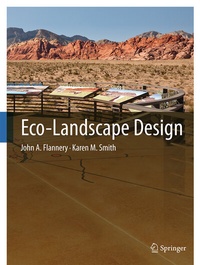
Eco-Landscape Design
Description

The ability to adapt to a changing environment has ensured the continued survival of the human race into the 21 st century. The challenges to be faced in this century are now well documented by the United Nations Intergovernmental Panel on Climate Change. The effects of drought, melting polar ice and increased incidences of extreme weather events will impact on the diverse landscapes of the earth and a human population predicted to be 9 billion by the middle of the 21 st century, a three-fold increase in less than one hundred years.
This book provides a valuable insight into landscaping activity worldwide by those tasked with housing, feeding and nurturing all species that share the planet. Research for this publication reveals the growth of non-anthropized design philosophies, acknowledging that humanity cannot be indefinitely sustained if animal, bird and plant life are excluded. The precious resources of water and the air that we breathe are no longer taken for granted; rivers flowing through the world's mega-cities are now being cleaned, restored and given pride of place in the landscapes they flow through. Conservation projects provide evidence that even fragile island and desert landscapes can be protected from the negative impacts of population. Eco-Landscape Design demonstrates that an intelligent and thoughtful approach to landscape design can not only ensure survival, it can reap compound benefits and rewards far in excess of those originally envisaged.
More details
Other editions
Additional editions
Persons
Mr. J. A. Flannery is the author of several books on architecture and design. With qualifications in industrial design, he has gained over 35 years experience in the Design, Procurement and Project Management of a wide range of construction projects in the industrial, commercial and private sectors throughout Europe, Africa and the U.S.A.. John Flannery currently works as a construction consultant in urban regeneration projects.
Karen M. Smith is the editor of several books on architecture and design. In addition to her publishing experience, Karen Smith's varied career has encompassed managerial posts in Public, University and Health Care Libraries in the UK. Currently, Ms. Smith is based at the University of York where she specialises in projects relating to publishing and the formulation of library and service quality strategies for the Information Directorate.
Content
Introduction.- Public Open Space.- Dwellings and Workplace.- Rivers, Shores and Islands.- Conservation and Education.
