


First-Year Teaching For Dummies
1st Edition
Published on 28. June 2023
368 pages
978-1-394-18978-6 (ISBN)
Description

Make your first year of teaching one to remember
Becoming a new teacher is one of the most fun, exciting, and challenging experiences you'll encounter in your life. Who wouldn't want a little help getting ready before sitting down behind the teacher's desk for the first time?
That's where First-Year Teaching For Dummies comes in. You'll find easy-to-follow strategies and techniques to help you navigate the politics of education in your community, develop fun and fulfilling relationships with your students, and refine your own instructional style. You'll learn to:
* Survive and thrive in your first two weeks as you hit the ground running and win over your students, co-workers, and administrators
* Avoid or reduce the major stressors that can lead to burnout and other common problems
* Understand and handle 21st-century issues with skill and sensitivity
It's almost time for you to take charge of your first classroom and you're raring to go. So, grab a copy of First-Year Teaching For Dummies to find the last-minute tips and common-sense guidance you need to help make your first school year a rewarding one!
Becoming a new teacher is one of the most fun, exciting, and challenging experiences you'll encounter in your life. Who wouldn't want a little help getting ready before sitting down behind the teacher's desk for the first time?
That's where First-Year Teaching For Dummies comes in. You'll find easy-to-follow strategies and techniques to help you navigate the politics of education in your community, develop fun and fulfilling relationships with your students, and refine your own instructional style. You'll learn to:
* Survive and thrive in your first two weeks as you hit the ground running and win over your students, co-workers, and administrators
* Avoid or reduce the major stressors that can lead to burnout and other common problems
* Understand and handle 21st-century issues with skill and sensitivity
It's almost time for you to take charge of your first classroom and you're raring to go. So, grab a copy of First-Year Teaching For Dummies to find the last-minute tips and common-sense guidance you need to help make your first school year a rewarding one!
More details
Other editions
Additional editions
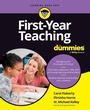
Carol Flaherty | Flirtisha Harris | W. Michael Kelley
First-Year Teaching For Dummies
Book
08/2023
1st Edition
Wiley
€24.00
Shipment within 15-20 days
Content
- Intro
- Title Page
- Copyright Page
- Table of Contents
- Introduction
- About This Book
- Foolish Assumptions
- Icons Used in This Book
- Beyond the Book
- Where to Go from Here
- Part 1 What They Didn't Teach You in College
- Chapter 1 What Have You Gotten Yourself Into?
- Real World versus School World
- How teaching is like other jobs
- How teaching is unique
- Bearing the Instructor's Burden
- Sink or swim!
- Facing adverse conditions
- You're the Adult Now!
- Performing six shows a day
- Working in Neverland
- Facing the Daily Grind
- Managing the school day
- Lesson plans and grading
- Chapter 2 Dealing with Society's Nutty Notions about Teaching
- "Those Who Can, Do
- Those Who Can't, Teach"
- Establishing Your Competence
- Winning over students
- Winning over parents
- Looking Inside Those "Educational Studies"
- The problem with numbers
- Interpreting statistics
- Forgetting Those Education Classes
- Chapter 3 How Things Have Changed in the Classroom
- Changes for the Better
- Changes for the Worse
- What's With These Kids Today?
- Part 2 Managing Your Classroom
- Chapter 4 Finding Your Way Around
- Topping Your To-Do List: Read the Rule Book
- Finessing fire drills
- Acclimating to active shooter drills
- Enforcing policy: Honor codes, dress codes, and secret codes
- Honor code
- Attendance policy
- Dress code
- Hall-pass procedures
- Phone policies
- Specific elementary issues
- Establishing Your Rules
- Getting Your Bearings
- Finding a buddy teacher
- Pairing up with a fellow rookie
- Meeting the administration
- Mapping Out Important Locations
- Chapter 5 Setting Up Your Classroom
- Building Blue-Ribbon Bulletin Boards
- Designing decorative bulletin boards
- Showcase student work
- Display photos of your class
- Commemorate a class activity
- Create a scoreboard for student competition
- Creating informative bulletin boards
- Tie in a contemporary theme to your subject
- Design a record-keeping board that reduces your administrative duties
- Create a visual reference
- Choosing a Seating Arrangement
- Feeling the feng shui
- Succeeding with seating
- The dance-floor seating chart
- The runway-model seating chart
- The independent-nation-state seating chart
- Establishing an Inviting Classroom
- Decorating for fun teachers
- Decorating for smart teachers
- Decorating for organized teachers
- Decorating for nurturing teachers
- Staying Afloat If You're a Floater
- Chapter 6 The First Week of School
- Making That Important First Impression
- Don't Smile until December?
- Building a reputation
- Building transparency, not friendship
- Identifying Important First-Week Tasks
- Addressing administrative tasks
- Breaking the ice
- Reassuring the younger kids
- Entertaining the older kids
- Dressing Appropriately
- Chapter 7 Keeping Your Classroom Under Control
- Understanding What the Front Office Expects from You
- Motivating Students
- Facing Bad Behavior Head On
- Winning the discipline war
- The three A's of confrontation
- Recognizing Ineffective Models of Confrontation
- The Thermostat
- The Crypt Keeper
- The Great Debater
- The Control Freak
- Getting Discipline Right
- Nabbing the ringleader
- Dropping the atomic bomb
- Chapter 8 Picking Your Battles
- Making the Punishment Fit the Crime
- Addressing minor problems
- Approach and stand beside the culprit
- Shoot the offender the icy stare of death
- Defuse potential distractions with humor
- Employ a distraction
- Addressing moderate problems
- Rearrange your seating chart
- Isolate the offender
- Don't be stingy with detentions
- Call a parent or coach to discuss your complaints
- Send kids to another teacher
- Letting Sleeping Dogs Lie
- Recognizing your limitations
- Surrendering unwinnable battles
- Recognizing an offer you can't refuse
- Saying yes to a bathroom request
- Taking Things Personally
- Passing the Problem (Child) to the Principal: When and How
- Part 3 Delivering Instruction
- Chapter 9 Finding Your Style
- Creating Lesson Plans
- Rehearsing your lines
- Avoiding common pitfalls
- Remember that the more you teach something, the faster you'll get
- Don't skip planning, even when you're tired
- Assume that your students don't possess prerequisite knowledge
- Put sufficient detail into your plans
- Consider the special needs of your students
- Honing Your Performance
- Move around the room
- Don't carry your lesson plans around
- Make eye contact with your students
- Avoid verbal crutches
- Stand so your students can see what you're writing on the board
- Making Learning Equitable
- Chapter 10 Making Learning Fun
- Teaching with Class Games
- Survivor
- The Box of Destiny
- Sparkle
- Head of the Class
- Games based on toys
- Adapting familiar games
- Game shows
- Board games
- Adding the Little Things
- Sharing personal stories
- Acknowledging achievement in goofy ways
- Holding your own awards assembly
- Writing letters as a class project
- Chapter 11 Managing Assessment
- Establishing a Grading System
- The total-points method
- The category method
- Comparing total-points and category grades
- Mastering the Tricks of the Grading Trade
- Preparing practical policies
- Don't check every single assignment for correctness
- Don't promise a fixed turnaround time for grading papers
- Make sure your grading policies are fair
- Don't forget to test the tester
- Absorbing assessment advice
- There is nothing wrong with multiple-choice questions
- Don't put too much faith in premade tests and quizzes
- Be sure to have at least one significant grade every week for each student in each subject you teach
- Part 4 Meet the Supporting Cast
- Chapter 12 Getting to Know Your Administrators
- A Field Guide to Administrators
- The Dictator
- The Political Animal
- The Pushover
- The Charity Case
- The Ideal Administrator
- Dealing with Dueling Bosses
- Partnering with your principal
- Satisfying your supervisor
- Overcoming Observations
- Chapter 13 Getting to Know Your Coworkers
- A Field Guide to Coworkers
- The Coach
- The Grouch
- The Golden Boy
- Paying Your Dues
- Understanding Staff Members
- Secretaries and administrative assistants
- Building service workers
- Guidance counselors
- Media specialists
- School nurses
- Parent Teacher Association (PTA) and Parent Volunteers
- Chapter 14 Getting to Know Parents
- A Field Guide to Parents
- The Short Fuse
- The Silent Spirit
- The Lost Cause
- The Quick Fixer
- Phoning Home
- Dialogue dissected
- Stage 1: The Introduction
- Stage 2: The Explanation
- Stage 3: The Treatment
- Stage 4: The Follow-Up
- Successful strategies
- Always get to the parent before the student does
- Document all phone calls
- Call parents to report good news as well as bad news
- Limit phone time with difficult or needy parents
- Don't give out your home phone number
- Surviving Parent Conferences
- Chapter 15 Getting to Know Students
- Teaching Different Academic Levels
- High-Achieving students
- Middle-of-the-roaders
- Academically challenged kids
- A Field Guide to Students
- The Super Geek
- The Catastrophic Thinker
- The Class Clown
- Figuring Out What Kids Want
- Part 5 Non-Instructional Duties
- Chapter 16 Implicit and Explicit Duties
- Doing Your Duty
- Cafeteria/recess duty
- Hallway/security duty
- Covering other classes
- Assembly duty
- The Joys of Sponsorship
- Life after School
- Tutoring after hours
- Attending school events
- Developing Professionally
- Tolerating intolerable in-services
- Taking classes on the weekend
- Chapter 17 Taming Administrative Tasks
- Hiking the Daily Recordkeeping Trail
- Attending to attendance
- Managing the minutiae
- Scripting Scintillating Substitute Plans
- Chapter 18 Protecting Students Under Your Care
- Navigating Common Health Concerns
- Handling Injuries and Emergencies
- Referring Students for Professional Help and Intervention
- Establishing a Safe Place for Students
- Contextualizing failure
- Acknowledging student choices
- Facing Difficult Truths about Sexual Harassment
- Students are sexually harassed every day
- You may be the victim of sexual harassment
- You may teach attractive students
- Avoiding the Appearance of Evil
- Part 6 The Part of Tens
- Chapter 19 Ten Things That Always Happen to First-Year Teachers
- You'll Have Problems Pacing Yourself
- A Harmless Comment You Make Will Be Misinterpreted
- Your Students Will Google You
- A Spill or Stain Will Embarrass You
- An Administrator Will Infuriate You
- You'll Find Out What the Kids Really Think of You
- A Parent Will Complain about You
- Something Completely Unexpected Will Happen
- You'll Receive Unexpected Praise
- A Student Will Greet You in Public
- Chapter 20 The Ten Biggest First-Year Teacher Blunders
- Becoming Too Friendly Too Early
- Teaching for the Wrong Reasons
- Coming to School Unprepared
- Reacting Before You Stop to Think
- Refusing to Back Down When You're Wrong
- Neglecting to Look in the Mirror
- Disassociating from Your Colleagues
- Acting Like Your Kids
- Not Practicing What You Preach
- Forgetting That Kids Are Just Kids
- Chapter 21 Ten Tips for Teaching Online
- Master Your Digital Learning Platform
- Offer Virtual Office Hours
- Provide Students a Place to Collaborate
- Figure Out How to Disable Student Microphones and Cameras
- Have Everyone Blur Their Camera Backgrounds
- Use a Variety of Methods to Assess Students
- Offer Incentives for Participating in Class
- Provide Timely and Effective Feedback
- Communicate Regularly through Different Channels
- Record Your Lessons
- Index
- EULA
