

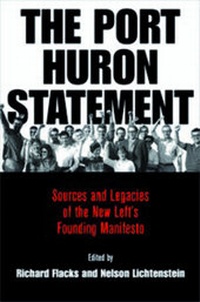
The Port Huron Statement
Sources and Legacies of the New Left's Founding Manifesto
1st Edition
Published on 21. January 2015
344 pages
978-0-8122-9099-8 (ISBN)
Description

The Port Huron Statement was the most important manifesto of the New Left student movement of the 1960s. Initially drafted by Tom Hayden and debated over the course of three days in 1962 at a meeting of student leaders, the statement was issued by Students for a Democratic Society as their founding document. Its key idea, "participatory democracy," proved a watchword for Sixties radicalism that has also reemerged in popular protests from the Arab Spring to Occupy Wall Street.
Featuring essays by some of the original contributors as well as prominent scholars who were influenced by the manifesto, The Port Huron Statement probes the origins, content, and contemporary influence of the document that heralded the emergence of a vibrant New Left in American culture and politics. Opening with an essay by Tom Hayden that provides a sweeping reflection on the document's enduring significance, the volume explores the diverse intellectual and cultural roots of the Statement, the uneasy dynamics between liberals and radicals that led to and followed this convergence, the ways participatory democracy was defined and deployed in the 1960s, and the continuing resonances this idea has for political movements today. An appendix includes the complete text of the original document.
The Port Huron Statement offers a vivid portrait of a unique moment in the history of radicalism, showing that the ideas that inspired a generation of young radicals more than half a century ago are just as important and provocative today.
Contributors: Robert Cohen, Richard Flacks, Jennifer Frost, Daniel Geary, Barbara Haber, Grace Elizabeth Hale, Tom Hayden, Michael Kazin, Nelson Lichtenstein, Jane Mansbridge, Lisa McGirr, James Miller, Robert J. S. Ross, Michael Vester, Erik Olin Wright.
Featuring essays by some of the original contributors as well as prominent scholars who were influenced by the manifesto, The Port Huron Statement probes the origins, content, and contemporary influence of the document that heralded the emergence of a vibrant New Left in American culture and politics. Opening with an essay by Tom Hayden that provides a sweeping reflection on the document's enduring significance, the volume explores the diverse intellectual and cultural roots of the Statement, the uneasy dynamics between liberals and radicals that led to and followed this convergence, the ways participatory democracy was defined and deployed in the 1960s, and the continuing resonances this idea has for political movements today. An appendix includes the complete text of the original document.
The Port Huron Statement offers a vivid portrait of a unique moment in the history of radicalism, showing that the ideas that inspired a generation of young radicals more than half a century ago are just as important and provocative today.
Contributors: Robert Cohen, Richard Flacks, Jennifer Frost, Daniel Geary, Barbara Haber, Grace Elizabeth Hale, Tom Hayden, Michael Kazin, Nelson Lichtenstein, Jane Mansbridge, Lisa McGirr, James Miller, Robert J. S. Ross, Michael Vester, Erik Olin Wright.
Reviews / Votes
"A wonderful volume-thoughtful, provocative, and entertaining. The all-star cast of contributors is truly impressive, filled with thoughtful activists and activist scholars." (David S. Meyer, University of California, Irvine) "This very fine collection on the Port Huron Statement and its key concept of 'participatory democracy' reminds us of how radicals and liberals might have walked together toward a boldly reshaped America. The volume is seasoned and insightful, yielding sterling original contributions that celebrate the Port Huron Statement while providing critical perspective informed by an acute sense that the program was not immediately realized." (Christopher Phelps, University of Nottingham)More details
Series
Language
English
Place of publication
Pennsylvania
United States
Target group
College/higher education
File size
1,24 MB
ISBN-13
978-0-8122-9099-8 (9780812290998)
Copyright in bibliographic data and cover images is held by Nielsen Book Services Limited or by the publishers or by their respective licensors: all rights reserved.
Schweitzer Classification
Other editions
Additional editions
Richard Flacks | Nelson Lichtenstein
The Port Huron Statement
Sources and Legacies of the New Left's Founding Manifesto
Book
03/2015
University of Pennsylvania Press
€64.48
Shipment within 10-20 days
Persons
Richard Flacks is Research Professor of Sociology at the University of California, Santa Barbara. He is author of Making History: The American Left and the American Mind and coauthor of Playing for Change: Music and Musicians in the Service of Social Movements. Nelson Lichtenstein is MacArthur Foundation Professor in History at the University of California, Santa Barbara. He is editor of American Capitalism: Social Thought and Political Economy in the Twentieth Century and coeditor of The Right and Labor in America: Politics, Ideology, and Imagination, both available from the University of Pennsylvania Press.
Content
Introduction
-Richard Flacks and Nelson Lichtenstein
Chapter 1. Crafting the Port Huron Statement: Measuring Its Impact in the 1960s and After
-Tom Hayden
PART I. INTELLECTUAL AND CULTURAL FOUNDATIONS
Chapter 2. Two Cheers for Utopia
-Michael Kazin
Chapter 3. Port Huron and the Origins of the International New Left
-Lisa McGirr
Chapter 4. The Romance of Rebellion
-Grace Elizabeth Hale
PART II. LIBERALISM AND RADICALISM CONJOINED AND DIVIDED
Chapter 5. The New Left and Liberalism Reconsidered: The Committee of Correspondence and the Port Huron Statement
-Daniel Geary
Chapter 6. A Moment of Convergence
-Nelson Lichtenstein
Chapter 7. The New Left's Love-Hate Relationship with the University
-Robert Cohen
PART III. PUTTING PARTICIPATORY DEMOCRACY INTO PRACTICE
Chapter 8. The Democratic Process at Port Huron and After
-Robert J. S. Ross
Chapter 9. A Manifesto of Hope
-Barbara Haber
Chapter 10. Putting Participatory Democracy into Action
-Jennifer Frost
Chapter 11. Port Huron and the New Left Movements in Federal Germany
-Michael Vester
PART IV. LESSONS AND LEGACIES
Chapter 12. Did We Learn How to Make Participatory Collectives Work?
-Jane Mansbridge
Chapter 13. Participatory Democracy and the Fate of Occupy Wall Street
-James Miller
Chapter 14. Radical Democracy as a Real Utopia
-Erik Olin Wright
Chapter 15. Philosophical and Political Roots of the American New Left
-Richard Flacks
The Port Huron Statement
Notes
List of Contributors
Index
Acknowledgments
-Richard Flacks and Nelson Lichtenstein
Chapter 1. Crafting the Port Huron Statement: Measuring Its Impact in the 1960s and After
-Tom Hayden
PART I. INTELLECTUAL AND CULTURAL FOUNDATIONS
Chapter 2. Two Cheers for Utopia
-Michael Kazin
Chapter 3. Port Huron and the Origins of the International New Left
-Lisa McGirr
Chapter 4. The Romance of Rebellion
-Grace Elizabeth Hale
PART II. LIBERALISM AND RADICALISM CONJOINED AND DIVIDED
Chapter 5. The New Left and Liberalism Reconsidered: The Committee of Correspondence and the Port Huron Statement
-Daniel Geary
Chapter 6. A Moment of Convergence
-Nelson Lichtenstein
Chapter 7. The New Left's Love-Hate Relationship with the University
-Robert Cohen
PART III. PUTTING PARTICIPATORY DEMOCRACY INTO PRACTICE
Chapter 8. The Democratic Process at Port Huron and After
-Robert J. S. Ross
Chapter 9. A Manifesto of Hope
-Barbara Haber
Chapter 10. Putting Participatory Democracy into Action
-Jennifer Frost
Chapter 11. Port Huron and the New Left Movements in Federal Germany
-Michael Vester
PART IV. LESSONS AND LEGACIES
Chapter 12. Did We Learn How to Make Participatory Collectives Work?
-Jane Mansbridge
Chapter 13. Participatory Democracy and the Fate of Occupy Wall Street
-James Miller
Chapter 14. Radical Democracy as a Real Utopia
-Erik Olin Wright
Chapter 15. Philosophical and Political Roots of the American New Left
-Richard Flacks
The Port Huron Statement
Notes
List of Contributors
Index
Acknowledgments
