

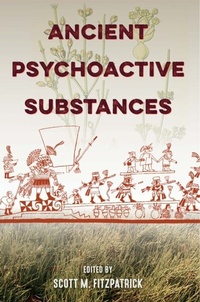
Ancient Psychoactive Substances
Description

"A well-founded and presented description of the integral role that psychoactive substances played in ancient societies. . . . A unique addition to ancient history collections."-Choice
"Very informative, well referenced, and well illustrated."-Latin American Antiquity
"A diverse and interesting introduction to the evidence for psychoactive use in the past, including consideration of the physical techniques and interpretative methods for understanding these practices."-Journal of Psychedelic Studies
"This well-researched and fascinating volume not only demonstrates the important cultural role of psychoactive substances in ancient societies but also points the way to an emerging research field. The unveiling of the past history of drug use becomes a lesson for present-day society."--Jan G. Bruhn, founding editor, Journal of Ethnopharmacology
"Presents a broad overview of drug plants and fermented beverages by using anthropological, ethnological, archaeological, iconographic, chemical, and botanical approaches. Essential reading."--Elisa Guerra Doce, author of Drugs in Prehistory: Archaeological Evidence of the Use of Psychoactive Substances in Europe
Mind-altering substances have been used by humans for thousands of years. In fact, ancient societies sometimes encouraged the consumption of drugs. Focusing on the archaeological study of how various entheogens have been used in the past, this volume examines why humans have social and psychological needs for these substances. Contributors trace the long-term use of drugs in ancient cultures and highlight the ways they evolved from being sacred to recreational in more modern times.
By analyzing evidence of these substances across a diverse range of ancient cultures, the contributors explore how and why past civilizations harvested, manufactured, and consumed drugs. Case studies examine the use of stimulants, narcotics, and depressants by hunter-gatherers who roamed Africa and Eurasia, prehistoric communities in North and South America, and Maya kings and queens.
Offering perspectives from many different fields of study, contributors illustrate the wide variety of sources and techniques that can provide information about materials that are often invisible to archaeologists. They use advanced biomolecular procedures to identify alkaloids and resins on cups, pipes, and other artifacts. They interpret paintings on vases and discuss excavations of breweries and similar sites. Uncovering signs of drugs, including ayahuasca, peyote, ephedra, cannabis, tobacco, yaupon, vilca, and maize and molle beer, they explain how psychoactive substances were integral to interpersonal relationships, religious practices, and social cohesion in antiquity.
Scott M. Fitzpatrick, professor of archaeology at the University of Oregon, is coeditor of Island Shores, Distant Pasts: Archaeological and Biological Approaches to the Pre-Columbian Settlement of the Caribbean.
Contributors: Quetta Kaye | Victor D. Thompson | Thomas J. Pluckhahn | Sean Rafferty | Mark Merlin | Matt Sayre | Constantino Manuel Torres | Zuzana Chovanec | Jennifer A. Loughmiller-Newman | Justin Jennings | Daniel M. Seinfeld | Shannon Tushingham | Scott M. Fitzpatrick
All prices
More details
Other editions
Additional editions
Content
- Intro
- Title Page
- Copyright Page
- Contents
- List of Illustrations
- Acknowledgments
- Introduction: Drugs from a Deep Time Perspective
- 1. Cannabis in Ancient Central Eurasian Burials
- 2. Intoxication on the Wine Dark Sea: Investigating Psychoactive Substances in the Eastern Mediterranean
- 3. Ancient Use of Ephedra in Eurasia and the Western Hemisphere
- 4. Prehistoric Intoxicants of North America
- 5. Pipes, Cups, Platform Mounds, and Mortuary Ritual in the Lake Okeechobee Basin of South Florida
- 6. Power From, Power To, Power Over? Ritual Drug-Taking and the Social Context of Power among the Indigenous People of the Caribbean
- 7. Intoxication Rituals and Gender among the Ancient Maya
- 8. Mayan Ritual Beverage Production: Considering the Ceramics
- 9. The Origins of the Ayahuasca/Yagé Concept: An Inquiry into the Synergy between Dimethyltryptamine and Beta-Carbolines
- 10. A Synonym for Sacred: Vilca Use in the Preconquest Andes
- 11. Ingredients Matter: Maize versus Molle Brewing in Ancient Andean Feasting
- List of Contributors
- Index
