

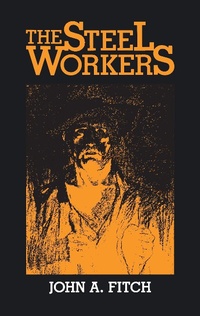
The Steel Workers
Published on 11. January 2012
437 pages
978-0-8229-7384-3 (ISBN)
Description

This classic account of the worker in the steel industry during the early years of the twentieth century combines the social investigator's mastery of facts with the vivid personal touch of the journalist. From its pages emerges a finely etched picture of how men lived and worked in steel.
In 1907-1908, when John Fitch spent more than a year in Pittsburgh interviewing workers, steel was the master industry of the region. It employed almost 80,000 workers and virtually controlled social and civic life.
Fitch observed steel workers on the job, and he describes succinctly the prevailing technology of iron and steelmaking: the blast furnace crews, the puddlers and rollers; the crucible, Bessemer, and open hearth processes. He examined the health problems and accidents which resulted from the pressure of long hours, hazardous machinery, and speed-ups in production. He also anaylzed the early experiments in welfare capitolism, such as accident prevention and compensation, and pensions.
One of the six volumes in the famous Pittsburgh Survey (1909-1914), The Steel Workers remains a readable and timeless account of labor conditions in the early years of the steel industry. An introduction by the noted historian Roy Lubove places the book in political and historical context and makes it especially suitable for classroom use.
In 1907-1908, when John Fitch spent more than a year in Pittsburgh interviewing workers, steel was the master industry of the region. It employed almost 80,000 workers and virtually controlled social and civic life.
Fitch observed steel workers on the job, and he describes succinctly the prevailing technology of iron and steelmaking: the blast furnace crews, the puddlers and rollers; the crucible, Bessemer, and open hearth processes. He examined the health problems and accidents which resulted from the pressure of long hours, hazardous machinery, and speed-ups in production. He also anaylzed the early experiments in welfare capitolism, such as accident prevention and compensation, and pensions.
One of the six volumes in the famous Pittsburgh Survey (1909-1914), The Steel Workers remains a readable and timeless account of labor conditions in the early years of the steel industry. An introduction by the noted historian Roy Lubove places the book in political and historical context and makes it especially suitable for classroom use.
More details
Other editions
Additional editions

John A. Fitch
The Steelworkers
Book
01/1989
University of Pittsburgh Press
€91.31
Article exhausted; check different version
Person
John A. Fitch was a journalist who wrote for the Pittsburgh Survey (1909-1914), a pioneering study of social conditions funded by the Russell Sage Foundation. He documented the working conditions of steel workers.
Content
- Intro
- Contents
- John A. Fitch, "The Steel Workers," and the Crisis of Democracy, by Roy Lubove
- Text of "The Steel Workers
- Table of Contents
- Chapter 1: Introductory
- Part I: The Men and the Tools
- II: The Workmen
- III: The Blast Furnace Crews
- IV: Puddlers and Iron Rollers
- V: The Steel Makers
- VI: The Men of the Rolling Mills
- VII: Health and Accidents in Steel Making
- Part II: The Struggle for Control
- VIII: Unionism and the Union Movement
- IX: Policies of the Amalgamated Association
- X: The Great Strikes
- Part III: The Employers in the Saddle
- XI: Industrial Organization under the Non-union Regime
- XII: Wages and the Cost of Living
- XIII: The Working Day and the Working Week
- XIV: Speeding Up and the Bonus System
- XV: The Labor Policy of Unrestricted Capital
- XVI: Repression
- Part IV: The Steel Workers and Democracy
- XVII: Citizenship in the Mill Towns
- XVIII: The Spirit of the Workers
- Appendices
- I: Documents relating to the Amalgamation of the Unions in the Iron and Steel Industry
- II: The Amalgamated Association
- III: Unionism at Homestead since 1892
- IV: Wage Figures
- V: Profit-sharing Plan and Bonus Fund of the United States Steel Corporation
- VI: Seven-Day Labor
- VII: Relief Plan of the United States Steel Corporation
- VIII: United States Steel and Carnegie Pension Fund
- IX: Labor Conditions in the Mills of the Bethlehem Steel Comany, at South Bethlehem, Pa.
- X: Racial Make-up of Labor Force of Carnegie Steel Company, Allegheny County Plants
- Index
