

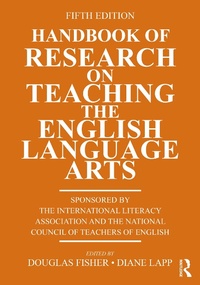
Handbook of Research on Teaching the English Language Arts
5th Edition
Published on 22. December 2023
386 pages
978-1-003-81781-9 (ISBN)
Description

Now in its fifth edition, the Handbook of Research on Teaching the English Language Arts--sponsored by the International Literacy Association and the National Council of Teachers of English--remains at the forefront in bringing together prominent scholars, researchers, and professional leaders to offer an integrated perspective on teaching the English language arts and a comprehensive overview of research in the field. Reflecting important developments since the publication of the fourth edition in 2017, this new edition is streamlined and completely restructured around "big ideas" in the field related to theoretical and research foundations, learners in context, and new literacies. Addressing all the language arts within a holistic perspective (speaking/listening, viewing, language, writing, reading), it covers new and important topics, such as online learning, multimodalities, culturally responsive learning, and more.
More details
Edition
5th edition
Language
English
Place of publication
London
United Kingdom
Publishing group
Taylor & Francis Ebooks
Target group
College/higher education
Professional and scholarly
Illustrations
2 Tables, black and white; 12 Line drawings, black and white; 1 Halftones, black and white; 13 Illustrations, black and white
ISBN-13
978-1-003-81781-9 (9781003817819)
Copyright in bibliographic data and cover images is held by Nielsen Book Services Limited or by the publishers or by their respective licensors: all rights reserved.
Schweitzer Classification
Other editions
Additional editions
Douglas Fisher | Diane Lapp
Handbook of Research on Teaching the English Language Arts
Book
03/2024
5th Edition
Routledge
€185.20
Shipment within 10-20 days
Douglas Fisher | Diane Lapp
Handbook of Research on Teaching the English Language Arts
Book
12/2023
5th Edition
Routledge
€377.40
Shipment within 10-20 days
Persons
Douglas Fisher is Professor in the Department of Educational Leadership at San Diego State University, USA.
Diane Lapp is a Distinguished Professor of Education in the Department of Teacher Education at San Diego State University, USA.
Both Lapp and Fisher are teacher leaders at Health Sciences High and Middle College in San Diego, CA.
Diane Lapp is a Distinguished Professor of Education in the Department of Teacher Education at San Diego State University, USA.
Both Lapp and Fisher are teacher leaders at Health Sciences High and Middle College in San Diego, CA.
Content
Preface
Section I
The Language Arts
Chapter 1
An International Focus of Language Arts Literacy
Chapter 2
The Power of Language
Chapter 3
Reading Instruction across Preschool Through Grade 12
Chapter 4
Writing Instruction: Evidence Based Practices and Critical Perspectives
Chapter 5
Teaching Multimodal and Digital Literacies
Chapter 6
Research in Children's Literature
Chapter 7
Adolescent Literature Comes of Age
Section II
Equity, Identity, and Belonging in the Classroom
Chapter 8
Cultivating Equitable Language Arts Practices
Chapter 9
Multilingual Learners Extending to "Multiculturating": Enacting Complex Linguistically and Culturally Enriched Teaching
Chapter 10
Literacy Development for Students with Disabilities
Chapter 11
Student Agency in the Adaptive Classroom
Chapter 12
Identity Safe Schools
Section III
Influences on Learning the Language Arts
Chapter 13
Roles of Motivation and Engagement in Teaching the English Language Arts
Chapter 14
Assessment in Language Arts Classrooms
Chapter 15
Self-Regulation and Executive Function in Language Arts Learning
Epilogue and New Directions
State of the Field: The Research We Have, Research We Need
Index
Section I
The Language Arts
Chapter 1
An International Focus of Language Arts Literacy
Chapter 2
The Power of Language
Chapter 3
Reading Instruction across Preschool Through Grade 12
Chapter 4
Writing Instruction: Evidence Based Practices and Critical Perspectives
Chapter 5
Teaching Multimodal and Digital Literacies
Chapter 6
Research in Children's Literature
Chapter 7
Adolescent Literature Comes of Age
Section II
Equity, Identity, and Belonging in the Classroom
Chapter 8
Cultivating Equitable Language Arts Practices
Chapter 9
Multilingual Learners Extending to "Multiculturating": Enacting Complex Linguistically and Culturally Enriched Teaching
Chapter 10
Literacy Development for Students with Disabilities
Chapter 11
Student Agency in the Adaptive Classroom
Chapter 12
Identity Safe Schools
Section III
Influences on Learning the Language Arts
Chapter 13
Roles of Motivation and Engagement in Teaching the English Language Arts
Chapter 14
Assessment in Language Arts Classrooms
Chapter 15
Self-Regulation and Executive Function in Language Arts Learning
Epilogue and New Directions
State of the Field: The Research We Have, Research We Need
Index
