

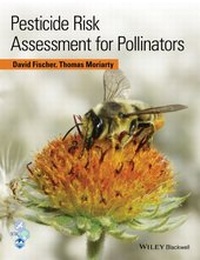
Pesticide Risk Assessment for Pollinators
Description

Reviews / Votes
"The debate concerning the effects of neonicotinoids on bees, though probably not the one about mobile phones, will no doubt continue for a long time so the publication of this excellent and comprehensive book is timely." (Chemistry & Industry, 26 January 2015)More details
Other editions
Additional editions
Persons
Content
List of Figures xi
List of Tables xv
Acknowledgments xvii
About the Editors xix
Workshop Participants xxi
Pellston Workshop Series xxv
Chapter 1 Introduction 1
1.1 Workshop Balance and Composition 2
Chapter 2 Overview of the Honey Bee 3
J. Pettis
2.1 Overview of Honey Bee Biology 3
Chapter 3 Overview of Non-Apis Bees 5
M. Vaughan, B.E. Vaissi`ere, G. Maynard, M. Kasina, R.C.F. Nocelli, C. Scott-Dupree, E. Johansen, C. Brittain, M. Coulson, and A. Dinter
3.1 Introduction 5
3.2 Non-Apis Bee Biology and Diversity 7
3.3 Opportunities for Non-Apis Bees to Inform Pollinator Risk Assessment 12
3.4 Conclusions 12
References 14
Chapter 4 Overview of Protection Goals for Pollinators 19
T. Moriarty, A. Alix, and M. Miles
4.1 Introduction 19
4.2 Elements and Proposed Protection Goals 20
4.3 Linking Protection Goals with Assessment Endpoints 21
4.4 Protection Goals and Monitoring 22
4.5 Conclusion 22
Reference 23
Chapter 5 Overview of the Pesticide Risk Assessment and the Regulatory Process 25
C. Lee-Steere and T. Steeger
5.1 Introduction 25
5.2 Current Approach for Assessing Effects of Pesticide Products to Pollinators 26
References 27
Chapter 6 Problem Formulation for an Assessment of Risk to Honey Bees from Applications of
Plant Protection Products to Agricultural Crops 29
D. Fischer, A. Alix, M. Coulson, P. Delorme, T. Moriarty, J. Pettis, T. Steeger, and J.D. Wisk
6.1 What Is Problem Formulation? 30
6.2 Case 1: Problem Formulation for a Systemic Chemical Applied to the Soil, or as a Seed-Dressing 35
6.3 Case 2: Problem Formulation for a Contact Chemical Applied as a Foliar Spray 39
References 44
Chapter 7 Assessing Exposure of Pesticides to Bees 45
J.D.Wisk, J. Pistorius, M. Beevers, R. Bireley, Z. Browning, M.P. Chauzat, A. Nikolakis, J. Overmyer, R. Rose, R. Sebastien, B.E. Vaissi`ere, G. Maynard, M. Kasina, R.C.F. Nocelli, C. Scott-Dupree, E. Johansen, C. Brittain, M. Coulson, A. Dinter, and M. Vaughan
7.1 Introduction 46
7.2 Potential Routes of Exposure for Non-ApisBees 49
7.3 Methods and Models for Estimating Exposure of Bees to Pesticides 54
7.4 Physical and Chemical Properties of Pesticide Active Ingredients Which Affect Exposure 55
7.5 Information Needed to Develop Refined Predictive Exposure Models 56
7.6 Predicted Contact Exposure for Foliar-Applied Products 56
7.7 Predicted Dietary Exposure for Foliar-Applied Products 59
7.8 Predicted Exposure for Soil and Seed Treatment Systemic Compounds 61
7.9 Predicted Exposure for Tree-Injected Compounds 62
7.10 Measuring Pesticides in Matrices Relevant for Assessing Exposure to Bees 62
7.11 Higher Tier Studies to Assess Exposure of Pesticides to Bees 63
7.12 Health of Honey Bee Colonies Can Influence Exposure 65
7.13 Higher Tier Studies with Non-Apis Bee Species 65
7.14 Summary and Recommendations 68
References 70
Chapter 8 Assessing Effects Through Laboratory Toxicity Testing 75
J. Frazier, J. Pflugfleder, P. Aupinel, A. Decourtye, J. Ellis, C. Scott-Dupree, Z. Huang, H. Thompson, P. Bachman, A. Dinter, M. Vaughan, B.E. Vaissi`ere, G. Maynard, M. Kasina, E. Johansen, C. Brittain, M. Coulson, and R.C.F. Nocelli
8.1 Introduction 75
8.2 Overview of Laboratory Testing Requirements Among Several Countries 77
8.3 Uncertainties in Current Testing Paradigms 78
8.4 Limitations and Suggested Improvements for Tier 1 Testing 79
8.5 Adult Oral Chronic Toxicity-Apis Bees 83
8.6 Honey Bee Brood Tests in the Laboratory 83
8.7 Adult Toxicity Testing with Non-Apis Bees 84
8.8 Sublethal Effects and Test Developments 86
8.9 Conclusions 91
References 91
Chapter 9 Assessing Effects Through Semi-Field and Field Toxicity Testing 95
J. Pettis, I. Tornier, M. Clook, K. Wallner, B. Vaissiere, T. Stadler, W. Hou, G. Maynard, R. Becker, M. Coulson, P. Jourdan, M. Vaughan, R.C.F. Nocelli, C. Scott-Dupree, E. Johansen, C. Brittain, A. Dinter, and M. Kasina
9.1 Introduction 96
9.2 Definition of Semi-Field and Field Studies 97
9.3 Design of a Semi-Field Study 97
9.4 Outline of a Semi-Field Study for Apis and Non-Apis Bees 101
9.5 Design of a Field Study 108
9.6 Outline of a Field Study for Apis and Non-Apis Species 108
9.7 Role of Monitoring and Incident Reporting 116
9.8 Summary 118
References 118
Chapter 10 Overview of a Proposed Ecological Risk Assessment Process for Honey bees
(Apis mellifera) and Non-Apis Bees 121
A. Alix, T. Steeger, C. Brittain, D. Fischer, R. Johnson, T. Moriarty, E. Johansen, F. Streissel, R. Fischer, M. Miles, C. Lee-Steere, M. Vaughan, B. Vaissiere, G. Maynard, M. Kasina, R.C.F. Nocelli, C. Scott-Dupree, M. Coulson, A. Dinter, and M. Fry
10.1 Introduction 122
10.2 Protection Goals, Assessment and Measurement Endpoints, Trigger Values for Transitioning to Higher Levels of Refinement, and Risk Assessment Terminology 125
10.3 Risk Assessment Flowcharts 127
10.4 Spray Applications 132
10.5 Soil and Seed Treatment Applications for Systemic Substances 134
10.6 Screening-Level Risk Assessments (Tier 1) 135
10.7 Factors Limiting Certainty in Screening Assessments 135
10.8 Refinement Options for Screening-Level Risk Assessment 136
10.9 Conclusions on the Risks and Recommendations 144
10.10 Recommending Risk Mitigation Measures 145
10.11 Additional Tools in Support of Risk Assessment and to Inform
Risk Management 146
References 146
Chapter 11 Ecological Modeling for Pesticide Risk Assessment for Honey Bees and Other Pollinators 149
V. Grimm, M.A. Becher, P. Kennedy, P. Thorbek, and J. Osborne
11.1 Introduction 149
11.2 Example Model: Common Shrew 150
11.3 Rationale and Approaches of Mechanistic Effect Modeling 152
11.4 Modeling Practice for Risk Assessment 154
11.5 Existing Models of Pollinators 155
11.6 Discussion 159
References 160
Chapter 12 Data Analysis Issues 163
W. Warren-Hicks
12.1 Study Duration 163
12.2 Replicates and Dosing 163
12.3 Long-Term Tests 164
12.4 Statistical Models 164
Chapter 13 Risk Mitigation and Performance Criteria 165
E. Johansen, M. Fry, and T. Moriarty
13.1 The Role of Risk Management in Pollinator Protection 165
13.2 Regulatory Risk Mitigation Methods167
13.3 Non-Regulatory Risk Mitigation Methods 169
13.4 Suggested Techniques to Mitigate Risks to Other Species of Bees 170
13.5 Pesticide Application Technologies to Mitigate Exposure to Bees 171
References 172
Chapter 14 Recommendations for Future Research in Pesticide Risk Assessment for Pollinators 173
14.1 Exposure 173
14.2 Effects 175
References 177
Appendix 1 Elements for a Chronic Adult Oral Toxicity Study 179
Appendix 2 Elements of a Larval Study 181
Appendix 3 Elements of Artificial Flower Test 187
Appendix 4 Elements of theVisual Learning Test 189
Appendix 5 Foraging Behavior with Radio Frequency Identification 193
Appendix 6 Detailed Description of the Proposed Overall Risk Assessment Scheme 195
Glossary of Terms 209
Index 211
Color plate section is located between pages 120 and 121.
Pellston Workshop Series
The workshop from which this book resulted, Potential Risks of Plant Protection Products to Pollinators, held in Pensacola Beach, Florida, USA, January 16–22, 2011, was part of the successful SETAC Pellston Workshop Series. Since 1977, Pellston Workshops have brought scientists together to evaluate current and prospective environmental issues. Each workshop has focused on a relevant environmental topic, and the proceedings of each have been published as peer-reviewed or informal reports. These documents have been widely distributed and are valued by environmental scientists, engineers, regulators, and managers for their technical basis and their comprehensive, state-of-the-science reviews. The workshops in the Pellston series are as follows:
- Estimating the Hazard of Chemical Substances to Aquatic Life. Pellston, Michigan, June 13–17, 1977. Published by the American Society for Testing and Materials, STP 657, 1978.
- Analyzing the Hazard Evaluation Process. Waterville Valley, New Hampshire, August 14–18, 1978. Published by the American Fisheries Society, 1979.
- Biotransformation and Fate of Chemicals in the Aquatic Environment. Pellston, Michigan, August 14–18, 1979. Published by the American Society of Microbiology, 1980.
- Modeling the Fate of Chemicals in the Aquatic Environment. Pellston, Michigan, August 16–21, 1981. Published by Ann Arbor Science, 1982.
- Environmental Hazard Assessment of Effluents. Cody, Wyoming, August 23–27, 1982. Published as a SETAC Special Publication by Pergamon Press, 1985.
- Fate and Effects of Sediment-Bound in Aquatic Systems. Florissant, Colorado, August 11–18, 1984. Published as a SETAC Special Publication by Pergamon Press, 1987.
- Research Priorities in Environmental Risk Assessment. Breckenridge, Colorado, August 16–21, 1987. Published by SETAC, 1987.
- Biomarkers: Biochemical, Physiological, and Histological Markers of Anthropogenic Stress. Keystone, Colorado, July 23–28, 1989. Published as a SETAC Special Publication by Lewis Publishers, 1992.
- Population Ecology and Wildlife Toxicology of Agricultural Pesticide Use: A Modeling Initiative for Avian Species. Kiawah Island, South Carolina, July 22–27, 1990. Published as a SETAC Special Publication by Lewis Publishers, 1994.
- A Technical Framework for [Product] Life-Cycle Assessments. Smuggler's Notch, Vermont, August 18–23, 1990. Published by SETAC, January 1991; 2nd printing September 1991; 3rd printing March 1994.
- Aquatic Microcosms for Ecological Assessment of Pesticides. Wintergreen, Virginia, October 7–11, 1991. Published by SETAC, 1992.
- A Conceptual Framework for Life-Cycle Assessment Impact Assessment. Sandestin, Florida, February 1–6, 1992. Published by SETAC, 1993.
- A Mechanistic Understanding of Bioavailability: Physical–Chemical Interactions. Pellston, Michigan, August 17–22, 1992. Published as a SETAC Special Publication by Lewis Publishers, 1994.
- Life-Cycle Assessment Data Quality Workshop. Wintergreen, Virginia, October 4–9, 1992. Published by SETAC, 1994.
- Avian Radio Telemetry in Support of Pesticide Field Studies. Pacific Grove, California, January 5–8, 1993. Published by SETAC, 1998.
- Sustainability-Based Environmental Management. Pellston, Michigan, August 25–31, 1993. Co-sponsored by the Ecological Society of America. Published by SETAC, 1998.
- Ecotoxicological Risk Assessment for Chlorinated Organic Chemicals. Alliston, Ontario, Canada, July 25–29, 1994. Published by SETAC, 1998.
- Application of Life-Cycle Assessment to Public Policy. Wintergreen, Virginia, August 14–19, 1994. Published by SETAC, 1997.
- Ecological Risk Assessment Decision Support System. Pellston, Michigan, August 23–28, 1994. Published by SETAC, 1998.
- Avian Toxicity Testing. Pensacola, Florida, December 4–7, 1994. Co-sponsored and published by Organisation for Economic Co-operation and Development (OECD), 1996.
- Chemical Ranking and Scoring (CRS): Guidelines for Developing and Implementing Tools for Relative Chemical Assessments. Sandestin, Florida, February 12–16, 1995. Published by SETAC, 1997.
- Ecological Risk Assessment of Contaminated Sediments. Pacific Grove, California, April 23–28, 1995. Published by SETAC, 1997.
- Ecotoxicology and Risk Assessment for Wetlands. Fairmont, Montana, 30 July–3 August 1995. Published by SETAC, 1999.
- Uncertainty in Ecological Risk Assessment. Pellston, Michigan, August 23–28, 1995. Published by SETAC, 1998.
- Whole-Effluent Toxicity Testing: An Evaluation of Methods and Prediction of Receiving System Impacts. Pellston, Michigan, September 16–21, 1995. Published by SETAC, 1996.
- Reproductive and Developmental Effects of Contaminants in Oviparous Vertebrates. Fairmont, Montana, July 13–18, 1997. Published by SETAC, 1999.
- Multiple Stressors in Ecological Risk Assessment. Pellston, Michigan, September 13–18, 1997. Published by SETAC, 1999.
- Re-evaluation of the State of the Science for Water Quality Criteria Development. Fairmont, Montana, June 25–30, 1998. Published by SETAC, 2003.
- Criteria for Persistence and Long-Range Transport of Chemicals in the Environment. Fairmont Hot Springs, British Columbia, Canada, July 14–19, 1998. Published by SETAC, 2000.
- Assessing Contaminated Soils: From Soil-Contaminant Interactions to Ecosystem Management. Pellston, Michigan, September 23–27, 1998. Published by SETAC, 2003.
- Endocrine Disruption in Invertebrates: Endocrinology, Testing, and Assessment (EDIETA). Amsterdam, The Netherlands, December 12–15, 1998. Published by SETAC, 1999.
- Assessing the Effects of Complex Stressors in Ecosystems. Pellston, Michigan, September 11–16, 1999. Published by SETAC, 2001.
- Environmental–Human Health Interconnections. Snowbird, Utah, June 10–15, 2000. Published by SETAC, 2002.
- Ecological Assessment of Aquatic Resources: Application, Implementation, and Communication. Pellston, Michigan, September 16–21, 2000. Published by SETAC, 2004.
- Toxicity Identification Evaluation/Toxicity Reduction Evaluation: What Works and What Doesn't. Pensacola, Florida, June 23–27, 2001. Proceedings published by SETAC in 2005.
- The Global Decline of Amphibian Populations: An Integrated Analysis of Multiple Stressors Effects. Wingspread, Racine, Wisconsin, August 18–23, 2001. Published by SETAC, 2003.
- Methods of Uncertainty Analysis for Pesticide Risks. Pensacola, Florida, 24 February–1 March 2002.
- The Role of Dietary Exposure in the Evaluation of Risk of Metals to Aquatic Organisms. Fairmont Hot Springs, British Columbia, Canada, 27 July–1 August 2002. Published by SETAC, 2005.
- Use of Sediment Quality Guidelines (SQGs) and Related Tools for the Assessment of Contaminated Sediments. Fairmont Hot Springs, Montana, August 17–22, 2002. Published by SETAC, 2005.
- Science for Assessment of the Impacts of Human Pharmaceuticals on Aquatic Ecosystem. Snowbird, Utah, June 3–8, 2003. Published by SETAC, 2005.
- Population-Level Ecological Risk Assessment. Roskilde, Denmark, August 23–27, 2003. Published by SETAC and CRC Press, 2007.
- Valuation of Ecological Resources: Integration of Ecological Risk Assessment and Socio-Economics to Support Environmental Decisions. Pensacola, Florida, October 4–9, 2003. Published by SETAC and CRC Press, 2007.
- Emerging Molecular and Computational Approaches for Cross-Species Extrapolations. Portland, Oregon, July 18–22, 2004. Published by SETAC and CRC Press, 2006.
- Veterinary Medicines in the Environment. Pensacola, Florida, February 12–16, 2006. Published by SETAC and CRC Press, 2008.
- Tissue Residue Approach for Toxicity Assessment: Invertebrates and Fish. Leavenworth, Washington, June 7–10, 2007. Published in SETAC Journal Integrated Environmental Assessment and Management (IEAM), 2011.
- Science-Based Guidance and Framework for the Evaluation and Identification of PBTs and POPs. Pensacola Beach, Florida, 27 January–1 February 2008.
- The Nexus between Ecological Risk Assessment (ERA) and Natural Resource Damage Assessment (NRDA). Fairmont, Montana, January 28–31, 2008. Published in SETAC Journal Integrated Environmental Assessment and Management (IEAM), 2009.
- Ecological Assessment of Selenium in the Aquatic Environment. Pensacola Beach, Florida, February 22–27, 2009. Published by SETAC and CRC Press, 2010.
- A Vision and Strategy for Predictive Ecotoxicology in the 21st Century: Defining Adverse Outcome Pathways Associated with Ecological Risk. Forest Grove, Oregon, April 19–23, 2009. Published in SETAC Journal Environmental Toxicology and Chemistry (ET&C), 2011.
- Problem Formulation for Ecological Risk Assessments. Pensacola Beach, Florida, April 18–24, 2010.
- Potential Risks of Plant Protection Products to Pollinators. Pensacola Beach, Florida, January 16–22, 2011.
- Life Cycle Assessment Database Global Guidance. Kanagawa, Japan, 30 January–4 February 2011. Published by the UNEP/SETAC Life Cycle Initiative, 2011.
- Influence of Global Climate Change on the Scientific Foundation and Application of Environmental Toxicology and Chemistry. Racine, Wisconsin, July 16–21, 2011. Published in ET&C,...
