

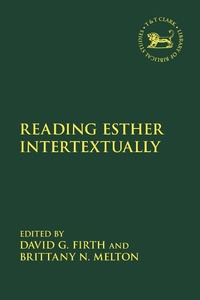
Reading Esther Intertextually
1st Edition
Published on 19. May 2022
256 pages
978-0-567-70302-6 (ISBN)
Description

Looking at the Book of Esther through the lens of intertextuality, this collection considers its connections with each division of the Hebrew Bible, along with texts throughout history. Through its exploration, it provides and invites further study into the relationship between Esther and its intertexts, many which are under explored. Topics covered in the book include considerations of Esther alongside the Torah and the prophetic books, as well as in dialogue with the Qumran community.
As an edited collection, the book draws together scholars with expertise in the wide variety of texts that are intertextually connected with Esther, offering the reader a more nuanced and informed discussion. By including some reflection on the nature of intertextuality as a 'method', it also enables the reader to appreciate the varying intertextual approaches currently employed in biblical studies. In applying these to a focused analysis of Esther, this collection will facilitate greater insight on both the book of Esther and current methodological research.
As an edited collection, the book draws together scholars with expertise in the wide variety of texts that are intertextually connected with Esther, offering the reader a more nuanced and informed discussion. By including some reflection on the nature of intertextuality as a 'method', it also enables the reader to appreciate the varying intertextual approaches currently employed in biblical studies. In applying these to a focused analysis of Esther, this collection will facilitate greater insight on both the book of Esther and current methodological research.
More details
Series
Edition
1. Auflage
Language
English
Place of publication
London
United Kingdom
Publishing group
Bloomsbury Publishing PLC
Target group
College/higher education
ISBN-13
978-0-567-70302-6 (9780567703026)
Copyright in bibliographic data and cover images is held by Nielsen Book Services Limited or by the publishers or by their respective licensors: all rights reserved.
Schweitzer Classification
Other editions
Additional editions
David Firth | Brittany N. Melton
Reading Esther Intertextually
Book
12/2023
T.& T.Clark Ltd
€43.80
Shipment within 3-4 weeks
David Firth | Brittany N. Melton
Reading Esther Intertextually
Book
06/2022
T.& T.Clark Ltd
€133.70
Shipment within 10-20 days
Persons
David G. Firth is Old Testament Tutor, Trinity College Bristol, UK and Research Associate, University of the Free State, South Africa
Brittany N. Melton is Assistant Professor of Biblical and Theological Studies at Palm Beach Atlantic University, USA
Brittany N. Melton is Assistant Professor of Biblical and Theological Studies at Palm Beach Atlantic University, USA
Content
List of Tables
List of Contributors
Preface
List of Abbreviations
Under the Intertextual Umbrella: An Introduction, David G. Firth (Trinity College Bristol, UK), Brittany N. Melton (Palm Beach Atlantic University, USA) and Heath A. Thomas (Oklahoma Baptist University, USA)
Part One: Esther in Dialogue with the Torah
1. Foreign Ambivalence in the Scroll: Reading Esther's Court alongside Joseph and Daniel, Gabriel Hornung (Trinity College, CT, USA)
2. The Book of Esther: Exodus, Passover, and Food Laws, Gordon McConville (University of Gloucestershire, UK)
Part Two: Esther in Dialogue with the Former Prophets
3. Esther and Joshua: Negotiating Identity In and Out of the Land, David G. Firth (Trinity College Bristol, UK)
4. Eyes, Hearts and Doing 'What Seems Good': Reading Judges and Esther Side by Side, Isabelle Hamley (Lambeth Palace / King's College London, UK)
5. Overturning Sovereignty: Esther in Dialogue with the Book of Samuel, Rachelle Gilmour (Trinity College Melbourne, Australia)
Part Three: Esther in Dialogue with the Latter Prophets
6. At the Table: Banquets in Esther and Isaiah in Intertextual Conversation, Andrew Abernethy (Wheaton College, USA)
7. The Fruit of Mourning: Esther Enriched by the Latter Prophets, Heath A. Thomas (Oklahoma Baptist University, USA)
Part Four: Esther in Dialogue with the Writings
8. In a World Without God: Reading Esther alongside Psalms, David G. Firth (Trinity College Bristol, UK) and Brittany N. Melton (Palm Beach Atlantic University, USA)
9. Reading Esther With Proverbs: Complexifying Character, Theme, and Ideology, Susanna R. Millar (University of Edinburgh, UK)
Part Five: Esther in Dialogue Beyond the Hebrew Bible
10. Trauma, Purity, and Danger in the LXX Prayers of Esther and Judith, Helen Efthimiadis-Keith (Keith-van Wyk) (University of Kwazulu Natal, South Africa)
11. Esther in Dialogue with the Qumran Community, Seulgi Byun (Grove City College, USA)
12. Reading Josephus Reading Esther, Paul Spilsbury (Regent College, Canada)
13. Esther in Dialogue with Mark: Power, Vulnerability, And Kingship Kara Lyons-Pardue (Point Loma Nazarene University, USA)
14. Reading Esther in Dialogue with the Rabbis, Jonathan Grossman (Bar-Ilan University, Israel)
15. Human Nature and Politics: A Modern Political- Theoretical Reading of Esther, Kyong-Jin Lee (Fuller Theological Seminary, USA)
17. Reading Esther Intertextually After the Shoah, Marvin A. Sweeney (Claremont School of Theology, USA)
Bibliography
Index
List of Contributors
Preface
List of Abbreviations
Under the Intertextual Umbrella: An Introduction, David G. Firth (Trinity College Bristol, UK), Brittany N. Melton (Palm Beach Atlantic University, USA) and Heath A. Thomas (Oklahoma Baptist University, USA)
Part One: Esther in Dialogue with the Torah
1. Foreign Ambivalence in the Scroll: Reading Esther's Court alongside Joseph and Daniel, Gabriel Hornung (Trinity College, CT, USA)
2. The Book of Esther: Exodus, Passover, and Food Laws, Gordon McConville (University of Gloucestershire, UK)
Part Two: Esther in Dialogue with the Former Prophets
3. Esther and Joshua: Negotiating Identity In and Out of the Land, David G. Firth (Trinity College Bristol, UK)
4. Eyes, Hearts and Doing 'What Seems Good': Reading Judges and Esther Side by Side, Isabelle Hamley (Lambeth Palace / King's College London, UK)
5. Overturning Sovereignty: Esther in Dialogue with the Book of Samuel, Rachelle Gilmour (Trinity College Melbourne, Australia)
Part Three: Esther in Dialogue with the Latter Prophets
6. At the Table: Banquets in Esther and Isaiah in Intertextual Conversation, Andrew Abernethy (Wheaton College, USA)
7. The Fruit of Mourning: Esther Enriched by the Latter Prophets, Heath A. Thomas (Oklahoma Baptist University, USA)
Part Four: Esther in Dialogue with the Writings
8. In a World Without God: Reading Esther alongside Psalms, David G. Firth (Trinity College Bristol, UK) and Brittany N. Melton (Palm Beach Atlantic University, USA)
9. Reading Esther With Proverbs: Complexifying Character, Theme, and Ideology, Susanna R. Millar (University of Edinburgh, UK)
Part Five: Esther in Dialogue Beyond the Hebrew Bible
10. Trauma, Purity, and Danger in the LXX Prayers of Esther and Judith, Helen Efthimiadis-Keith (Keith-van Wyk) (University of Kwazulu Natal, South Africa)
11. Esther in Dialogue with the Qumran Community, Seulgi Byun (Grove City College, USA)
12. Reading Josephus Reading Esther, Paul Spilsbury (Regent College, Canada)
13. Esther in Dialogue with Mark: Power, Vulnerability, And Kingship Kara Lyons-Pardue (Point Loma Nazarene University, USA)
14. Reading Esther in Dialogue with the Rabbis, Jonathan Grossman (Bar-Ilan University, Israel)
15. Human Nature and Politics: A Modern Political- Theoretical Reading of Esther, Kyong-Jin Lee (Fuller Theological Seminary, USA)
17. Reading Esther Intertextually After the Shoah, Marvin A. Sweeney (Claremont School of Theology, USA)
Bibliography
Index
